 Save
Save The first time I attempted this dish, I was overcome with nervous energy—not because of the cooking, but because I'd promised my colleagues a showstopper for our firm's holiday gathering. I'd seen a gilded dome of breadsticks at a Michelin-starred restaurant years ago and never forgot it. Standing in my kitchen with flour dusting my apron, I realized I could recreate that magic myself. What started as an ambitious idea became an evening of quiet joy, the kind where your hands move through familiar motions while your mind settles into genuine creativity.
I remember plating this for the first time and watching my sister's face light up. She picked up a breadstick, broke it against the soft Brie, and whispered that it tasted like something from a five-star restaurant. In that moment, I understood why people become obsessed with entertaining—it's not about the ingredients or the time spent, it's about creating something that makes others pause and simply enjoy.
Ingredients
- All-purpose flour: The foundation of your breadsticks; I've learned that bread flour creates an even crispier texture if you want to experiment.
- Instant dry yeast: This works faster than active dry, which means less waiting—crucial when you're on a timeline.
- Lukewarm water: Too hot and you'll kill the yeast; too cold and nothing happens—aim for the temperature of a comfortable bath.
- Olive oil: Adds richness and helps the dough stretch without tearing; don't skip this step.
- Egg yolk glaze: Creates that beautiful golden shine and helps sesame seeds adhere.
- Triple-cream Brie: Buttery and melting, it becomes the anchor of your cheese selection.
- Aged Comté: Brings nutty depth and a firm structure that supports the dome.
- Truffled goat cheese: A luxury touch that elevates the entire presentation.
- Blue cheese: The bold voice in the ensemble, adding complexity and sharp contrast.
- Parmigiano Reggiano shavings: Crisp and salty, they catch the light beautifully.
- Red grapes and honey: The sweet and acidic elements that balance the richness of the cheeses.
- Fresh herbs: Thyme or rosemary add an earthy note and visual drama to the finished dome.
Tired of Takeout? 🥡
Get 10 meals you can make faster than delivery arrives. Seriously.
One email. No spam. Unsubscribe anytime.
Instructions
- Bring the dough to life:
- Combine your dry ingredients in a large bowl, then add water and olive oil. Mix until shaggy, then knead for 8 to 10 minutes—your hands will feel the dough transform from rough to silky smooth, almost like it's breathing.
- Let it rise:
- Cover with a damp towel and leave in a warm spot for 30 minutes. You'll know it's ready when it's roughly doubled and jiggles slightly when you nudge the bowl.
- Preheat and prepare:
- Set your oven to 200°C and line a baking tray with parchment paper—this prevents sticking and saves cleanup.
- Shape your sticks:
- Divide the dough into 18 to 20 pieces and roll each into a thin stick about 3 mm thick and 25 cm long. The rolling is meditative; take your time and enjoy the rhythm.
- Add shine and texture:
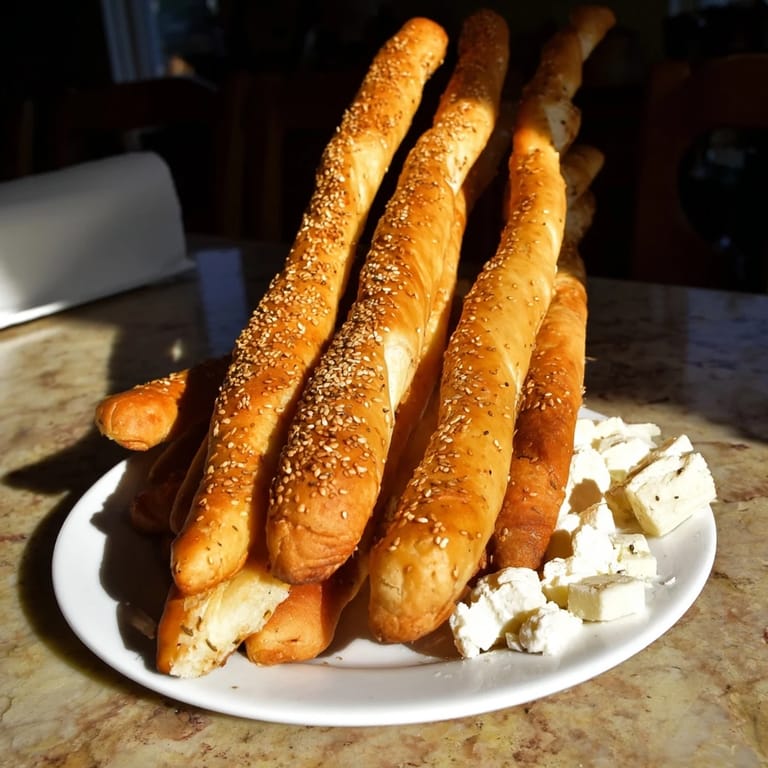
- Brush each breadstick lightly with egg yolk and sprinkle with sesame seeds if you're using them. This is where the visual magic begins.
- Bake until golden:
- Bake for 15 to 18 minutes, turning once halfway through. They're done when they're golden brown and make a crisp sound when bent—they should feel as light as air.
- Assemble your centerpiece:
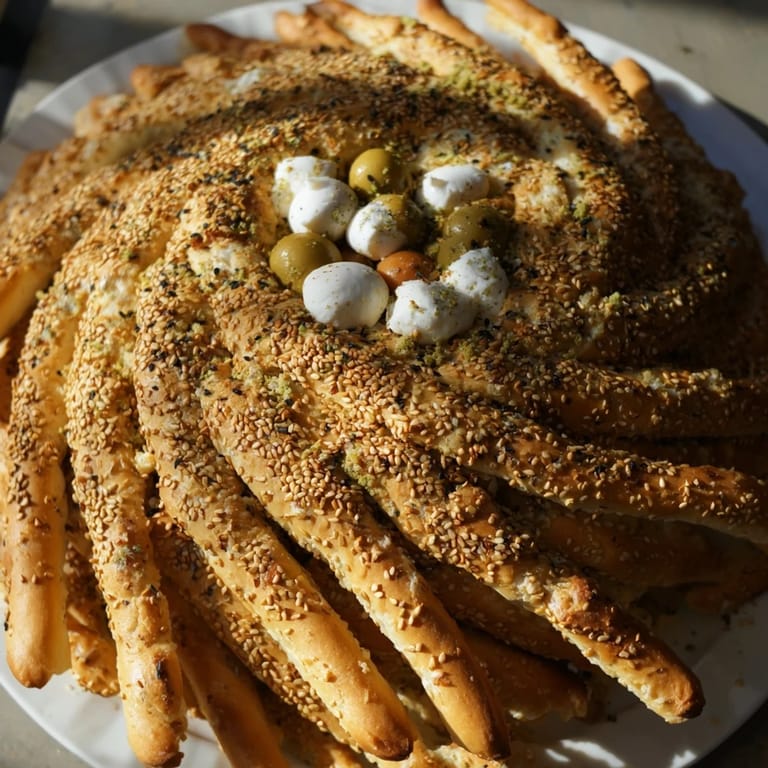
- Arrange the cheeses on a serving platter in a mound, scatter grapes and herbs around, then carefully lean the breadsticks against each other in a dome formation. If they're uncooperative, use a small bowl as temporary scaffolding while you build, then remove it once the structure is stable.
 Save
Save There's something almost ceremonial about presenting this dish. When you set it down and watch people lean in to examine it—studying how the breadsticks catch the light, noticing the way the cheeses nestle beneath—you realize you've created more than food. You've created a moment.
The Art of Building Your Dome
The first dome I built leaned slightly to the left, and I was certain it would topple. It didn't. I learned that day that this dish is forgiving, almost kind—it wants to stand, wants to impress. Start by leaning several breadsticks at a steep angle, then fill the gaps with shorter pieces, building in layers. Think of it as architecture where the materials are flexible and the margins for error are wide. The visual reward far outweighs the few minutes of gentle problem-solving.
Choosing Your Cheeses
Every wheel and wedge tells a story, and this dish is your chance to tell yours. I've made this with different cheese combinations depending on the season and who I'm serving—in autumn I lean toward aged Manchego and creamy Taleggio, in spring I might swap the blue for a fresh, tangy chèvre. The classic combination I've outlined is a reliable baseline, but don't be afraid to visit your local cheesemonger and ask questions. Their passion is contagious, and their recommendations will make this dish feel entirely your own.
Perfect Pairings and Presentation
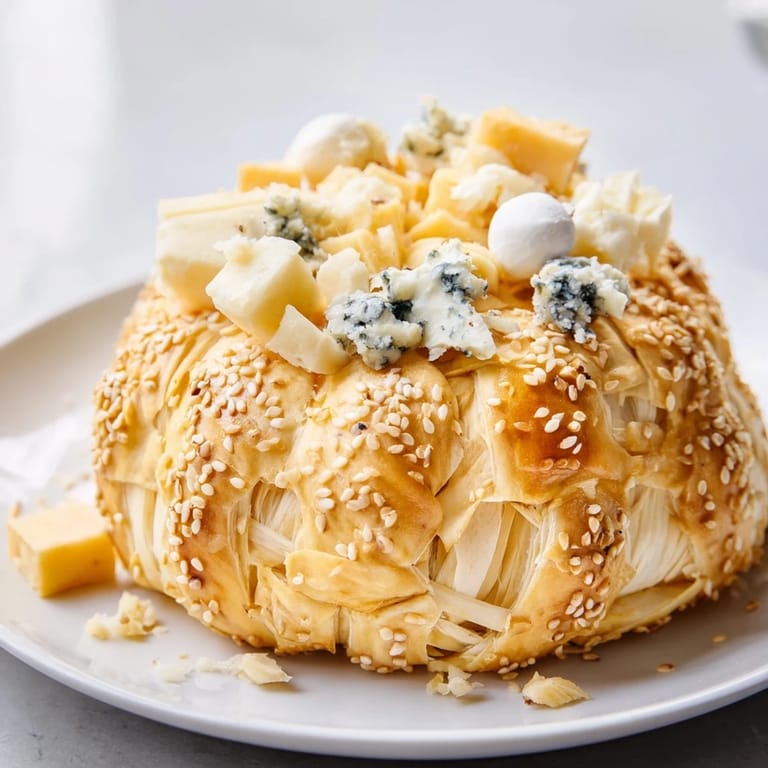
I serve this with a crisp Sancerre or a dry Champagne that cuts through the richness of the cheeses, and the pairing feels almost ceremonial. Place the dome on a table where it catches natural light if possible—the golden breadsticks become luminous, almost jewel-like. For added theater, brush a few breadsticks with edible gold leaf before baking, or scatter microgreens around the base. The presentation matters because you've put in the care; let that care shine.
- Serve immediately after assembly so the breadsticks stay at their crispiest.
- Have small appetizer plates and napkins nearby—people will want to reach in and explore.
- A small honey drizzle on individual plates adds elegance and a touch of sweetness to balance the savory cheeses.
 Save
Save This dish has become my answer to the question of how to entertain without exhausting yourself. It feels luxurious and looks stunning, yet it asks only for a little patience and good ingredients.
Recipe FAQs
- → How do I make the breadsticks crisp and golden?
Roll the dough thinly and bake at 200°C for 15–18 minutes, turning once to ensure even browning and crispness.
- → Can I use different cheeses for the filling?
Yes, substitute with your favorite varieties like aged cheddar, Manchego, or Taleggio to personalize the flavor.
- → What is the best way to assemble the breadstick dome?
Arrange cheeses in a mound on the platter, then carefully build a dome by leaning breadsticks over the cheese, pressing gently for stability.
- → Are there any garnishes recommended to enhance flavor?
Adding seedless grapes, a drizzle of honey or fig jam, and fresh herbs such as thyme or rosemary enhances both aroma and taste.
- → How can I accommodate gluten-free preferences?
Use a gluten-free breadstick dough to replace the all-purpose flour based version.