 Save
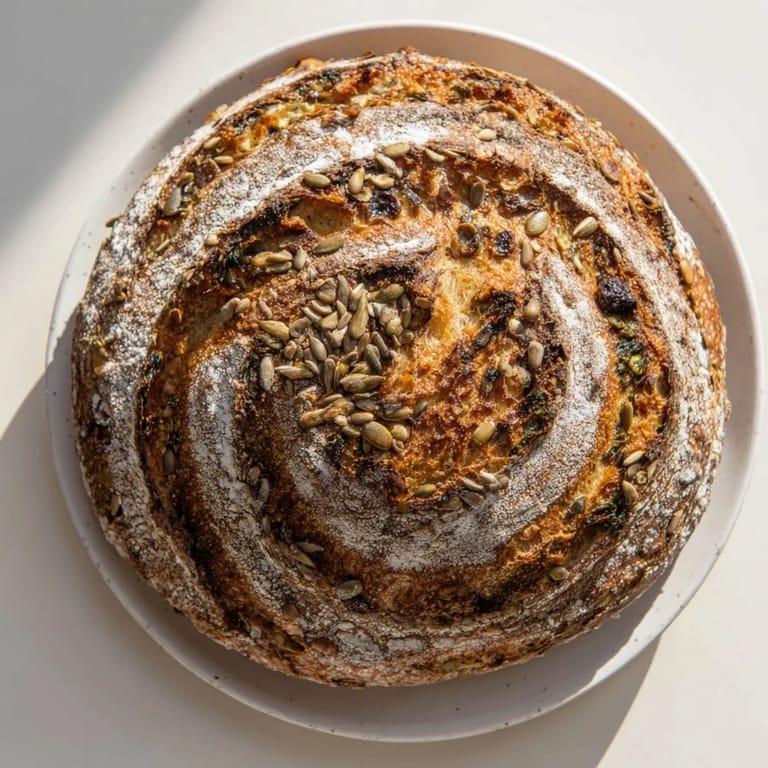
Save I'll never forget the first time I saw a Fibonacci spiral in nature—it was on a pinecone my daughter brought home from school. That moment sparked an idea: what if I could bake that mathematical beauty into bread? After weeks of testing, experimenting with different ingredient densities, and watching dough spiral into existence, I created this loaf. It's part art, part science, and entirely delicious. Every time I pull it from the oven, I'm reminded that the most stunning things often emerge from curiosity and a willingness to try something beautifully unconventional.
I made this bread for a dinner party last winter, and I still remember the silence when I placed it on the table. My friend Sarah, who's usually chatty, just stared at it for a moment before saying, 'Did you really make that?' Watching people discover a new flavor in each bite—the crunch of seeds, then walnuts, then the brightness of sun-dried tomatoes—felt like sharing a secret with everyone at the table.
Ingredients
- 500 g strong bread flour: This is your foundation. Strong flour has higher protein content, which means better gluten development and those beautiful open crumbs that make this bread sing. Don't swap it for all-purpose—it matters.
- 350 ml lukewarm water: Temperature matters here. Too hot kills your starter; too cold and fermentation drags. Lukewarm, like a comfortable bath, is perfect.
- 100 g active sourdough starter or 7 g instant yeast: If you have a starter, use it—the flavor develops over those long hours in ways yeast alone can't replicate. It's worth waiting for.
- 10 g fine sea salt: Don't skip this. Salt strengthens gluten and deepens flavor in ways people can't quite name but always notice.
- 15 ml olive oil: This adds richness and helps with that tender crumb. Use good olive oil; you'll taste it.
- 20 g toasted sunflower seeds through 80 g sautéed spinach: These aren't just toppings—they're the soul of the spiral. Each ingredient increases in quantity and intensity, mirroring how the Fibonacci sequence grows. The progression creates both visual drama and flavor that builds with every spiral layer.
Tired of Takeout? 🥡
Get 10 meals you can make faster than delivery arrives. Seriously.
One email. No spam. Unsubscribe anytime.
Instructions
- Create Your Foundation with Autolyse:
- Mix flour and water in a large bowl until everything is moistened—there shouldn't be any dry flour hiding. Cover this and walk away for 30 minutes. This rest period, called autolyse, lets the flour fully hydrate and makes everything easier to work with. When you come back, the dough will feel transformed.
- Build Strength into Your Dough:
- Add your starter (or yeast), salt, and olive oil. Mix until a shaggy, sticky dough forms. Now knead on a lightly floured surface for 8 to 10 minutes. You're looking for smooth, elastic dough that springs back when you poke it. This is where patience pays off—good gluten development makes everything that follows possible.
- Let Time Do the Heavy Lifting:
- Transfer to an oiled bowl, cover loosely, and let rise at room temperature for 8 to 12 hours. You want the dough to roughly double in size. If your kitchen is cool, it might take closer to 12 hours. That's not a problem—it's actually giving you deeper flavor. You'll know it's ready when it's puffy and smells like something worth waiting for.
- Divide and Prepare for the Spiral:
- Turn your dough onto a lightly floured surface and divide it into 7 equal portions. This is where the magic begins. Each piece will become one spiral segment, and each one will hold progressively more ingredients.
- Layer Your Flavors with Intent:
- Take your first portion (the smallest spiral's worth of dough) and gently knead in the toasted sunflower seeds. You want them distributed throughout without overworking the dough. Repeat this process with each subsequent portion, moving through walnuts, pumpkin seeds, cheese, sun-dried tomatoes, olives, and finally, well-drained sautéed spinach. Each time, you're adding more, creating density and flavor that builds as the spiral grows.
- Shape the Spiral:
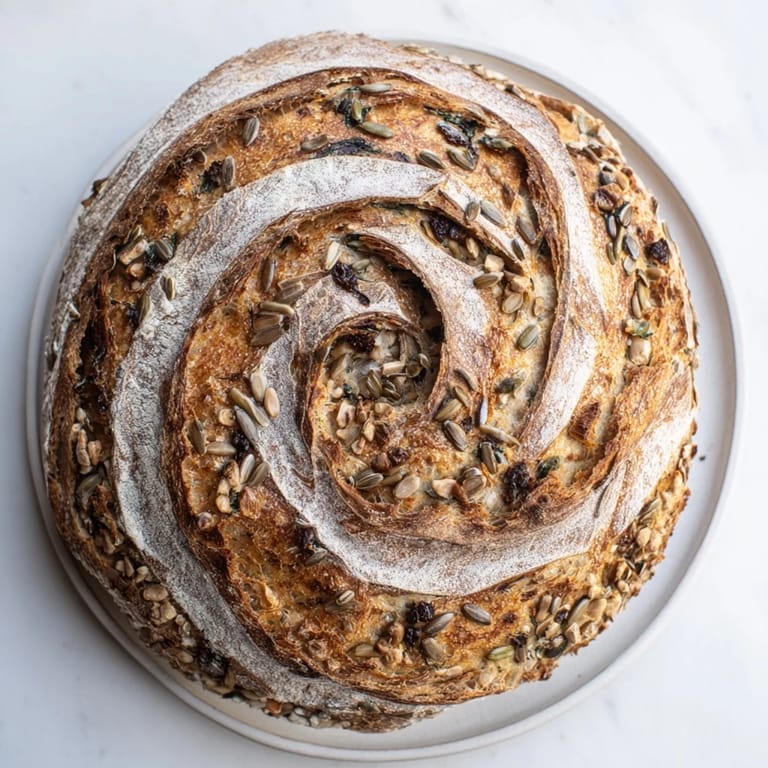
- Roll each dough portion into a rope, roughly 12 to 14 inches long. Start with your smallest, plainest rope (sunflower seeds) and coil it tightly around a central point on parchment paper. Then wrap the next rope (walnuts) around it, and continue spiraling outward, each rope building on the last. When you reach the final spinach rope, press the end firmly to seal. Your spiral should look like a edible galaxy.
- Give It a Final Rise:
- Cover loosely and let rise for about 1.5 hours at room temperature. It should puff up noticeably—you want it puffy but not over-proofed. This is the last gentle push before the oven's heat transforms it all.
- Steam and Bake to Golden Perfection:
- Preheat your oven to 230°C (445°F) and place an empty baking tray on the bottom rack. Dust your loaf with flour, then use a sharp blade or lame to slash along the spiral lines, making shallow cuts that guide expansion. Pour a cup of hot water into the oven tray to create steam—this is essential for that crisp, shattered crust. Bake for 40 minutes total, rotating halfway through. You're aiming for deep golden brown and a sound like crackling when you tap the bottom.
- Cool with Patience:
- Let it cool completely on a wire rack. I know it's torturous when it's still warm and smells incredible, but cutting into hot bread compresses the crumb. Wait. It's worth it.
 Save
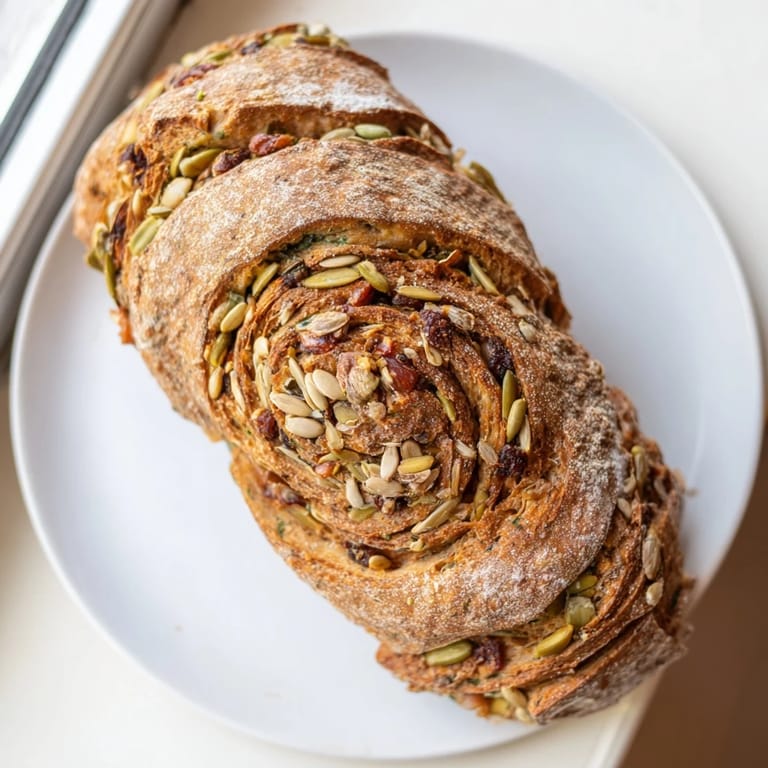
Save There's something humbling about the moment when your spiral comes together on the parchment. You've spent all day watching dough rise and preparing your ingredients, and suddenly there it is—your mathematical vision, tangible and fragrant. That's when you realize you're not just making bread; you're creating something that will nourish people you care about.
Ingredient Swaps and Variations
The beauty of this bread is its flexibility. The Fibonacci progression matters more than the exact ingredients. Love roasted red peppers? Add them in place of sun-dried tomatoes—just make sure they're well-drained. Prefer a vegan loaf? Skip the cheese or use a vegan alternative (cashew-based adds richness without the dairy). You could swap walnuts for hazelnuts, pumpkin seeds for sesame, or add fresh herbs like rosemary to your spinach layer. The key is maintaining the quantity increase as you spiral outward, so each layer is progressively denser and more complex.
Shaping and Steam Mastery
The spiral shape isn't just for show—it's integral to how this bread bakes. Shallower outer layers puff up in the oven's dry heat while denser inner layers steam gently. This is why steam in the oven is non-negotiable. That initial blast of humidity opens the crust and allows the bread to expand freely. If you don't have a dedicated baking stone, even a cast iron skillet works beautifully for creating steam pockets and even baking. Watch for that golden-brown exterior starting around 30 minutes, then rotate. Every oven is different, so trust your eyes and nose as much as the timer.
From Kitchen to Table
This bread deserves a moment. Slice it thickly, and you'll see the spiral progression revealed in cross-section—a edible map of your careful work. Serve it warm with good olive oil for dipping, herbed butter, or simply with a sharp cheese and your favorite wine. It's equally stunning as the unexpected centerpiece of a casual brunch or a simple dinner with friends. Make it once, and it becomes a signature—the bread people ask you to bring, the loaf they remember months later.
- Always let the bread cool fully before slicing; hot bread is delicious but crumbly
- Store in a paper bag at room temperature for up to two days to maintain crust crackliness
- Leftover slices toast beautifully and taste even more complex as the flavors deepen
 Save
Save This bread is a conversation starter, a small act of creation, and proof that you can turn a mathematical pattern into something people actually want to eat. Make it, share it, and watch the moment someone discovers the story in each spiral layer.
Recipe FAQs
- → What makes the spiral pattern unique in this bread?
The spiral is formed by coiling dough ropes layered with increasing amounts of seeds, nuts, cheese, and vegetables, creating a visually captivating and texturally varied loaf.
- → Can I substitute the cheese for a vegan alternative?
Yes, you can omit the cheese or replace it with a vegan cheese to maintain flavor complexity while keeping the loaf plant-based.
- → How does the steam affect the baking process?
Introducing steam during baking helps develop a crisp, golden crust by delaying the setting of the crust and allowing the bread to expand fully.
- → What are the key ingredients contributing to the texture?
Toasted sunflower seeds, walnuts, pumpkin seeds, grated cheese, sun-dried tomatoes, olives, and sautéed spinach each add unique crunch, moisture, or density to the loaf.
- → How long should the dough rise before shaping?
The initial rise is 8 to 12 hours until doubled, followed by a 1.5-hour rise after shaping into the spiral to develop flavor and volume.