 Save
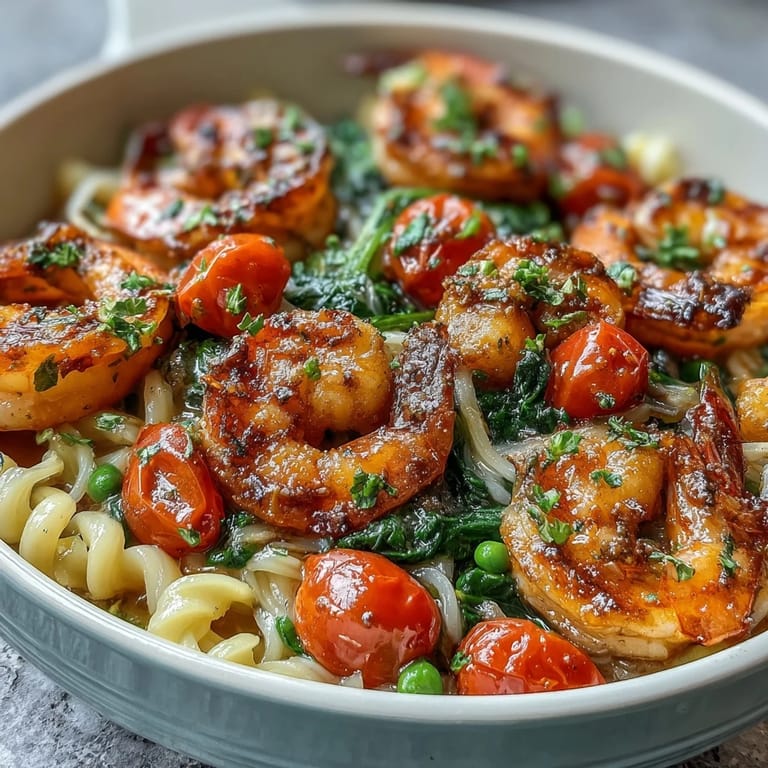
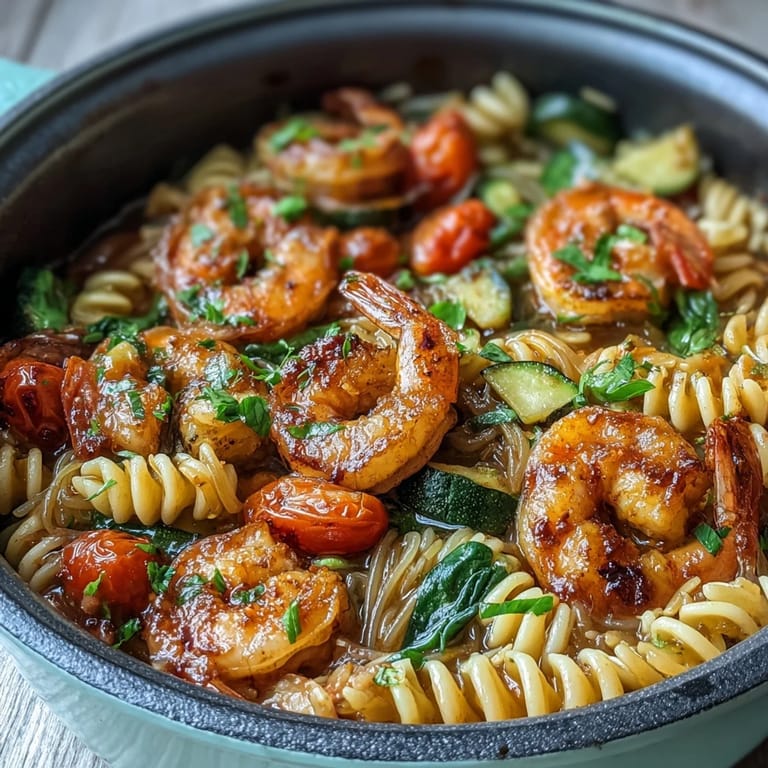
Save There's something almost magical about the moment when garlic hits hot oil and suddenly your entire kitchen smells like a coastal Mediterranean village. I discovered this one-pot garlic shrimp pasta on a Tuesday when I was too tired to dirty multiple pans but too hungry to settle for something boring. The beauty of it is watching everything come together in one skillet—pasta, vegetables, shrimp, all swimming in this bright lemon and white wine sauce that tastes far more impressive than the thirty minutes it takes to make.
My neighbor caught me making this one evening and the smell pulled her right into my kitchen—we ended up sharing a bowl while her kids played in the yard, and she's made it every week since. That's when I knew it wasn't just good; it was the kind of dish that makes people want to linger at your table.
Ingredients
- Large shrimp, peeled and deveined (1 lb): Buy them this way if your budget allows—it saves precious time and they cook so evenly when they're all the same size.
- Angel hair pasta (12 oz): This delicate pasta absorbs the sauce beautifully and cooks quickly, which means less chance of everything turning mushy.
- Cherry tomatoes (1 cup, halved): They burst slightly as they cook, releasing their juices right into the sauce instead of sitting there like little marbles.
- Snap peas (1 cup, trimmed): They stay crisp-tender if you don't overthink them, adding a pleasant texture contrast to the soft pasta.
- Baby spinach (1 cup): Stir this in at the very end so it wilts gently without turning dark and bitter.
- Zucchini (1 small, sliced): Slice it thin so it softens at the same pace as everything else without becoming mushy.
- Fresh parsley and green onions (1/4 cup and 2 onions): These go in last and brighten everything with a fresh, grassy note that makes you taste spring.
- Garlic (4 cloves, minced): Don't use the pre-minced jar—the real stuff blooms so much better in hot oil and tastes completely different.
- Extra virgin olive oil (1/4 cup): This is your base, so don't cheap out; good oil makes everything taste like itself, but better.
- Lemon zest and juice (1 lemon): The zest goes in early to perfume the whole dish, while the juice balances everything at the end.
- Dry white wine (1/2 cup): Use something you'd actually drink—the flavor carries through and makes the sauce taste alive.
- Broth (3 cups): Vegetable broth keeps it lighter; chicken broth makes it more savory—either works beautifully.
- Red pepper flakes (1/2 tsp, optional): Just enough to whisper heat without overpowering the delicate shrimp.
Tired of Takeout? 🥡
Get 10 meals you can make faster than delivery arrives. Seriously.
One email. No spam. Unsubscribe anytime.
Instructions
- Bloom the garlic in oil:
- Heat olive oil in your largest skillet over medium heat, then add minced garlic and red pepper flakes. Within about a minute, your whole kitchen will smell incredible—that fragrance tells you everything is ready for the next step.
- Soften the spring vegetables:
- Toss in cherry tomatoes, snap peas, and zucchini, stirring gently for two to three minutes until they start to soften at the edges. You want them tender but still holding their shape and color.
- Deglaze with wine:
- Pour in the white wine and let it bubble gently for about two minutes, which mellows any sharpness and adds depth. The sizzle tells you the pan is hot enough for what comes next.
- Build the broth base:
- Add your broth along with lemon zest and juice, then bring everything to a gentle boil. This becomes your cooking liquid for the pasta, so it needs to be hot.
- Cook the pasta directly in the sauce:
- Break the angel hair into shorter pieces if you like, then stir it into the boiling liquid to submerge. Cover and cook for three to four minutes, stirring occasionally so nothing sticks to the bottom.
- Add the shrimp:
- When the pasta is nearly tender, spread the shrimp evenly across the pan, cover it again, and cook for two to three minutes until they turn bright pink and opaque. This is the point where you need to actually pay attention—overcooked shrimp becomes rubbery, but undercooked is not an option.
- Finish with fresh herbs:
- Remove from heat and fold in the baby spinach, green onions, and parsley so they wilt gently into the warm pasta. Taste and adjust seasoning with salt and pepper, being generous because the pasta has absorbed most of your original salt.
- Plate and serve:
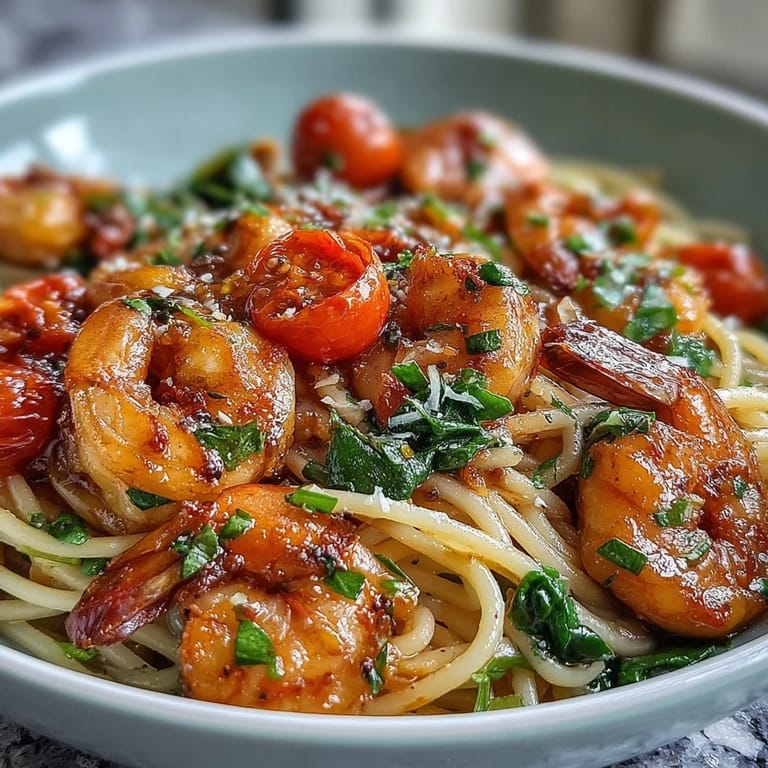
- Serve immediately while everything is still hot, with Parmesan and lemon wedges on the side. The whole thing takes thirty minutes from raw ingredients to dinner on the table.
 Save
Save The first time my daughter asked to help make this, she stood on a stool and insisted on being the one to tell me when the shrimp turned pink. It became this little ritual where she owned that final moment, and now whenever I make it without her, I think about how food can turn into these small pockets of memory with the people we love.
Why This Works as a One-Pot Wonder
The magic of cooking pasta directly in the sauce instead of in a separate pot of water is that every grain gets coated and flavored from the beginning. You're not draining starchy water down the sink—you're using that starch to help emulsify the olive oil and create a silky sauce that clings to everything. It feels like cheating when you realize you've just saved yourself from washing an extra pot and actually made better food at the same time.
Timing and Temperature Matter
The entire dish rides on keeping heat at a steady medium—not so hot that your sauce boils away before the pasta finishes, not so low that everything takes forever. I learned this the hard way the first time I made it, cranking the heat thinking faster was better and ending up with overcooked shrimp and barely-cooked pasta. Now I know that watching the gentle bubble of the liquid and adjusting the burner accordingly is the difference between dinner that tastes homemade and dinner that tastes like a restaurant actually made it.
Flexibility and Swaps
This recipe is remarkably forgiving about vegetables—whatever looks fresh at the market works beautifully. I've swapped asparagus for snap peas, added mushrooms that I'd been meaning to use, tossed in handfuls of kale instead of spinach, and every version tastes distinctly itself while still feeling like the same dish. The constant is the garlic, lemon, and shrimp; everything else bends to what your kitchen has and what you're craving.
- Swap in asparagus, broccoli, or mushrooms whenever you want something different.
- Use scallops or firm white fish instead of shrimp if that's what looks good.
- Skip the Parmesan entirely or crumble fresh mozzarella over the top instead.
 Save
Save This is the kind of dinner that feels special without asking you to spend hours in the kitchen, and somehow that's exactly when food tastes best. Serve it with cold wine and good company, and you've got something that tastes like summer.
Recipe FAQs
- → Can I use other types of pasta?
Yes, longer or thinner pasta like spaghetti or linguine works well. Adjust cooking time accordingly for desired tenderness.
- → How can I make this dish gluten-free?
Replace angel hair pasta with gluten-free alternatives to keep the texture light and delicate.
- → What wine pairs best with this dish?
A chilled Sauvignon Blanc or Pinot Grigio complements the bright citrus and seafood flavors beautifully.
- → Can I omit the cheese garnish?
Yes, leaving out Parmesan makes the dish dairy-free without sacrificing much flavor, keeping it light and fresh.
- → Is it possible to substitute shrimp with another protein?
While shrimp provides a delicate seafood taste, firm white fish or scallops could work with minor adjustments to cooking time.