 Save
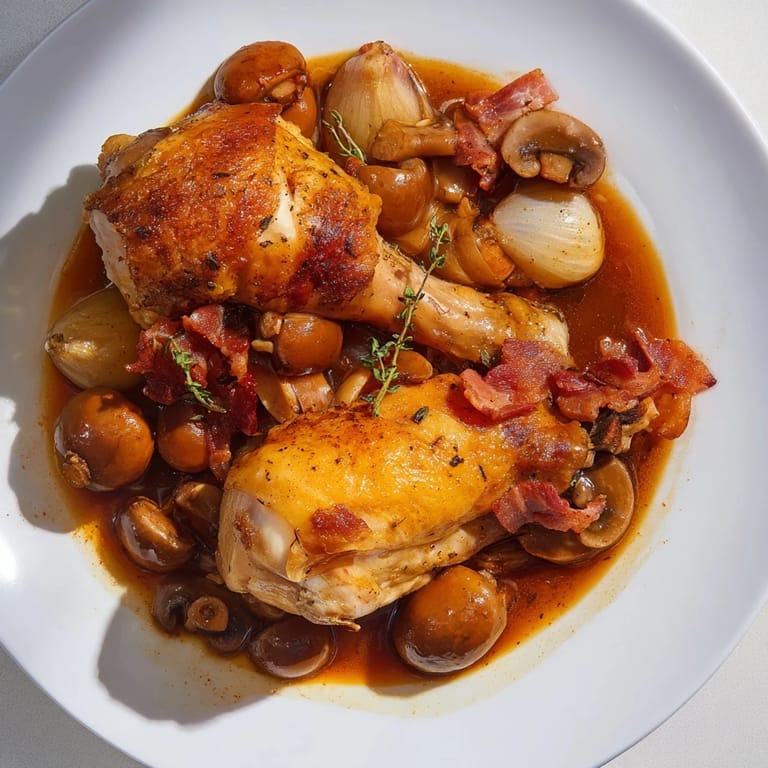
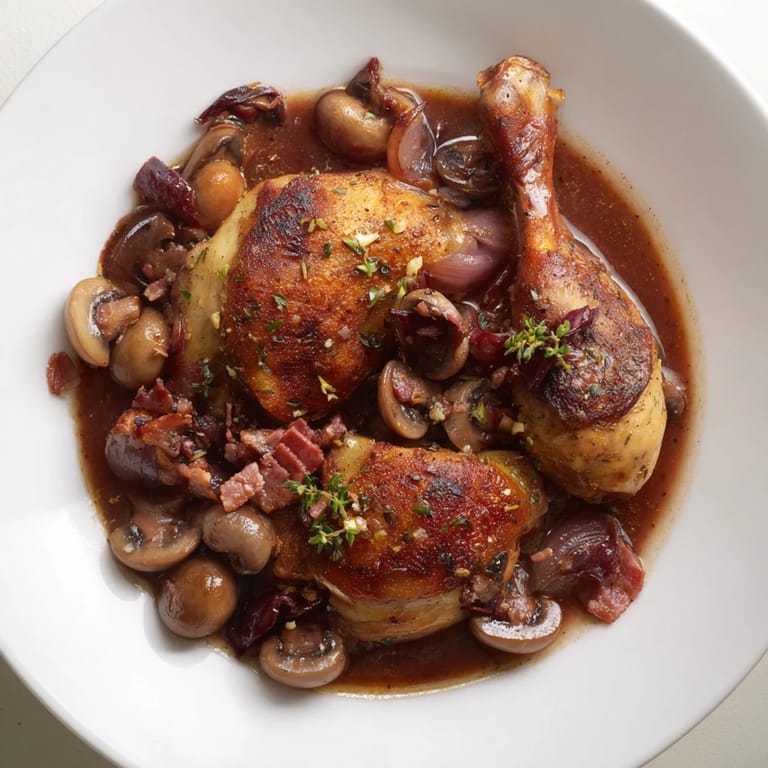
Save I stumbled into coq au vin on a rainy Tuesday when I had nothing but a chicken, half a bottle of wine, and too much time on my hands. The kitchen smelled like a French bistro within an hour, and I remember thinking I'd accidentally made something far beyond my skill level. It wasn't fancy technique that did it, just patience and letting the wine work its magic. That night, I served it to myself over mashed potatoes and felt like I'd cracked a secret code. Sometimes the best recipes find you when you're not even looking.
The first time I made this for friends, I panicked halfway through because the sauce looked too thin. I almost reached for cornstarch, but I trusted the process and let it reduce uncovered. When I finally ladled it over the chicken, it clung to the meat like velvet. Everyone went quiet for the first few bites, and one friend asked if I'd been hiding a culinary degree. I hadn't, I'd just learned to trust the wine and the time.
Ingredients
- Whole chicken, cut into 8 pieces: Using a whole chicken gives you a mix of white and dark meat, which means every bite has different texture and flavor.
- Smoked bacon or pancetta, diced: This adds a smoky depth that balances the acidity of the wine, plus the rendered fat is pure gold for browning.
- Pearl onions, peeled: They sweeten as they braise and add little bursts of softness throughout the stew.
- Cremini or button mushrooms, quartered: Sautéing them separately keeps them from getting soggy and ensures they stay meaty and flavorful.
- Carrots, sliced: They bring a subtle earthiness and help thicken the sauce as they break down.
- Garlic cloves, minced: Two cloves is just enough to add warmth without overpowering the wine.
- Dry red wine: Use something you'd actually drink, Burgundy or Pinot Noir work beautifully and don't turn bitter during the long simmer.
- Chicken stock: It tempers the wine and adds body without diluting the flavor.
- Tomato paste: A small amount deepens the color and adds umami.
- All-purpose flour: It thickens the sauce just enough to coat the back of a spoon.
- Olive oil and unsalted butter: The combination gives you high heat tolerance and rich flavor.
- Bay leaves and fresh thyme: These herbs are essential, they make the whole pot smell like a French countryside kitchen.
- Salt and freshly ground black pepper: Season generously, the chicken needs it and the sauce will absorb it.
Tired of Takeout? 🥡
Get 10 meals you can make faster than delivery arrives. Seriously.
One email. No spam. Unsubscribe anytime.
Instructions
- Dry and season the chicken:
- Pat each piece completely dry with paper towels so they brown instead of steam. Season both sides with salt and pepper, and don't be shy.
- Render the bacon:
- Heat a tablespoon of olive oil in your Dutch oven over medium heat and add the diced bacon. Let it cook until the edges are crisp and the fat has pooled in the bottom, then scoop it out with a slotted spoon.
- Brown the chicken in batches:
- Don't crowd the pot or the chicken will steam. Work in batches, letting each piece develop a deep golden crust on all sides before setting it aside.
- Sauté the vegetables:
- Toss in the carrots, pearl onions, and garlic, letting them pick up all the browned bits left behind. Stir occasionally until they're lightly golden and fragrant, about five minutes.
- Add tomato paste and flour:
- Stir them into the vegetables and cook for a full minute. This step is easy to rush, but it's important for building flavor and avoiding a raw flour taste.
- Bring it all together:
- Return the chicken and bacon to the pot, then pour in the wine and stock. Toss in the bay leaves and thyme, scraping up every caramelized bit from the bottom of the pot.
- Simmer low and slow:
- Bring everything to a gentle simmer, cover the pot, and turn the heat down low. Let it cook for an hour and a half, checking occasionally to make sure it's bubbling softly.
- Sauté the mushrooms separately:
- While the chicken braises, heat a tablespoon each of butter and olive oil in a skillet over medium-high heat. Add the mushrooms and let them brown without stirring too much, about five minutes.
- Reduce and finish:
- Remove the lid from the Dutch oven for the last fifteen minutes to let the sauce thicken. Stir in the sautéed mushrooms and taste for seasoning, adding more salt and pepper if needed.
- Serve:
- Fish out the bay leaves and thyme sprigs before plating. Serve the chicken and sauce hot, with crusty bread or mashed potatoes to soak up every bit of that wine-soaked goodness.
 Save
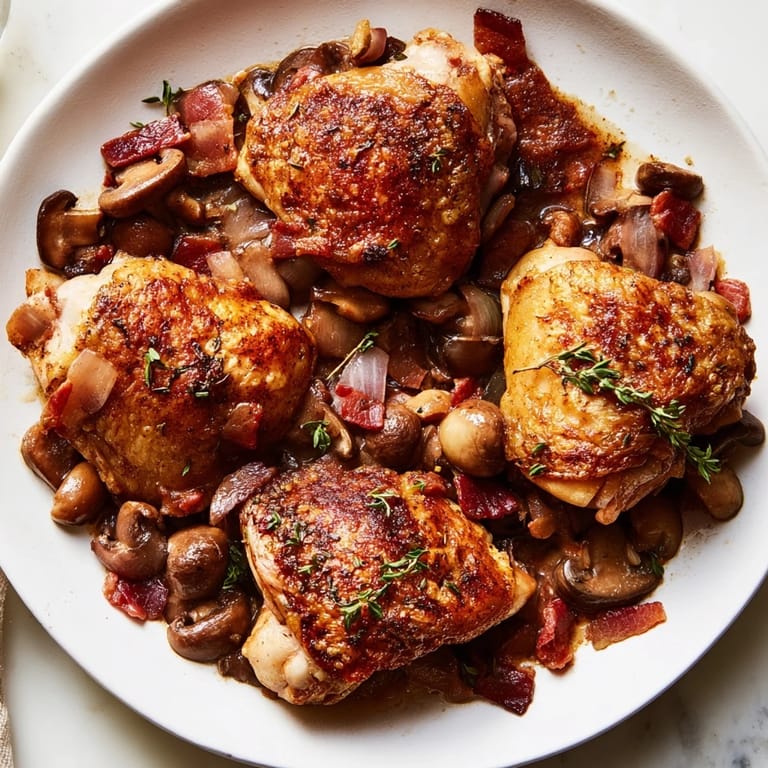
Save I made this on a cold Sunday afternoon and the smell filled the entire house. My neighbor knocked on the door asking what I was cooking, and I ended up inviting her to stay for dinner. We sat at the table with bowls of coq au vin, tearing into baguette and talking until the wine bottle was empty. That's when I realized this dish isn't just about the recipe, it's about what happens when you slow down and let something simmer.
What to Serve It With
I've served this over mashed potatoes, buttered egg noodles, and even polenta, and every pairing worked. The key is choosing something that can soak up the sauce without competing with the wine-braised flavors. Crusty French bread is non-negotiable, you'll want it to mop up every last bit from the bottom of your bowl. A simple green salad with a sharp vinaigrette cuts through the richness and makes the meal feel complete.
How to Store and Reheat
Coq au vin keeps beautifully in the fridge for up to three days, and honestly, it tastes better the next day. Let it cool completely before transferring it to an airtight container, sauce and all. When you're ready to reheat, warm it gently on the stovetop over low heat, adding a splash of stock or water if the sauce has thickened too much. The microwave works in a pinch, but the stovetop keeps the texture intact.
Little Tweaks That Make a Difference
If you want extra richness, add a splash of brandy to the mushrooms while they sauté and let it cook off. Swapping the whole chicken for just thighs makes the dish even more forgiving since dark meat stays tender no matter what. I've also stirred in a tablespoon of butter at the very end to make the sauce glossy and silky.
- Use a mix of wild mushrooms if you can find them for deeper earthy flavor.
- Add a pinch of sugar if your wine is too acidic and the sauce tastes sharp.
- Garnish with fresh parsley or chives right before serving for a pop of color and freshness.
 Save
Save This is the kind of recipe that makes you feel capable, even on days when everything else feels like a mess. It asks for your patience and rewards you with something that tastes like you've been cooking for years.
Recipe FAQs
- → What type of wine is best for coq au vin?
Dry red wines such as Burgundy or Pinot Noir are preferred because they add depth and complexity without overpowering the other ingredients.
- → Can I use chicken thighs instead of whole chicken?
Yes, chicken thighs work well due to their higher fat content, which helps keep the meat moist during the slow braising process.
- → What is the purpose of sautéing mushrooms separately?
Sautéing mushrooms before adding them preserves their texture and adds a rich, caramelized flavor that enhances the final dish.
- → How long should the chicken braise for optimal tenderness?
Simmering the chicken gently for about 1.5 to 2 hours ensures it becomes tender and absorbs the flavors from the wine and herbs.
- → Are there suitable side dishes to complement the stew?
Classic accompaniments include crusty bread, mashed potatoes, or buttered noodles, which soak up the savory sauce beautifully.