 Save
Save The first time I made paella, I was standing in a friend's kitchen in Barcelona watching her grandmother stir a massive pan over an open flame, and I was mesmerized by how she never touched the rice after pouring in the stock. She told me that the bottom layer—the socarrat—was where the magic lived, and that patience and trust were the real ingredients. Years later, I finally understood what she meant when I made my own version and heard that first crackling sound of rice kissing hot pan, and tasted the deep, nutty flavor that appeared without stirring or fussing.
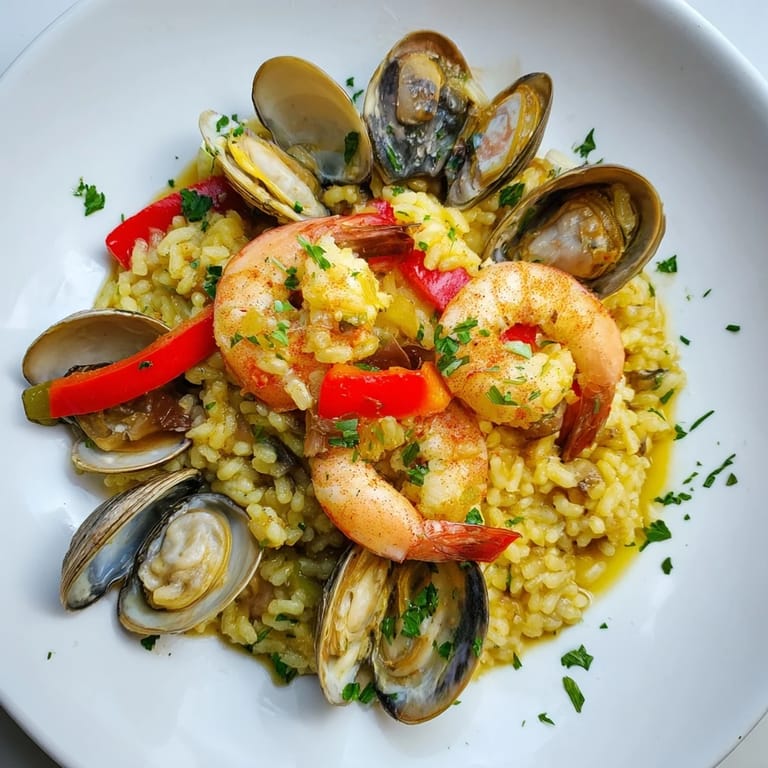
I made this for my partner's family the first summer we got serious, and I was nervous enough without worrying about the paella, but something about standing over that pan for forty minutes felt grounding. My future mother-in-law came into the kitchen and sat at the table watching, and we just talked—no phones, no pretense—while the rice sizzled and the room filled with steam and saffron. When I lifted the foil and showed her the golden, perfectly cooked rice studded with open shells, she smiled in a way I'll never forget.
Ingredients
- Short-grain paella rice: Bomba or Arborio rice is essential here—regular long-grain rice will turn mushy and won't have the structure to create that prized crispy bottom layer.
- Saffron threads: Don't skip this or substitute with turmeric; saffron is expensive but a little goes a long way, and it's the soul of authentic paella.
- Fish or seafood stock: Homemade stock is wonderful if you have it, but good quality store-bought works beautifully too—just taste it before you season the paella.
- Shrimp, mussels, and clams: Buy these the same day you plan to cook; if they smell off or any shells are already open and won't close, trust that instinct and replace them.
- Smoked paprika: This adds a depth of flavor that regular paprika can't match, so it's worth tracking down.
- Fresh parsley: A small handful at the end brightens everything; I learned to chop it right before serving so it doesn't wilt.
Tired of Takeout? 🥡
Get 10 meals you can make faster than delivery arrives. Seriously.
One email. No spam. Unsubscribe anytime.
Instructions
- Infuse the saffron:
- Warm your stock in a separate pot and drop in the saffron threads, letting them steep as everything heats through. This gentle warming coaxes out that golden color and floral warmth.
- Build the flavor base:
- Heat olive oil in your paella pan and sauté the onion until it softens and turns translucent, about two minutes. Add garlic next and breathe in—that moment when it becomes fragrant is when you know it's time to add the peppers.
- Cook the vegetables:
- Add the bell peppers and let them soften slightly, stirring occasionally, then add the grated tomato and cook until you don't see much liquid pooling anymore. This concentrates the flavors instead of diluting the rice later.
- Toast the rice:
- Stir the rice into the vegetable mixture, coating every grain with oil and letting it warm through for about a minute. Sprinkle in the smoked paprika, salt, and pepper, stirring once more to distribute.
- Add the stock:
- Pour in the warm saffron-infused stock slowly, spreading the rice out so it sits in a single layer, then step back and let it be. This is the hardest part—not stirring—but stirring releases starch and makes the rice mushy instead of individual and tender.
- Cook the seafood together:
- After about twenty minutes when the rice is almost tender, arrange your shrimp, mussels, and clams over the top in a loose pattern, cover with foil or a lid, and let everything finish cooking together for another five to eight minutes. You'll know it's done when the rice is tender, the shells have opened, and you might hear a gentle crackling from the bottom of the pan.
- Rest and serve:
- Remove from heat and let it sit covered for five minutes—this allows the rice to finish absorbing any remaining liquid. Uncover, scatter parsley over the top, and serve straight from the pan with lemon wedges alongside.
 Save
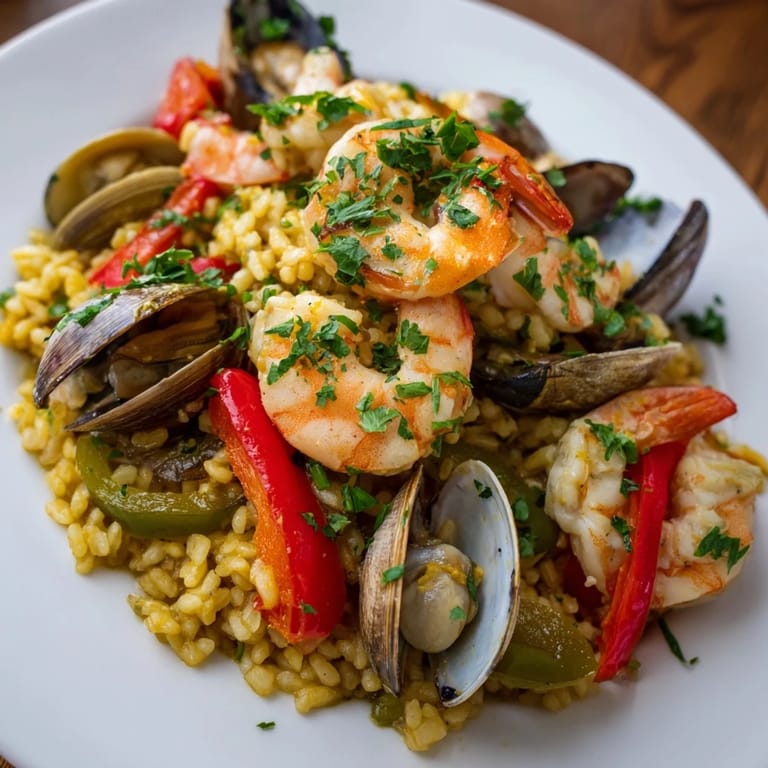
Save The moment everything is plated and people lean in to smell it before they even taste it—that's when I remember why I love cooking paella. It's not complicated or fussy once you stop thinking of it as something intimidating; it's just rice, seafood, and patience, arranged in one beautiful pan.
Timing and Tempo
Mise en place—getting everything prepped before you start cooking—is what saves you from standing over the pan feeling frazzled. Chop your vegetables, peel your shrimp, and scrub your mussels and clams at least fifteen minutes before you begin; having everything ready means you can actually enjoy the cooking process instead of rushing through it. I learned this the hard way when I was halfway through cooking and realized my garlic was still unpeled, and now I always set aside thirty minutes for prep alone.
Seafood Swaps and Flexibility
While traditional paella celebrates what the sea offers, you're not locked into this exact combination. I've made this with scallops instead of some of the mussels, added a handful of diced squid, and even swapped in white fish like halibut or snapper when seafood budgets got tight. The only real rule is that whatever you add should cook in roughly the same time and complement the saffron-infused rice without overpowering it.
Wine, Serving, and Leftovers
Serve this with a crisp Spanish white wine—Albariño or Verdejo—and watch how the acidity cuts through the richness of the seafood and rice in the most satisfying way. Leftovers are honestly better the next day if you reheat them gently with a splash of stock, though truthfully, I rarely have leftovers because this is one of those dishes that people keep coming back to the table for.
- If you do have leftover paella, store it covered in the fridge and reheat it gently in a covered pan with a few tablespoons of stock to restore moisture.
- A squeeze of fresh lemon juice right before eating brightens every bite, so don't skip the wedges on the side.
- Make this for people you want to impress, but know that the real magic isn't in perfection—it's in showing up and feeding people something beautiful.
 Save
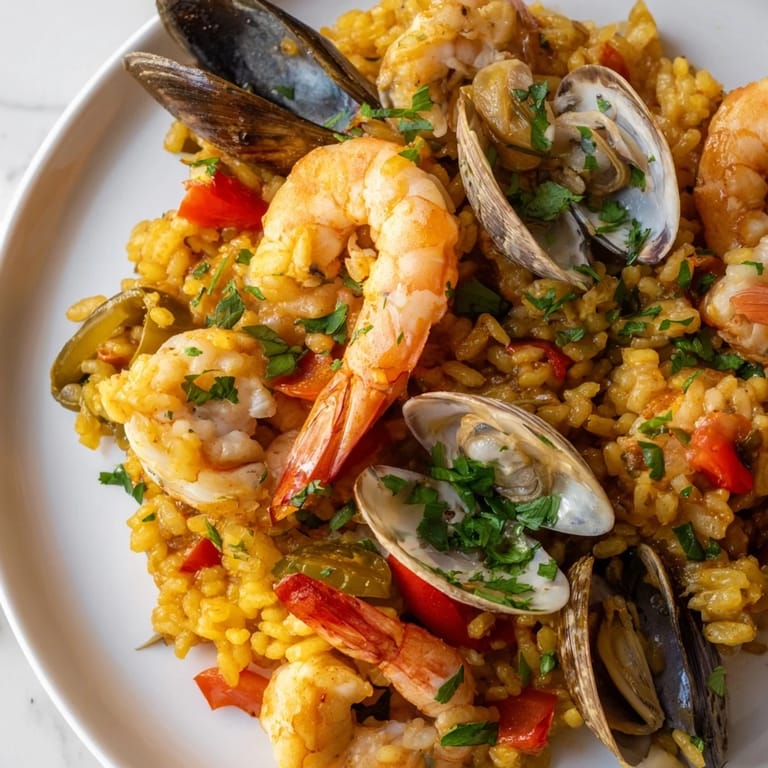
Save This paella is a conversation in a bowl—saffron and seafood and rice cooked together until they become something greater than the sum of their parts. Make it for the people you love, and let them taste how much care went into each golden grain.
Recipe FAQs
- → What type of rice is best for this dish?
Short-grain paella rice like Bomba or Arborio works best to absorb flavors while maintaining texture.
- → How do I ensure the shellfish are safe to eat?
Discard any mussels or clams that do not open during cooking to avoid potential health risks.
- → Can I substitute seafood stock?
Fish or seafood stock provides the best depth, but a light fish broth can be used if unavailable.
- → What spices add authentic flavor?
Saffron threads and smoked paprika are essential for the dish’s signature aroma and color.
- → How should this be served for best experience?
Garnish with fresh parsley and lemon wedges to brighten flavors before serving.