 Save
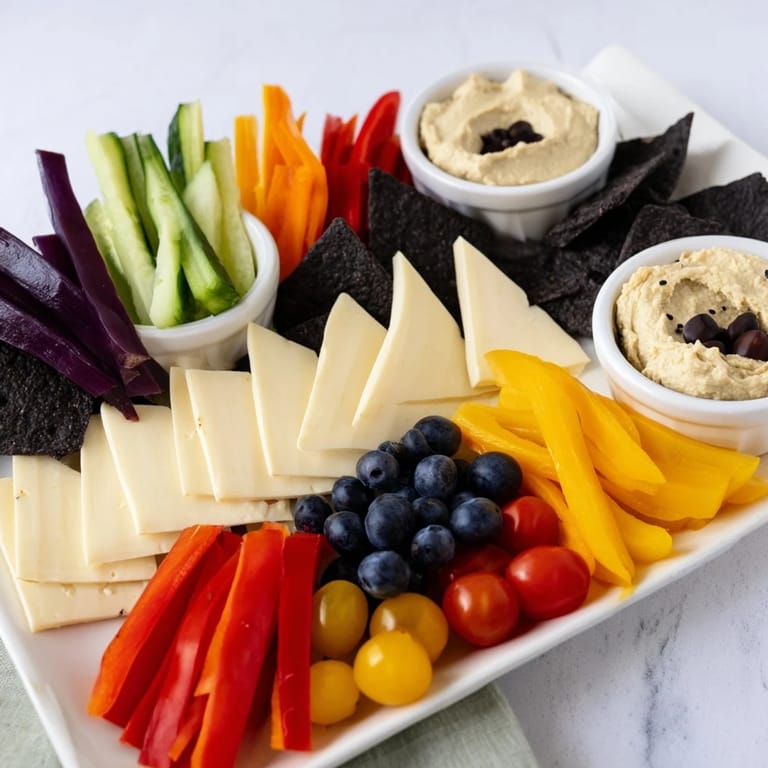
Save I'll never forget the moment I decided to stop arranging appetizers like everyone else. It was at a gallery opening downtown where I watched a designer friend arrange cheese and vegetables into this stunning geometric lightning bolt, and I thought: why do we always arrange food in boring circles and rows? That night, I went home inspired and started experimenting with angles and contrast. The Zig-Zag Lightning Strike was born from pure creative restlessness, and it's become my signature move whenever I want a platter that actually makes people gasp before they eat.
I made this for my sister's book club last spring, and honestly, it became the conversation piece of the night. Not because people wanted to talk about the recipe, but because everyone started pulling out their phones to photograph it. By the end of the evening, I'd gotten requests from four different friends to make it for their events. That's when I realized this wasn't just pretty food—it was permission to be bold and different with something as simple as a snack board.
Ingredients
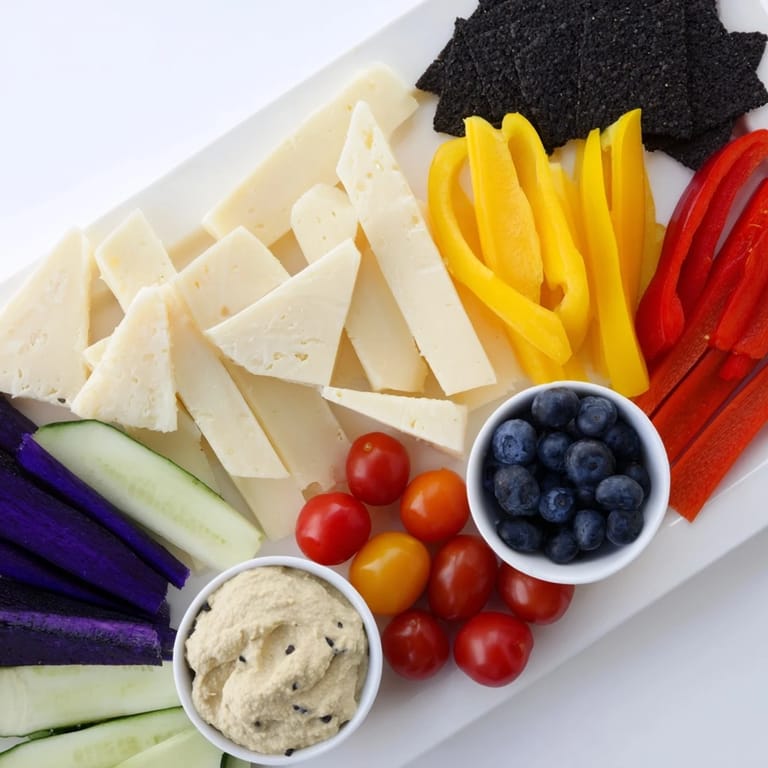
- Red bell pepper strips (1 cup): These are your main color hero. Cut them lengthwise into thin, angular pieces to emphasize those sharp lines that make the whole board work. Red against the bright yellows and whites is what makes people actually notice this arrangement.
- Yellow bell pepper strips (1 cup): The warm counterpoint to red. Peppers are forgiving to cut and hold their crisp texture beautifully, so don't be afraid to prep them a few hours ahead.
- Cucumber sticks (1 cup): These are your neutral ground, the calm between the color explosions. Cut them on a slight diagonal to reinforce the angular theme throughout.
- Purple carrots, cut into sticks (1 cup): If you can find these at a farmer's market, grab them. If not, regular orange carrots work, but purple adds an unexpected sophistication that makes people ask where you shopped.
- Sharp white cheddar, sliced into thin angular pieces (100 g): The key word here is sharp—mild cheddar will disappear into the background. Slice it thin and cut into long rectangles that echo the vegetable cuts. This creates visual rhythm.
- Black wax gouda, sliced (100 g): The dark drama. I learned the hard way that black-wrapped gouda tastes better than it looks, but it looks incredible. The slight sweetness plays beautifully against sharp cheddar.
- Blueberries (1/2 cup): Scatter these like jewels. They're small enough to fit in the gaps and dark enough to punctuate the whole design without overwhelming it.
- Golden cherry tomatoes, halved (1/2 cup): Use golden, not red, so they read as light and sunny rather than merging with the red peppers. Halving them gives you little vessels to catch dip.
- Beet hummus (1/2 cup): This is your magenta surprise. Beet hummus tastes more refined than it sounds, and its color adds another layer of complexity to the board. If you can't find it, regular hummus works, but you'll lose a whole color story.
- Classic hummus (1/2 cup): The creamy anchor. I always choose the kind with a good slick of olive oil on top because it feels intentional and tastes better.
- Blue corn tortilla chips (1 cup): The angular crunch. Blue corn chips have a deeper, almost nutty flavor that white or yellow chips lack. They also photograph better, which matters when your board is this photogenic.
- Black sesame rice crackers (1/2 cup): These are the tiny architecture detail that makes everything feel designed. They're delicate and sophisticated, which is exactly what this board needs.
Tired of Takeout? 🥡
Get 10 meals you can make faster than delivery arrives. Seriously.
One email. No spam. Unsubscribe anytime.
Instructions
- Prepare with precision:
- Wash everything and pat it completely dry. Wetness will mess with your visual contrast and make things slip around. Cut all vegetables and fruits into long, angular pieces—think less of eating convenience and more of visual power. A sharp chef's knife matters here. Slice your cheeses thin and cut them into long rectangles that echo your vegetable cuts. This repetition is what makes the whole thing feel intentional rather than random.
- Plan your lightning bolt:
- Before you place anything, imagine a diagonal line running from one corner of your board to the opposite corner. This is your spine. Now picture a zig-zag traveling along that line—sharp angles, alternating directions, like electricity. This mental map is what separates a pretty board from a designed one.
- Build in contrasting pairs:
- Start placing ingredients in opposing pairs: red pepper next to white cheddar, cucumber next to black gouda. Let each element create maximum visual tension against its neighbor. Work along your imaginary zig-zag, placing pieces close enough that the pattern reads clearly, but with just enough breathing room between them that individual elements still pop.
- Place your dips strategically:
- Set small bowls of hummus at the high points of your zig-zag—places where the pattern changes direction. This isn't random; it's creating functional focal points that also serve your design.
- Edge the angles with crunch:
- Tuck blue corn chips and black sesame crackers along the outside edges of your zig-zag to reinforce the sharp geometry. They act like a border that says: this design is intentional.
- Scatter the small wonders:
- Blueberries and halved cherry tomatoes go last. Distribute them along your zig-zag like you're placing stars on a map—evenly spaced enough that they feel deliberate, not haphazard. They're your punctuation marks.
- Serve at the moment of perfection:
- Bring this to the table immediately. The longer it sits, the more the vegetables will start to wilt and the edges will soften. This board is about crisp contrast, so timing matters. Fresh is the whole point.
 Save
Save The moment I truly understood the power of this board was watching my eight-year-old cousin sketch out her own zig-zag pattern before we built it together. She got it immediately—the geometry, the color theory, the idea that food could be about visual language, not just taste. That afternoon taught me that beautiful things don't have to be complicated, and sometimes the simplest ideas resonate the deepest.
Color Theory You Can Taste
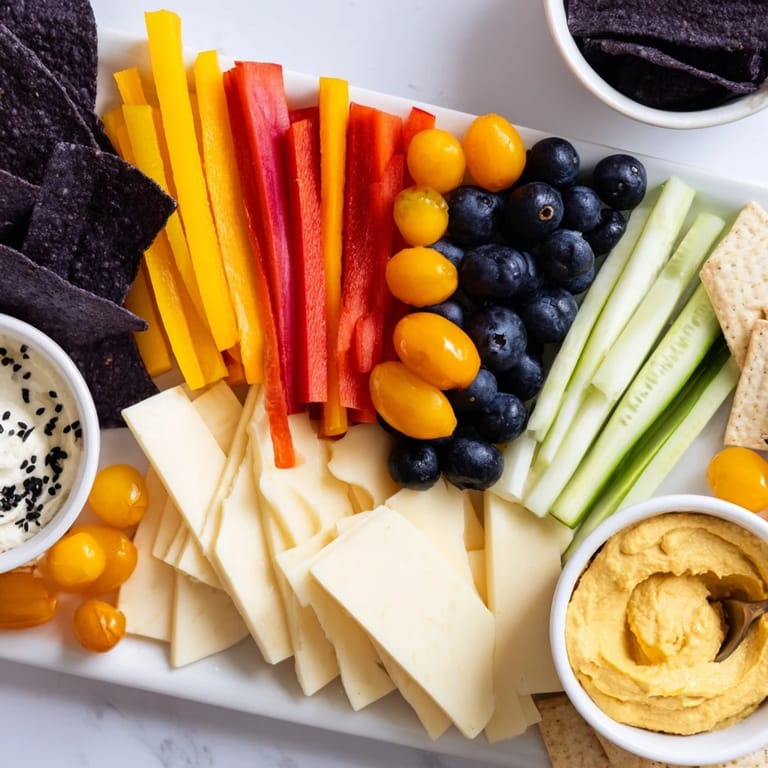
Every color on this board was chosen with intention. Red and yellow peppers together create warmth and energy. White and black cheese provide stark contrast that makes your eye stop and focus. Purple carrots add unexpected sophistication without overwhelming the design. Blueberries and golden tomatoes are your color surprises—small enough not to break the pattern, but present enough that people discover new details as they look longer. The more you understand why each element is placed, the more confident you'll feel designing your own boards.
The Geometry of Grazing
A zig-zag isn't just visually interesting; it's functionally smart. Your guests' eyes travel along the pattern naturally, which means they discover every element instead of gravitating toward one corner and ignoring the rest. The sharp angles also create natural stopping points around the dips, turning them into gathering places rather than afterthoughts. This is how you design a board that feels welcoming and organized without being fussy.
Seasonal Variations and Smart Swaps
This board adapts beautifully to what's in season and what your guests need. In summer, swap the purple carrots for golden beets to add earthiness. Spring calls for thin radish slices and fresh peas. Fall is your moment for roasted beet chips and candied walnuts. For vegan guests, plant-based cheeses work if you find ones with good color contrast. Gluten-free guests get blue corn chips naturally, and the whole board is already free of gluten as long as you choose gluten-free crackers. This isn't a rigid recipe; it's a template for creativity.
- Always taste your hummus before serving—some brands are heavily spiced and might need toning down with a little olive oil
- If your board is sitting for more than an hour, cover the vegetables loosely with a damp paper towel to keep them crisp without making them wet
- Trust your eye for color balance—if something feels off, it probably means you need more of one color or less of another
 Save
Save This board became my favorite thing to make because it proved that simple ingredients, when arranged with intention and a little geometric thinking, can become something that makes people pause and appreciate not just the taste, but the care. That's the real magic.
Recipe FAQs
- → What ingredients create the bold colors in this platter?
Fresh red and yellow bell peppers, purple carrots, blueberries, and golden cherry tomatoes contribute vibrant, contrasting colors to the arrangement.
- → How should the vegetables and cheeses be prepared?
Vegetables and cheeses are sliced into long, angular strips or thin pieces to emphasize sharp lines and enhance the zig-zag visual effect.
- → What dips complement this angular arrangement?
Beet hummus and classic hummus are placed at key junctions to add flavor and richness while complementing the color palette.
- → Can this platter accommodate gluten-free diets?
Yes, by choosing gluten-free crackers and chips, the platter can easily fit gluten-free dietary needs without compromising taste or presentation.
- → What is the best way to serve this platter for lasting freshness?
Serve immediately after arranging to maintain the crisp texture of fresh vegetables and the visual vibrancy of the ingredients.