 Save
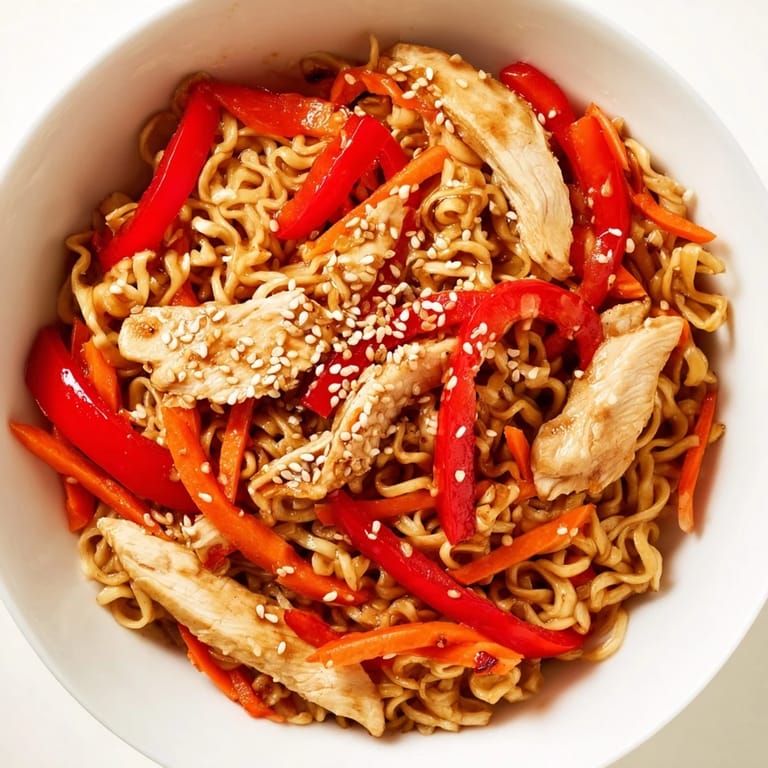
Save The smell of ginger hitting hot oil always pulls me back to that cramped studio apartment where counter space was a luxury and my wok doubled as my mixing bowl. I threw this together on a Wednesday night when takeout felt too expensive and my fridge was down to half a bell pepper, some wilted broccoli, and two packs of ramen I'd been hoarding. What started as desperation cooking turned into something I actually craved. Now it's my go-to when I want something fast, loud with flavor, and honest.
I made this for my neighbor once after she mentioned craving something spicy but not wanting to go out in the rain. She stood in my kitchen while I cooked, asking questions about every ingredient, and by the time we sat down to eat, she was already planning to make it herself that weekend. It's the kind of dish that makes people lean over their bowls and go quiet for a few minutes, then look up and ask if there's more. I've watched it win over picky eaters, impress dates, and save weeknights more times than I can count.
Ingredients
- Boneless, skinless chicken breasts: Slicing them thin is the secret to quick cooking and tender bites, and I always cut against the grain so they stay soft instead of chewy.
- Instant ramen noodles: Toss those seasoning packets and use the noodles as your base, they cook fast and soak up sauce better than you'd expect from something so cheap.
- Red bell pepper: It adds sweetness and a pop of color that makes the whole dish look alive, plus it stays crisp even after stir frying.
- Broccoli florets: They bring a little bitterness that balances the sugar in the sauce, and they hold up well under high heat without turning mushy.
- Carrot: Julienned thin so it cooks in the same time as everything else, and it adds a slight crunch that keeps the texture interesting.
- Green onions: I stir them in at the end so they stay bright and sharp, cutting through all that richness.
- Garlic and ginger: These two are the backbone of the dish, blooming in the oil for just thirty seconds releases their flavor without burning them.
- Soy sauce: It's your salt and your umami all in one, and I never skimp on it.
- Sriracha or chili garlic sauce: Start with one tablespoon and taste as you go, because once it's too spicy, there's no going back.
- Oyster sauce: It adds depth and a hint of sweetness that rounds out the heat, making the sauce taste more complex than the sum of its parts.
- Sesame oil: Just a tablespoon gives you that toasted, nutty aroma that makes the whole kitchen smell like a restaurant.
- Brown sugar: Two teaspoons balance the salt and spice, and it helps the sauce cling to the noodles instead of pooling at the bottom.
- Toasted sesame seeds: Optional but worth it for the crunch and the visual appeal, plus they add a little extra nuttiness.
Tired of Takeout? 🥡
Get 10 meals you can make faster than delivery arrives. Seriously.
One email. No spam. Unsubscribe anytime.
Instructions
- Prep the noodles:
- Boil the ramen according to the package directions, then drain and set them aside. I usually undercook them by a minute since they'll cook more in the wok later.
- Mix the sauce:
- Whisk together soy sauce, sriracha, oyster sauce, sesame oil, brown sugar, and water in a small bowl. Having this ready means you won't scramble later when everything is moving fast.
- Cook the chicken:
- Heat a tablespoon of vegetable oil in a large wok or skillet over medium high heat, then add the sliced chicken and stir fry until just cooked through, about four to five minutes. Pull it out and set it aside so it doesn't overcook.
- Bloom the aromatics:
- In the same pan, toss in the garlic and ginger and stir fry for thirty seconds until they smell incredible. This step is quick, so stay close and keep everything moving.
- Stir fry the vegetables:
- Add the bell pepper, broccoli, and carrot, then stir fry for three to four minutes until they're tender but still have some bite. I like them to keep their color and crunch.
- Bring it all together:
- Return the chicken to the pan, add the cooked noodles, and pour the sauce over everything. Toss well to coat and let it heat through for two to three minutes, stirring constantly.
- Finish and taste:
- Stir in the green onions, then taste and adjust the seasoning or spice level as needed. Sometimes I add a splash more soy sauce if it needs salt.
- Serve:
- Plate it hot and garnish with toasted sesame seeds and fresh herbs if you have them. It looks better and tastes even more vibrant.
 Save
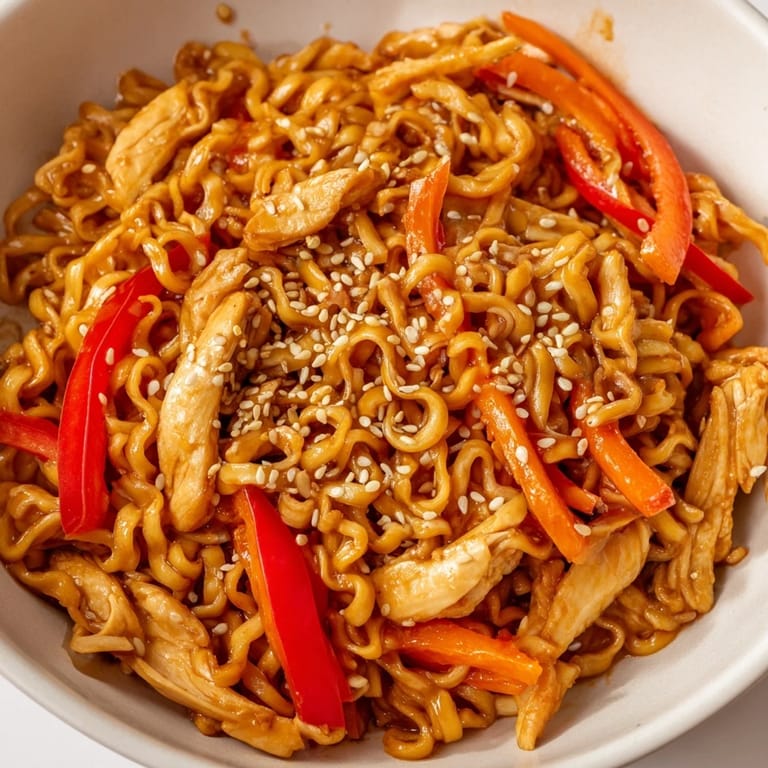
Save I remember serving this to my brother, who claimed he didn't like spicy food, and watching him go back for seconds without a word. By the end of the night, he was asking me to write down the recipe, which felt like a small victory. It's funny how a dish this simple can become the thing people remember about a meal, not because it's fancy, but because it's real and satisfying in a way that sticks with you.
Adjusting the Heat
Start with one tablespoon of sriracha and taste the sauce before you commit. If you want more heat, you can always add a pinch of red pepper flakes or an extra drizzle of chili garlic sauce at the end. I learned the hard way that it's easier to add spice than to fix a dish that's already too hot, and now I always keep a spoonful of brown sugar nearby just in case I go overboard.
Swapping Proteins
Chicken works great, but I've used firm tofu, shrimp, and even thinly sliced pork with equal success. If you go with tofu, press it well and cube it instead of slicing it, then pan fry it separately until it gets a little crispy on the edges before adding it back in. Shrimp cooks even faster than chicken, so watch it closely and pull it as soon as it turns pink.
Storage and Reheating
Leftovers keep in an airtight container in the fridge for up to three days, and they reheat beautifully in a hot skillet with a splash of water to loosen the noodles. I avoid the microwave because it makes the vegetables soggy and the noodles gummy, but if you're in a rush, use fifty percent power and stir halfway through.
- Add a drizzle of sesame oil when reheating to bring back that fresh, toasted aroma.
- If the noodles have absorbed too much sauce overnight, toss in a tablespoon of water or soy sauce to rehydrate them.
- Garnish with fresh green onions or cilantro right before serving to make leftovers feel like a new meal.
 Save
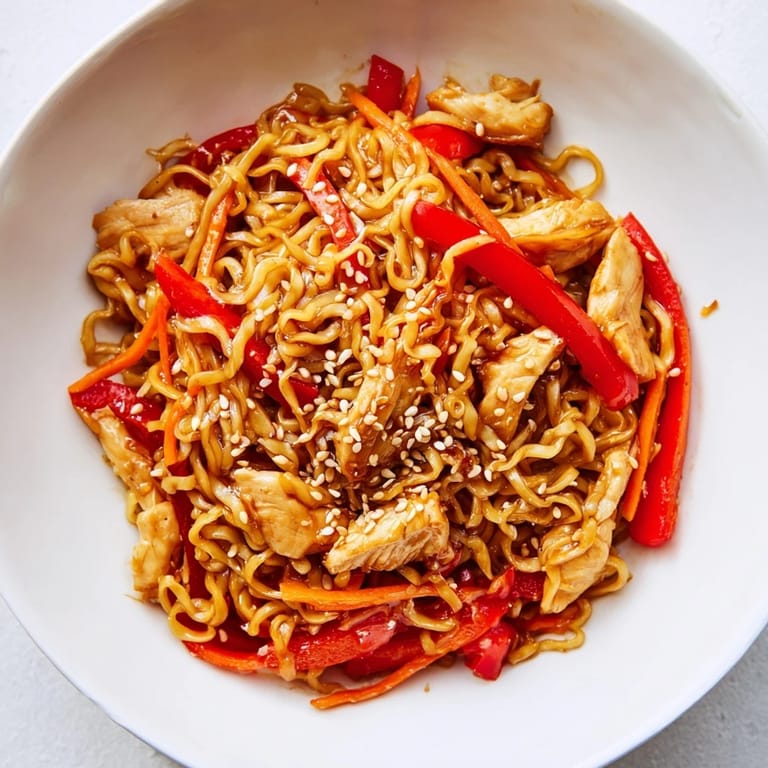
Save This dish has saved more weeknights than I can count, and it never gets old because it's fast, flexible, and always hits the spot. I hope it becomes one of those recipes you turn to without thinking, the kind that feels like muscle memory and tastes like home.
Recipe FAQs
- → Can I prepare the components ahead of time?
Yes, slice your chicken and vegetables in advance and store them separately in the refrigerator. Prepare the sauce ahead and keep it in a sealed container. Cook the noodles just before serving to maintain the best texture.
- → How do I adjust the spice level?
Start with the recommended 1 tablespoon of sriracha, then add more to taste. For milder heat, reduce the sriracha and skip red pepper flakes. For extra intensity, increase sriracha or add fresh chili peppers during cooking.
- → What can I substitute for chicken?
Tofu, shrimp, beef, or pork work wonderfully. For a vegetarian version, press firm tofu and cut into cubes, adding it at the same point you would add chicken. Adjust cooking times based on your protein choice.
- → Is there a gluten-free option?
Use gluten-free tamari instead of soy sauce and select gluten-free ramen noodles. Verify your oyster sauce is gluten-free by checking the label, as some brands contain wheat. Always cross-check all sauce ingredients.
- → What beverages pair well with this dish?
A crisp, cold lager complements the spicy elements beautifully. Jasmine tea provides a soothing contrast to the heat. For non-alcoholic options, try iced ginger ale or a cooling cucumber cooler.
- → Can I use fresh ramen noodles instead of instant?
Fresh ramen noodles work wonderfully and provide a better texture than instant. Cook them according to package directions and proceed with the stir-fry. You may need to use less sauce since fresh noodles absorb liquid differently.