 Save
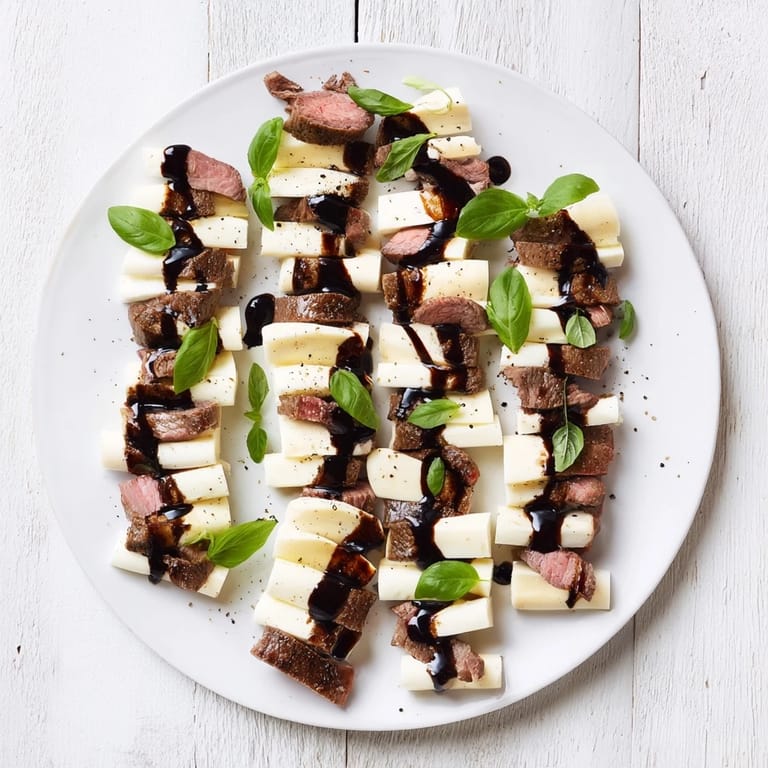
Save I discovered this dish by accident at a dinner party where I was frantically arranging appetizers on a platter. Someone had left me with beautiful strips of fresh mozzarella and feta, some gorgeous seared beef and chicken, and a bottle of aged balsamic. Instead of serving them separately, I started laying them down in alternating rows, almost like I was painting with food. The contrast was so striking—the cream-white cheese against the deep mahogany meat—that I drizzled the balsamic glaze across the top and stepped back. Everyone circled it immediately. That happy accident taught me that sometimes the simplest arrangements can feel the most elegant.
I remember making this for my sister's engagement celebration, and what stuck with me wasn't just how quickly it disappeared—it was watching people pause mid-conversation to savor each bite. A friend who claimed she didn't like balsamic vinegar went back three times. That's when I realized this dish works because it respects each ingredient instead of drowning them. The glaze is there to enhance, not to mask.
Ingredients
- Fresh mozzarella, sliced into 1 cm strips: This is your canvas—use the best quality you can find because it's meant to shine on its own. Fresh mozzarella should taste milky and delicate, never plastic-like.
- Feta cheese, sliced into 1 cm strips: The salty counterpoint that makes every other flavor pop. Its tanginess keeps the richness grounded.
- Beef tenderloin, cut into 1 cm strips: Tender enough that you don't need to chew forever, elegant enough for a refined appetizer. Let it come to room temperature before searing so it cooks evenly.
- Chicken breast, cut into 1 cm strips: Lean and quick-cooking, it absorbs the balsamic glaze beautifully without overwhelming the plate.
- Olive oil: Use good quality—it's part of the flavor story, not just a cooking medium.
- Balsamic vinegar: This is worth spending a bit extra on. Aged balsamic has depth; the cheap stuff tastes thin and sharp.
- Honey: Just enough to round out the vinegar's edges without making it candy.
- Fresh basil and cracked black pepper: These aren't afterthoughts; they're the final note that says someone cared enough to finish it right.
Tired of Takeout? 🥡
Get 10 meals you can make faster than delivery arrives. Seriously.
One email. No spam. Unsubscribe anytime.
Instructions
- Make the glaze:
- Pour your balsamic vinegar into a small saucepan with the honey and set it to a gentle simmer. Watch it bubble quietly for 8–10 minutes until it thickens into something that coats the back of a spoon—it should smell sweet and concentrated, almost like a reduction of itself. Let it cool completely so it's no longer steaming when you use it.
- Sear the meats:
- Season your beef and chicken generously with salt and pepper, then get your skillet smoking hot with olive oil. Work quickly—beef needs just 1–2 minutes per side so it stays tender inside, and chicken should take about the same. You're looking for a golden crust, not well-done meat. Set everything aside on a clean plate to rest.
- Build your stripes:
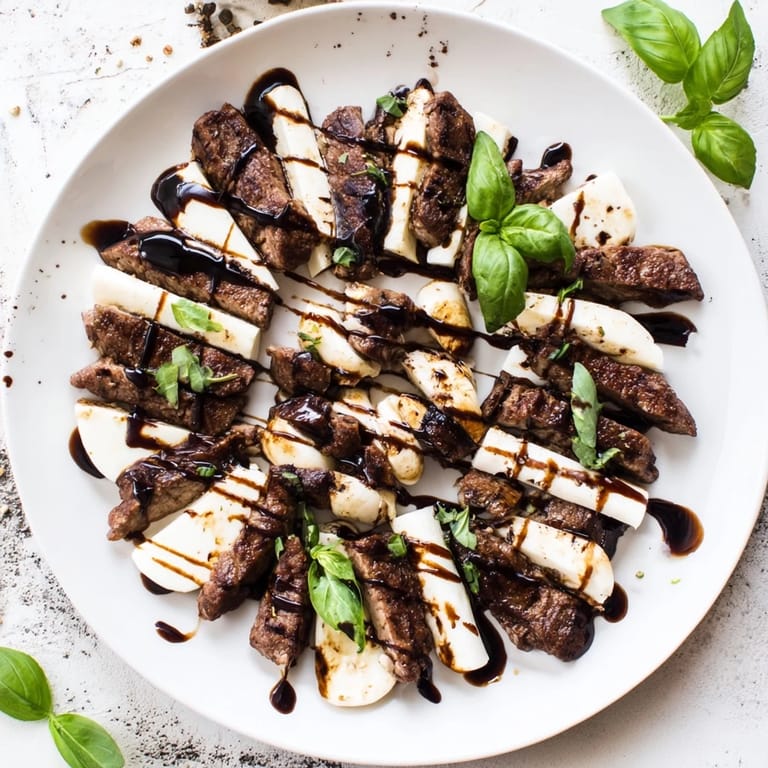
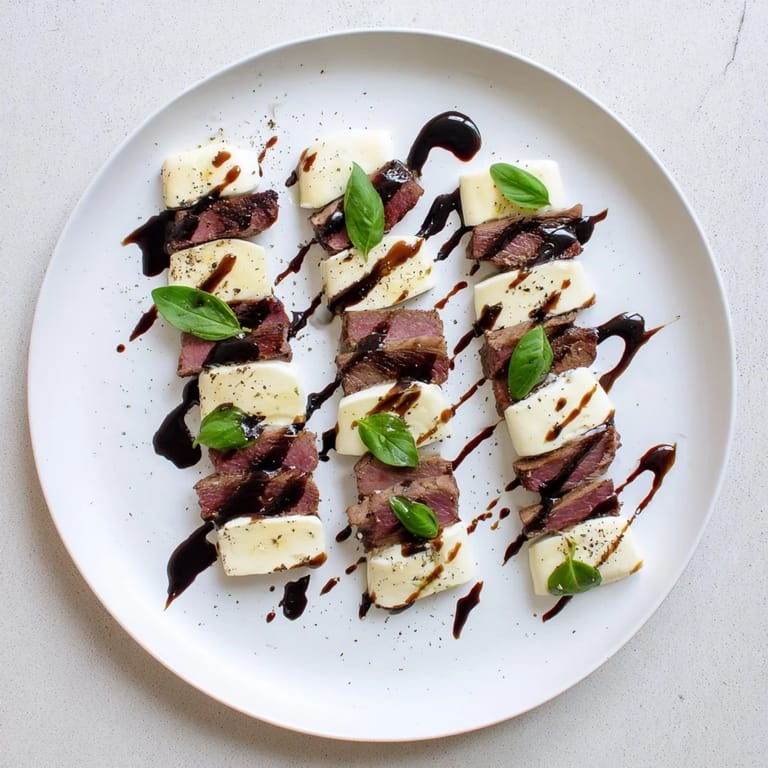
- Now comes the fun part. Lay down a strip of mozzarella, then beef, then feta, then chicken, then mozzarella again—keep going until your platter tells a story through its pattern. Stagger the rows slightly if you want it to feel less rigid and more organic.
- Glaze and garnish:
- Drizzle the cooled balsamic over the meat rows generously—it should pool slightly in places. Scatter fresh basil leaves across the top and finish with a grind of black pepper that looks like you meant to be generous with it.
- Serve immediately:
- This dish is best at room temperature, so don't refrigerate it. Bring it straight from your kitchen to the table while everything is still in its prime.
 Save
Save There was a moment at a small dinner I hosted when my grandmother—who is hard to impress when it comes to food—took a piece of this and just closed her eyes. She said it reminded her of a meal she had in Italy years ago, which meant everything to me. That's what happens when you respect your ingredients and let them speak.
Why This Works as an Appetizer
This dish sits in that perfect middle ground where it feels sophisticated enough for a formal event but casual enough to work at a backyard gathering. It's finished in 40 minutes, which means you can spend the rest of your evening with guests instead of still cooking. People can pick it up with their hands or use a fork—there's no wrong way to eat it.
Customizing Your Safari Stripes
I've made this a dozen different ways depending on what I had on hand and what story I wanted to tell. Sometimes I swap the beef for prosciutto, which adds a salty chewiness that's completely different but equally compelling. For a crowd with vegetarians, I've grilled thick slices of portobello mushroom and eggplant, and honestly, that version holds its own. The structure stays the same; only the players change.
The Small Details That Make the Difference
The magic here lives in the restraint. Too much glaze and you've made a mess. Too thick-cut ingredients and the whole thing feels clumsy. The right balsamic matters because it has complexity—it tastes like wine and caramel and time, not just sour and thin. And room temperature is key; cold mozzarella is dense and rubbery, but at room temperature it's creamy and soft against your tongue.
- Always taste the glaze after it cools because some batches are more intense than others, and you can adjust by adding a pinch more honey if needed.
- If your knife isn't sharp enough to slice the cheese cleanly, run it under hot water and dry it between cuts—a warm knife glides through mozzarella instead of tearing it.
- Prep everything an hour or two ahead, but only assemble it right before serving so the flavors stay bright and the textures stay distinct.
 Save
Save This appetizer is proof that you don't need a complicated recipe or hours of work to create something memorable. Sometimes the best meals happen when you trust good ingredients and let them shine.
Recipe FAQs
- → How do you prepare the balsamic glaze?
Simmer balsamic vinegar and honey over medium heat until thick and syrupy, then let it cool before drizzling.
- → Can I substitute the meats with other proteins?
Yes, prosciutto or smoked turkey can replace the beef and chicken for different flavors.
- → Is there a vegetarian alternative for Safari Stripes?
Grilled eggplant or portobello mushroom strips can be used instead of meats for a vegetarian version.
- → What is the best way to arrange the cheese and meat strips?
Arrange sliced cheese and cooked meat strips alternately in rows to create the signature striped appearance.
- → What accompaniments pair well with this dish?
A crisp Sauvignon Blanc or a light Pinot Noir complements the creamy cheeses and balsamic glaze beautifully.