 Save
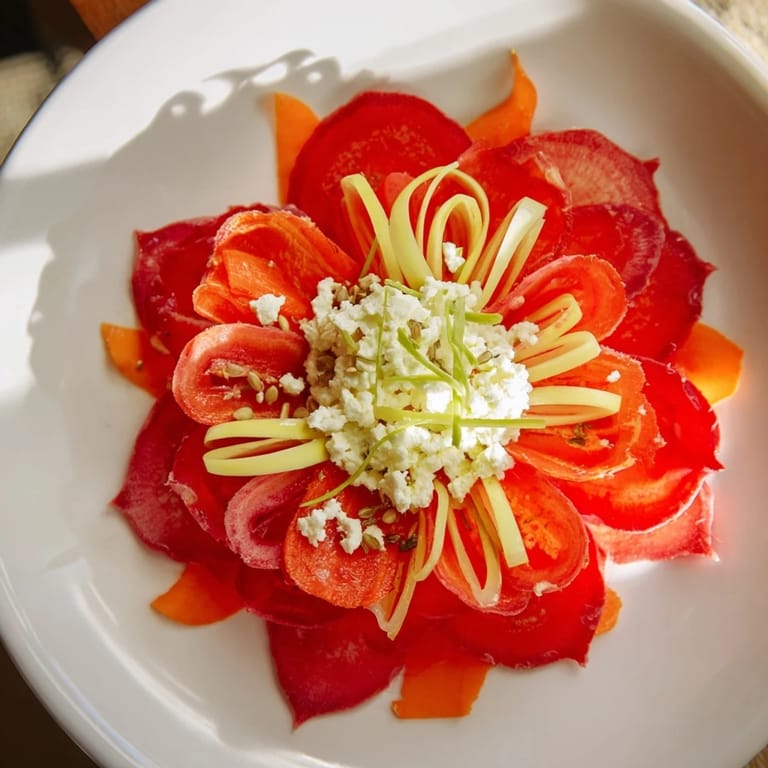
Save I still remember the afternoon I discovered this dish at a small farmers' market in Provence. A chef was arranging vegetables with such deliberate care, creating this perfect sunburst that made me stop mid-step. She caught me staring and smiled, explaining how she learned the technique from her grandmother who believed food should nourish both the belly and the soul. That day, I understood that some dishes transcend taste—they're about creating moments of beauty on the table.
My favorite memory is bringing this to a potluck where everyone else brought the expected casseroles and pasta. When I set it down in the center of the table, the room literally went quiet. Not in a judgmental way—but in that moment where people realize they're looking at something genuinely special. By the end of the night, three people asked for the recipe, and one friend said it was the first time a salad had made her feel like someone truly cared about impressing her.
Ingredients
- Golden beet: The earthy sweetness becomes your foundation color, and sliced thin, it stays tender without any cooking. I learned to wear gloves because they stain everything magenta.
- Red beet: This creates the dramatic contrast that makes the sunburst sing. The deep burgundy against the yellow is where the magic happens visually.
- Zucchini: Your blank canvas vegetable that adds freshness and a delicate pale green. It absorbs the dressing beautifully without falling apart.
- Yellow squash: The bright cheerful element that bridges your warm and cool colors. Slice it at the exact same thickness as the zucchini or your pattern loses its rhythm.
- Watermelon radish: If you can find it, this is the secret ingredient that makes people gasp. The pink and white concentric rings are nature's own geometry lesson.
- Carrot: The golden-orange thread that ties warm colors together. A mandoline is genuinely worth using here because uniform slices make the difference between rustic and refined.
- Goat cheese: Creamy and slightly tangy, it becomes the flavor anchor in the center. The crumbled texture adds a lovely contrast to all those smooth vegetables.
- Crème fraîche: This is what makes the goat cheese spreadable without making it heavy. It's the whisper of richness that transforms the center from cheese to something luxe.
- Extra-virgin olive oil: Use your good oil here. The vegetables need to taste like themselves, and cheap oil will drown them out.
- Lemon juice: Fresh squeezed only—the brightness cuts through the richness and makes every vegetable pop with its own flavor.
- Honey: Just a touch to round the edges and give the dressing body without adding sugar that would make it syrupy.
- Chives: The final green note that says you cared enough to finish properly. Finely chopped so they distribute like confetti.
- Sesame seeds: Toasted first, so they release their nuttiness. They add a textural surprise with every bite.
- Edible flowers: Genuinely optional but if you can find them at your market, use them. They're the punctuation mark that says this was made with intention.
Tired of Takeout? 🥡
Get 10 meals you can make faster than delivery arrives. Seriously.
One email. No spam. Unsubscribe anytime.
Instructions
- Slice with intention:
- Lay out all your vegetables and slice each one as thinly as you can manage. If you have a mandoline, this is its moment to shine—it creates those paper-thin slices that make the dish feel refined. A sharp knife works too, just take your time. The thickness should be consistent within each vegetable, but they don't all need to match each other.
- Find your center:
- Take your large round platter and place that small bowl or ramekin right in the middle. This is your focal point, your sun. Step back and make sure the platter itself is clean and dry—any water or smudges will distract from what you're about to create.
- Begin the sunburst:
- Now comes the meditative part. Start with one vegetable type and fan the slices outward from that center point, overlapping each slice slightly so they cascade like rays of light. Watch how the colors speak to each other. I usually start with the darkest vegetable first, then move to medium tones, then brightest colors, creating a subtle gradient. Think of it as painting with food. Don't overthink it—nature made these colors, you're just arranging them.
- Create the rhythm:
- As you add each new vegetable, rotate around the circle so the pattern mirrors itself. This is where the symmetry becomes meditative. You'll find yourself adjusting, stepping back, noticing which color wants to go where. This is the part people get lost in—in the best way.
- Prepare the center treasure:
- In a small bowl, fold together the crumbled goat cheese and crème fraîche until it's a soft, spreadable consistency. Now remove that central bowl or ramekin—this is the moment of reveal. Fill that empty circle with your cheese mixture, which will be the creamy, tangy heart of the whole arrangement.
- Make the liquid gold:
- Whisk together your olive oil, fresh lemon juice, honey, and a pinch of salt and pepper. Taste it—it should be balanced between bright and rich. Drizzle it evenly over the vegetables, letting it pool slightly in the center and cascade across the sunburst.
- The final flourish:
- Scatter the chopped chives across the whole thing like you're sprinkling wishes. Then add the toasted sesame seeds, letting them catch the light. If you have edible flowers, place them like little jewels in the spaces between colors. Step back and admire what you've made.
 Save
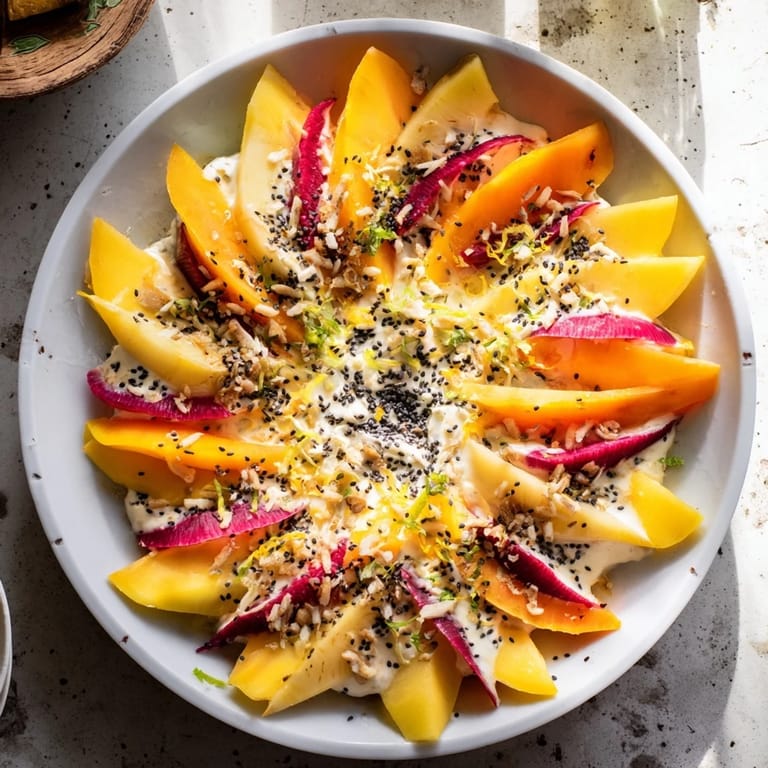
Save What I love most is that this dish does something rare: it makes people put their phones down and just look. My grandmother came to dinner once when I made this, and she spent five minutes studying the pattern before eating a single slice. Afterward, she said it reminded her of stained glass windows she saw in Italy as a girl. Sometimes the most meaningful meals aren't about how they taste—they're about the moment they create.
The Art of Arrangement
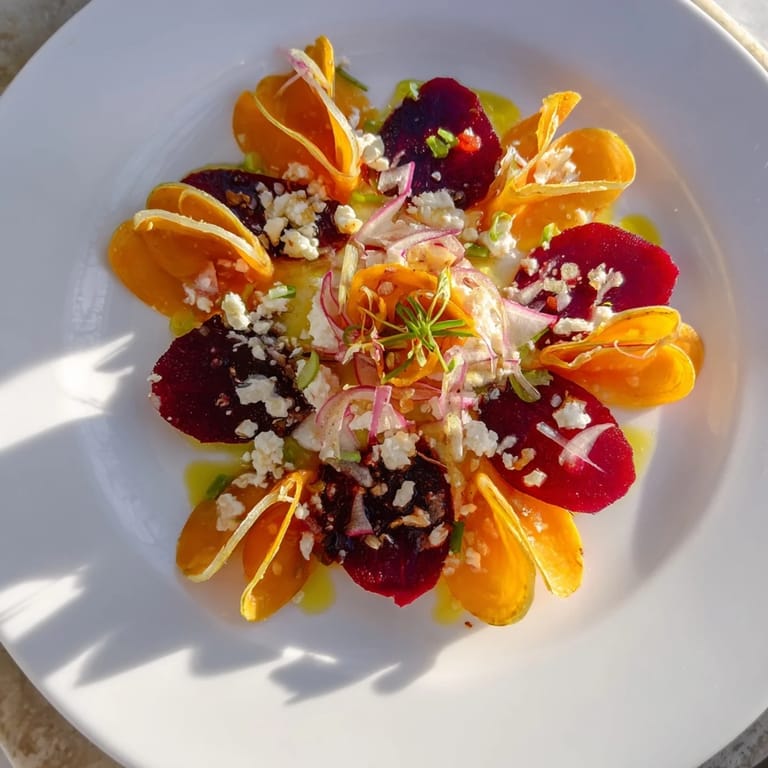
The sunburst isn't just decoration—it's about understanding how colors interact with each other. The golden beets warm up the zucchini's pale green. The red beets make the carrots sing. The watermelon radish sits there like a secret, with its own internal pattern echoing the larger pattern you're creating. Once you understand this, you'll start seeing every plate of food as an opportunity to arrange, to balance, to create something that feels intentional rather than accidental.
Making It Your Own
This is the kind of recipe that invites improvisation. Late summer when your garden is overflowing? Add paper-thin cucumber slices or shaved fennel. Winter? Thin slices of roasted beets take on a different character. The shape of the sunburst is rigid, but the vegetables within it are flexible. I've made versions with feta instead of goat cheese, with a balsamic vinegar twist to the dressing, with walnuts instead of sesame seeds. Each version tells a different story about the season and what moved you in the market that day.
Pairing and Presentation
This dish deserves to be the star of the table, so give it space. Serve it as the first course before something more substantial, or make it the centerpiece of a light lunch. It pairs beautifully with a crisp white wine—something with bright acidity like Sauvignon Blanc or a Pinot Grigio. The key is not letting it get crowded by other flavors. Sometimes I'll serve it with warm crusty bread on the side, because people want to soak up that dressing and it feels almost wrong not to offer them the chance to.
- Use your largest, most beautiful platter—this deserves to be seen from all angles as it comes to the table
- If you're making it more than an hour ahead, cover it loosely with plastic wrap and keep it in a cool place, but uncover it at least 15 minutes before serving so the vegetables aren't chilled
- Have your camera ready because your guests will want to photograph this before they eat it, and honestly, let them—some food is meant to be remembered twice
 Save
Save Make this dish when you want to remind someone—or yourself—that you care about beauty. That's really what it is: a love letter made of vegetables.
Recipe FAQs
- → What tools are best for slicing the vegetables thinly?
A sharp knife or mandoline slicer is recommended to achieve even, paper-thin vegetable slices necessary for the sunburst effect.
- → Can I substitute the goat cheese with other cheeses?
Yes, ricotta or feta can be used as alternatives depending on preference and dietary needs.
- → How do I create the radial symmetry arrangement?
Place a small bowl at the center of your platter as a guide, then fan sliced vegetables outward in alternating colors and shapes, overlapping slightly to form concentric circles before removing the bowl.
- → What is a suitable dressing for this dish?
A light dressing made from extra-virgin olive oil, freshly squeezed lemon juice, honey, salt, and pepper harmonizes with the vegetables and cheese.
- → Are there allergen concerns to consider?
This dish contains dairy from goat cheese and crème fraîche, and sesame seeds used as garnish may also cause allergies.
- → Can I add other vegetables to enhance color?
Yes, heirloom carrots or thinly sliced cucumber can be added for extra vibrancy and texture.