 Save
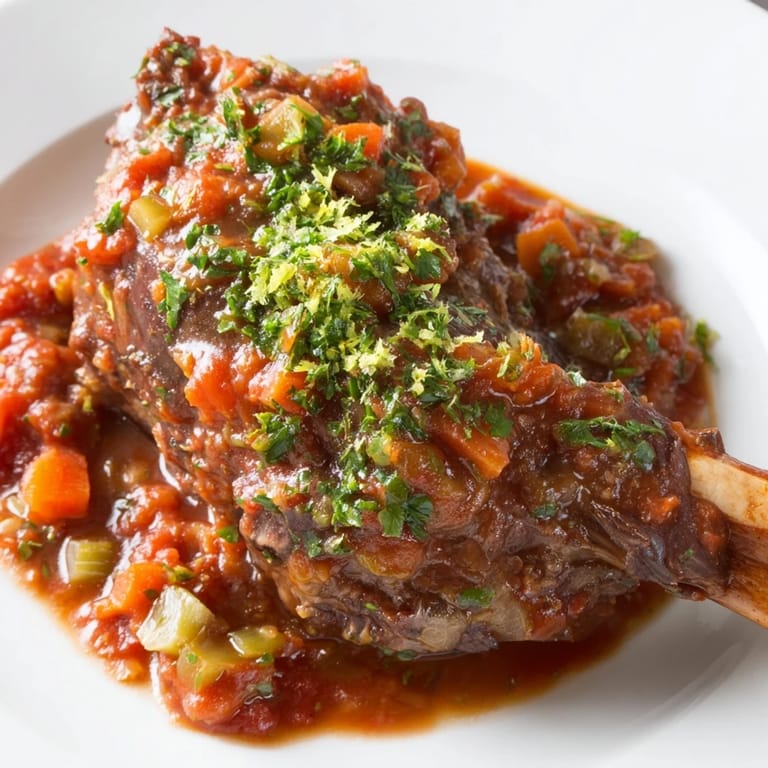
Save The first time I truly understood what osso buco meant—hollow bone—was watching my nonno cradle a veal shank like it was a treasure, turning it slowly over the flame to catch the light. He explained how the marrow inside would become silk, how patience would transform something so humble into something worth savoring. That lesson stayed with me, and now whenever I make this dish, I'm back in that kitchen watching his hands work.
I made this for a dinner party once when I was trying to prove something I no longer remember, and what I actually proved was that good food doesn't announce itself with fuss. My guests got quiet when they tasted it, the kind of quiet that means they're thinking about something other than conversation. That's when I realized osso buco isn't really about technique—it's about giving yourself permission to slow down.
Ingredients
- Veal shanks (4, about 350g each, cross-cut, bone-in): The crosscut exposes the marrow, which is where the magic happens; ask your butcher to cut them about 1.5 inches thick so they braise evenly.
- Salt and freshly ground black pepper: Don't skip the fresh grinding—pre-ground pepper tastes tired, and this dish deserves better.
- All-purpose flour (1/3 cup/40g): A light dredge creates texture and helps develop the fond; gluten-free flour works just as well.
- Olive oil and unsalted butter (2 tbsp each): The combination gives you the browning power of butter with the stability of oil.
- Onion, carrots, celery (1 large, 2 medium, 2 stalks): This is your soffritto base—the vegetables should be roughly the same size so they soften together.
- Garlic cloves (4, minced): Add it to the soffritto, not earlier, so it doesn't burn and turn bitter.
- Dry white wine (1 cup/240ml): The acid cuts through the richness and adds brightness; use something you'd actually drink.
- Diced tomatoes (1 can, 400g with juice): The juice is essential for building the sauce, so don't drain them.
- Beef or veal stock (1.5 cups/360ml): Homemade is better, but good quality store-bought works—avoid anything too salty.
- Tomato paste (2 tbsp): A moment in the pan with the vegetables concentrates its flavor and removes any metallic edge.
- Bay leaves and dried thyme (2 leaves, 1 tsp): These anchor the braising liquid without overpowering the delicate veal.
- Lemon zest (from 1 lemon, divided): Half goes in the braise to add brightness, the rest waits for the gremolata finish.
- Fresh flat-leaf parsley (2 tbsp, finely chopped): This is your gremolata, the moment the dish wakes up; always use fresh.
Tired of Takeout? 🥡
Get 10 meals you can make faster than delivery arrives. Seriously.
One email. No spam. Unsubscribe anytime.
Instructions
- Prepare and season the veal:
- Pat your shanks dry with paper towels—moisture is the enemy of browning. Season them generously with salt and pepper, then give each one a light dredge in flour, shaking off the excess.
- Brown the shanks:
- Heat your olive oil and butter together until the butter foams and the oil shimmers, then lay the shanks in carefully. You'll hear them sizzle, which is exactly what you want. Give them 3–4 minutes per side without moving them around; let the heat do the work. They should be deep golden, not pale.
- Build the soffritto:
- Push the shanks aside, add your onion, carrots, celery, and garlic to the same pot. The fond stuck to the bottom is flavor waiting to be captured. Sauté everything until it softens and the onion turns translucent, about 6 minutes.
- Deepen with tomato paste:
- Stir in your tomato paste and let it sit in the heat for a minute, just long enough to darken slightly and lose its raw edge.
- Deglaze with wine:
- Pour in your white wine, scraping the bottom with a wooden spoon to lift all those caramelized bits. Let it bubble for a moment, reducing slightly, then the sharp alcohol smell will soften.
- Build the braising liquid:
- Add your tomatoes with their juice, stock, bay leaves, thyme, and half your lemon zest. Stir everything together and taste it—it should be savory and slightly bright, a base you'd want to sip.
- Return the shanks and braise:
- Nestle the shanks back in, spooning the liquid over them so they're mostly submerged. Bring everything to a gentle simmer on the stovetop, then cover and transfer to a 160°C (325°F) oven for 2 hours, or until the veal is so tender a fork slides through with no resistance.
- Make the gremolata:
- While the shanks braise, finely chop your parsley, mince a single garlic clove, and combine with the reserved lemon zest. This fresh mixture is what brings everything to life at the end.
- Finish the dish:
- Remove the shanks to a platter and skim any excess fat from the sauce. If you like it thicker, let it simmer uncovered for a few minutes. Spoon the sauce over the shanks, scatter the gremolata across the top, and serve.
 Save
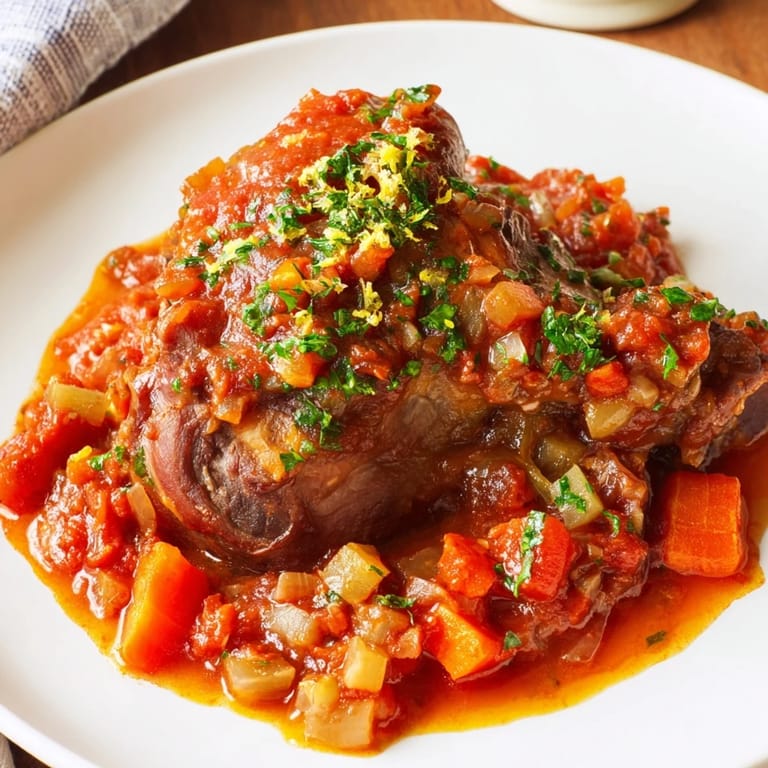
Save One winter evening, I served this to a friend who'd been having a hard time, and she used a small spoon to extract the marrow from the bone and spread it across a piece of bread. She closed her eyes like she'd tasted something sacred. That's when I understood that osso buco is less about cooking technique and more about giving someone comfort in a bowl.
Why This Dish Matters
Osso buco is Milanese through and through, born from the idea of using every part of the animal and transforming what might seem like an afterthought into something elegant. It's braising at its most honest—low heat, time, and a few good ingredients doing all the heavy lifting. When you make it, you're not following a trend; you're cooking something with real history.
The Gremolata Moment
The gremolata is the spark that ignites everything else. Without it, the dish is rich and soft. With it, suddenly you taste brightness, energy, the lemon cutting through the deep umami of the braise. It's the difference between a good meal and one that stays with you. This is why you make everything from scratch—that final moment when fresh parsley and zest transform what came before.
Serving and Variations
This dish begs for something creamy alongside it—risotto alla Milanese with its saffron glow, or soft polenta, or mashed potatoes silky with butter and cream. The sauce needs something to cling to, to turn into its own moment on the plate. Think about what your guests love, and choose the side that lets them focus on the veal and that precious marrow.
- If veal isn't available or feels too precious, beef shanks work beautifully and only need an extra 15–20 minutes in the oven.
- Make this a day ahead and reheat it gently—the flavors deepen overnight, and you'll have more time to enjoy your guests.
- The gremolata should be made fresh and scattered on at the very last moment, so it stays bright and alive.
 Save
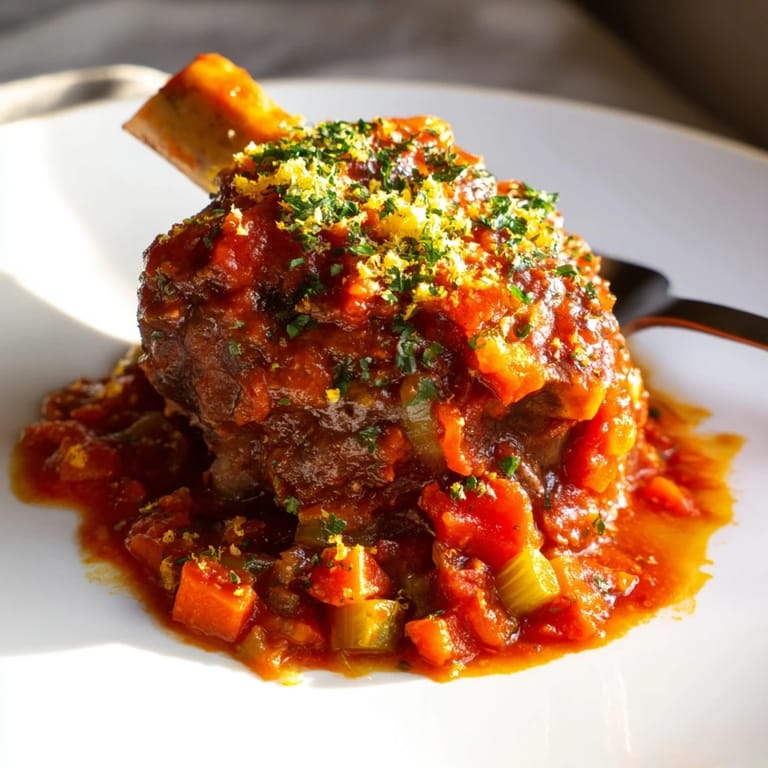
Save Every time I make osso buco, I think about my nonno's hands and how he taught me that some meals are about patience, not perfection. This is one of those meals.
Recipe FAQs
- → What cut is best for this dish?
Veal shanks, cross-cut with bone-in, offer ideal tenderness and flavor when braised slowly.
- → Can I substitute veal with another meat?
Beef shanks can be used instead, but cooking times may need adjustment to ensure tenderness.
- → How is the gremolata prepared?
Fresh parsley, minced garlic, and lemon zest are combined to create the gremolata, which adds a fresh, zesty finish.
- → Is gluten-free preparation possible?
Yes, use gluten-free flour for dredging to accommodate gluten sensitivities.
- → What side dishes pair well?
Saffron risotto, polenta, or creamy mashed potatoes complement the rich flavors perfectly.
- → How long does the braising take?
A slow braise at 160°C/325°F for approximately 2 hours tenderizes the shanks thoroughly.