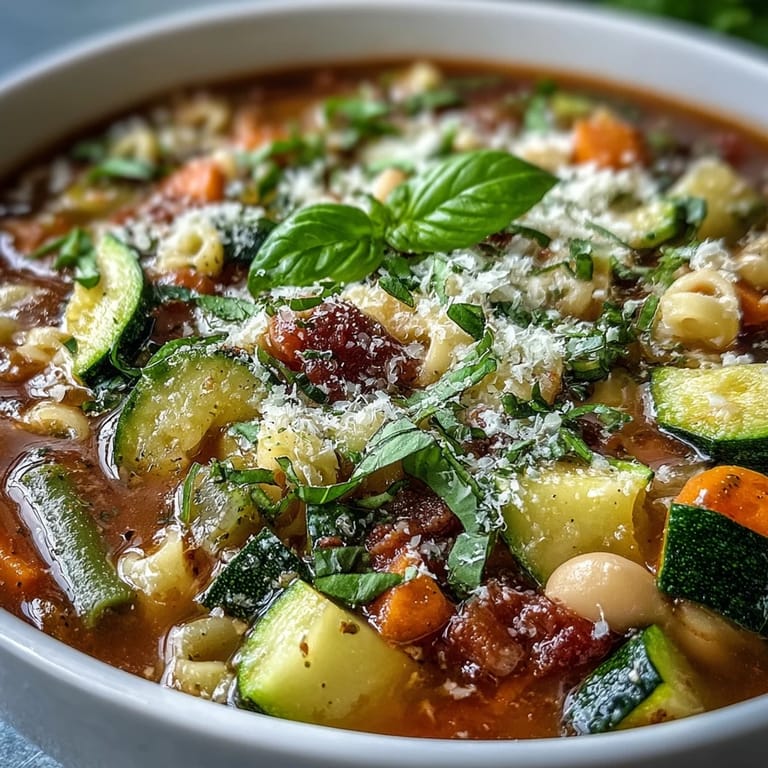
 Save
Save My neighbor Maria taught me that minestrone isn't about following a recipe—it's about whatever vegetables are sitting on your counter and the confidence to throw them in a pot. Years ago, she'd invite me over on random Tuesday afternoons, and we'd stand in her kitchen while she'd gesture at her vegetable drawer like it was a treasure chest, deciding what the soup would become that day. The smell of sautéed garlic and onion hitting hot olive oil was her signal that something good was about to happen. I've since learned that this soup is less about precision and more about intuition, which somehow makes it feel less intimidating and infinitely more rewarding.
I made this soup for my partner during his first flu, and watching him sit at the kitchen table with a bowl warming his hands while steam rose into his face reminded me that food is sometimes medicine for more than just hunger. He didn't eat much, but he kept coming back for another spoonful, and by the third bowl, he was smiling again. That's when minestrone became my go-to remedy soup, the one I make when someone needs comfort in a bowl.
Ingredients
- Olive oil: Use good quality oil—this isn't the time to be cheap, since it's building the flavor foundation from the very first sauté.
- Onion, garlic, carrots, and celery: These four are the holy trinity plus one, the aromatic base that makes everything taste like it's been simmering for hours.
- Zucchini, potato, and green beans: Each vegetable brings different texture and substance, so don't skip them thinking they're interchangeable.
- Diced tomatoes with juices: The liquid in the can matters as much as the tomatoes themselves, so drain nothing away.
- Vegetable broth and water: Broth carries flavor, water allows the vegetables to shine—use both for balance.
- Cannellini beans: Creamy, mild, and they soften into the broth like little clouds of comfort.
- Small pasta: Ditalini or elbow macaroni work because they cook quickly and don't overwhelm the vegetables.
- Dried oregano and basil: These go in at the beginning to infuse the entire broth, while fresh herbs finish the dish with brightness.
- Bay leaf: It's subtle but essential—remove it before serving or you'll bite into it and understand why people warn you about these things.
- Fresh parsley and basil: Added at the end so they stay vibrant and don't turn into shadowy ghosts of herbs.
- Parmesan cheese: Optional but transformative, turning a simple bowl into something that feels a little more special.
Tired of Takeout? 🥡
Get 10 meals you can make faster than delivery arrives. Seriously.
One email. No spam. Unsubscribe anytime.
Instructions
- Start with the aromatics:
- Heat olive oil over medium heat and add your chopped onion and garlic, listening for that gentle sizzle that tells you it's hot enough. Within 2–3 minutes, the kitchen will smell incredible and the vegetables will turn translucent, which is your signal to move forward.
- Build with texture:
- Add carrots, celery, zucchini, potato, and green beans, then let them soften for 5–6 minutes while you stir occasionally. This sauté step is where you're developing flavor, not just softening vegetables, so don't rush it.
- Bring everything together:
- Pour in the tomatoes with their juices, then the broth and water, and add all your dried herbs and seasonings. The moment it comes to a boil is when you know the real cooking is beginning.
- Let it simmer:
- Lower the heat, cover the pot, and let it bubble gently for 15 minutes while the broth becomes infused with flavor from the vegetables. You can step away here, which is one of the beautiful parts of soup.
- Add beans and pasta:
- Uncover and stir in your beans and pasta, then simmer uncovered for 10–12 minutes until everything is tender. The pasta will absorb some broth as it cooks, making the soup thicker and more cohesive.
- Finish with fresh herbs:
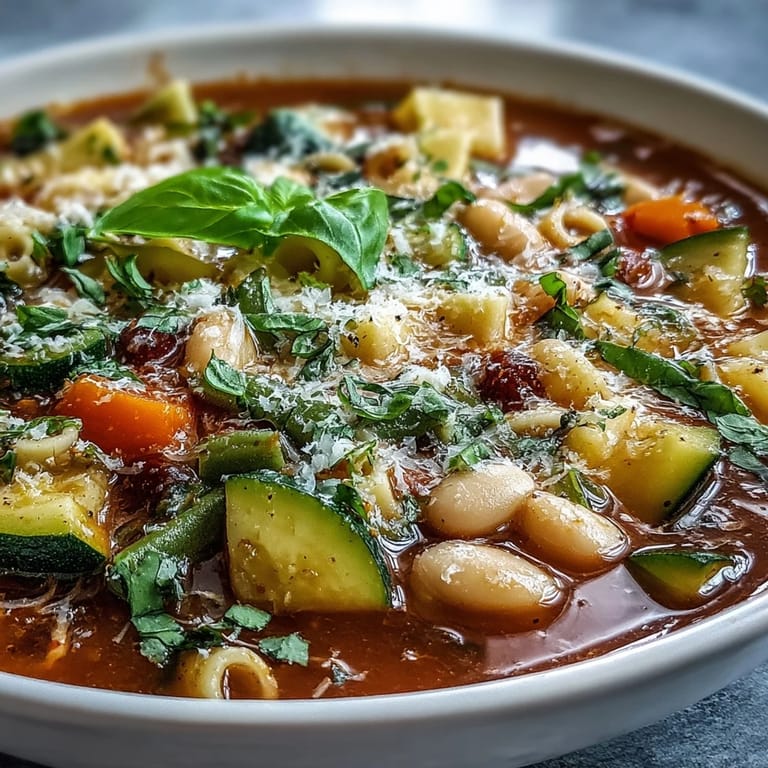
- Remove the bay leaf and stir in your fresh parsley and basil, tasting as you go and adjusting salt and pepper. Fresh herbs at the end taste completely different from dried herbs, brighter and more alive.
 Save
Save One winter evening, I served this to a group of friends who'd been snowed in at my house, and as the storm continued outside, the kitchen grew warmer and more alive with conversation. Somehow, a pot of minestrone became the thing that made everyone relax, like we'd stopped worrying about being stuck and started appreciating that we were stuck together, with good soup between us.
Making It Your Own
Minestrone is a canvas more than a strict recipe, which is what makes it feel so personal once you've made it a couple of times. In summer, I load it with zucchini and fresh spinach; in winter, I add kale and extra potato for earthiness. The vegetables should change with your market, your garden, and what's been sitting in your crisper drawer the longest.
The Bread Pairing Question
Crusty Italian bread isn't optional if you're thinking about this properly—it's the thing you use to wipe the bottom of the bowl once you've eaten all the soup, and that ritual is part of why minestrone feels like ceremony instead of just dinner. A glass of Chianti alongside doesn't hurt either, though honestly, a simple red wine or even just water works when the soup is this good.
Storage and Leftovers
Minestrone actually improves after a night in the refrigerator, when the flavors have melded and the broth deepens. It keeps for about four days refrigerated, and it freezes beautifully for up to three months if you want to be ahead of the game.
- Store it in glass containers if you can, since the acidity of the tomatoes can interact with plastic over time.
- If you're freezing, leave a little space at the top of the container since liquids expand.
- Reheat gently on the stovetop with a splash of water or broth to restore the original consistency.
 Save
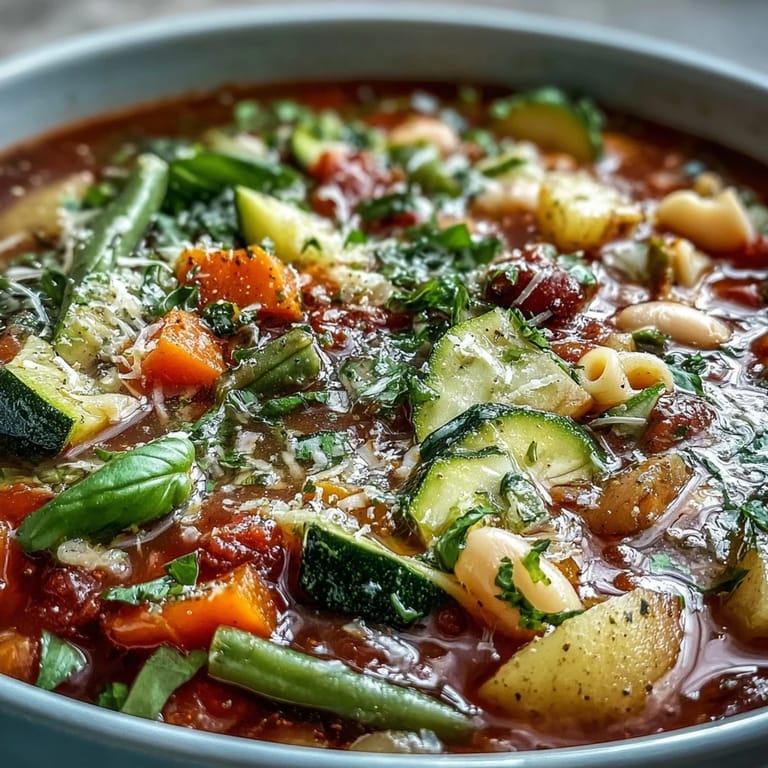
Save This soup became my answer to a lot of questions—what to bring to someone recovering, what to cook when I'm not sure what I'm making, what to prepare when I want to feel capable in the kitchen. It's honest food that asks for your attention but doesn't demand perfection.
Recipe FAQs
- → What vegetables work best in minestrone?
Traditional minestrone includes carrots, celery, onions, zucchini, green beans, and potatoes. You can easily adapt based on seasonality—try adding spinach, kale, cabbage, or diced tomatoes when available. The key is using fresh, quality vegetables that hold their shape during simmering.
- → Can I make minestrone ahead of time?
Absolutely. Minestrone actually develops deeper flavors when made ahead. The broth absorbs more herb and vegetable essence after sitting overnight. Store cooled soup in the refrigerator for up to 3 days. Add a splash of water when reheating, as the pasta will continue absorbing liquid.
- → What pasta should I use?
Small pasta shapes work best—ditalini, elbow macaroni, small shells, or tubetti. These shapes are perfect for spooning and hold up well during simmering. If planning to freeze portions, consider cooking pasta separately and adding when reheating to prevent it from becoming too soft.
- → How can I add more protein?
For extra protein, add another can of cannellini or kidney beans. Some traditional versions include a small amount of pancetta or bacon cooked with the onions at the start. You can also stir in a parmesan rind during simmering for subtle richness and depth.
- → Is minestrone freezer-friendly?
Yes, though the pasta texture may change slightly after freezing. For best results, cool completely before transferring to airtight containers. Freeze for up to 3 months. Thaw overnight in the refrigerator and reheat gently, adding more broth or water if needed.
- → What should I serve with minestrone?
Crusty Italian bread is perfect for soaking up the flavorful broth. A simple green salad with vinaigrette balances the heartiness. For wine, pair with a medium-bodied Chianti or Sangiovese. A light drizzle of good olive oil just before serving adds a lovely finishing touch.