 Save
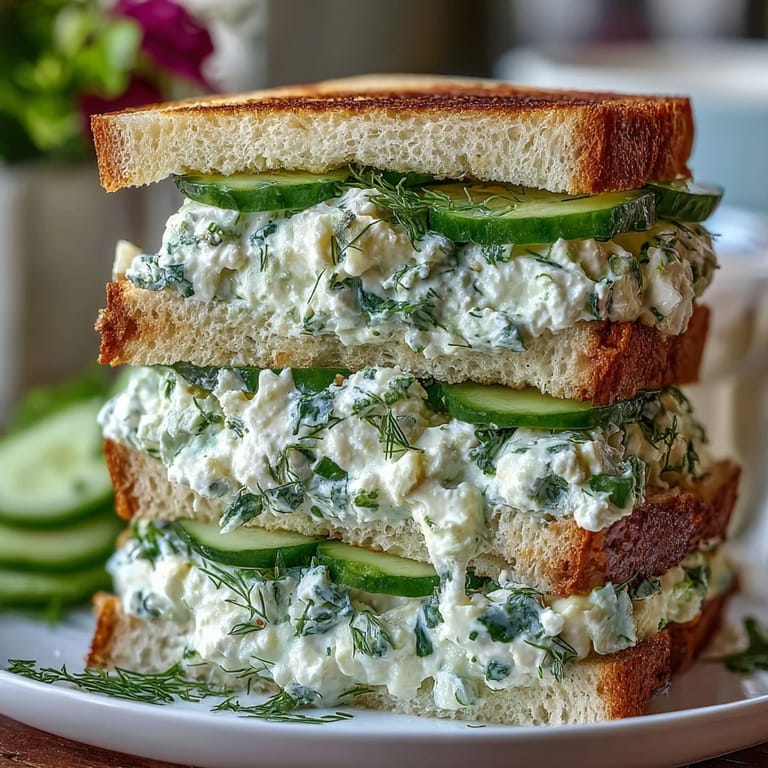
Save My grandmother kept a clipping of this recipe tucked in her recipe box for forty years, wrinkled and splattered from countless Derby day preparations. She'd hum while grating cucumbers, her kitchen suddenly smelling bright and herbaceous in that specific way that meant something elegant was coming together. These sandwiches were her secret weapon for making afternoons feel like occasions, whether we were watching the race or just pretending to celebrate something worth celebrating. The pale green spread caught everyone off guard—they'd expect something heavy, but instead found themselves reaching for another triangle before they'd finished the first.
The first time I made these for my book club, I wasn't expecting them to matter as much as they did. Someone had mentioned feeling tired, another had a difficult week, and somehow these delicate little sandwiches became the thing that made everyone linger longer at the table, talking about nothing important and everything that mattered. That's when I understood they weren't just food—they were permission to slow down together.
Ingredients
- English cucumber (1 large, peeled and seeded): The long thin ones water out less than regular cucumbers, but you still need to squeeze that grated cucumber like you mean it or the whole spread turns into soup.
- Cream cheese (8 oz, softened): Cold cream cheese will fight you and create lumps, so leave it on the counter for thirty minutes and you'll forgive yourself later.
- Mayonnaise (2 tablespoons): Acts as a binder and adds a subtle richness that makes people wonder what the secret ingredient is (it's this).
- Fresh dill (2 tablespoons, finely chopped): Don't use the dried stuff—the whole point is that bright, grassy flavor that tastes like spring thinks it's fancier than it is.
- Chives (1 tablespoon, finely chopped): A gentler onion note that doesn't overpower, just whispers in the background.
- Grated onion (1 tablespoon): Releases its moisture as it sits, so grate it fresh and don't skip this—it's the backbone of the flavor.
- Salt and white pepper (1/4 teaspoon and 1/8 teaspoon): White pepper keeps the spread pristine looking, but regular black pepper works if you don't mind the specks.
- Green food coloring (2-3 drops, optional): Traditionally these are pale green, but honestly they taste just as good without it—this is your call.
- White sandwich bread (12 slices with crusts removed): You need bread soft enough not to tear when you spread, sturdy enough not to fall apart from the moisture of the filling.
- Unsalted butter (2 tablespoons softened, optional): A thin layer prevents the bread from getting soggy, which means everything stays dignified on the plate.
Tired of Takeout? 🥡
Get 10 meals you can make faster than delivery arrives. Seriously.
One email. No spam. Unsubscribe anytime.
Instructions
- Wring out the cucumber like you're wringing out a secret:
- Grate the cucumber on the fine side of your grater, then gather it in a clean kitchen towel and squeeze, twist, and squeeze again until hardly any liquid drips out. This step decides whether your sandwiches stay elegant or get soggy.
- Build the green spread from the bottom up:
- In a medium bowl, combine the softened cream cheese, mayonnaise, dill, chives, grated onion, salt, and white pepper, stirring until smooth and creamy. Once that's done, fold in the wrung-out cucumber gently—you want flecks of green, not a puree.
- Add color if the mood strikes:
- If you're using the food coloring, add it now, just a couple drops, and stir until the spread turns that distinctive pale green. Taste it and adjust seasonings because salt and pepper are personal, and so is this.
- Prepare your bread canvas:
- Remove the crusts from your bread slices if you haven't already, then lightly butter one side of each slice if you're worried about sogginess (and you should be a little worried). This is optional but worth it if you're making these more than an hour before serving.
- Spread generously and stack:
- Take half your bread slices and spread a thick layer of the Benedictine mixture on each one—don't be stingy here because that's where all the flavor lives. Press the remaining bread slices on top, butter side down, so you've got bread and mixture and bread.
- Cut into elegant bites:
- Using a sharp knife and a gentle sawing motion, cut each sandwich into four pieces—rectangles if you're feeling traditional, triangles if you want to feel fancier. Wipe the knife between cuts so everything looks clean.
- Serve or hold with intention:
- Arrange the quarters on a serving platter and serve immediately while everything is at its crispest, or cover with a barely damp paper towel and plastic wrap and refrigerate until you're ready. They'll keep for a few hours this way, though they taste best within two hours.
 Save
Save My neighbor once brought these to a backyard gathering where I thought nobody was talking to anybody, and within minutes people were sharing them with each other, sharing bites, asking each other what they tasted. Food does that sometimes—it breaks something open that needs breaking.
The Kentucky Derby Connection
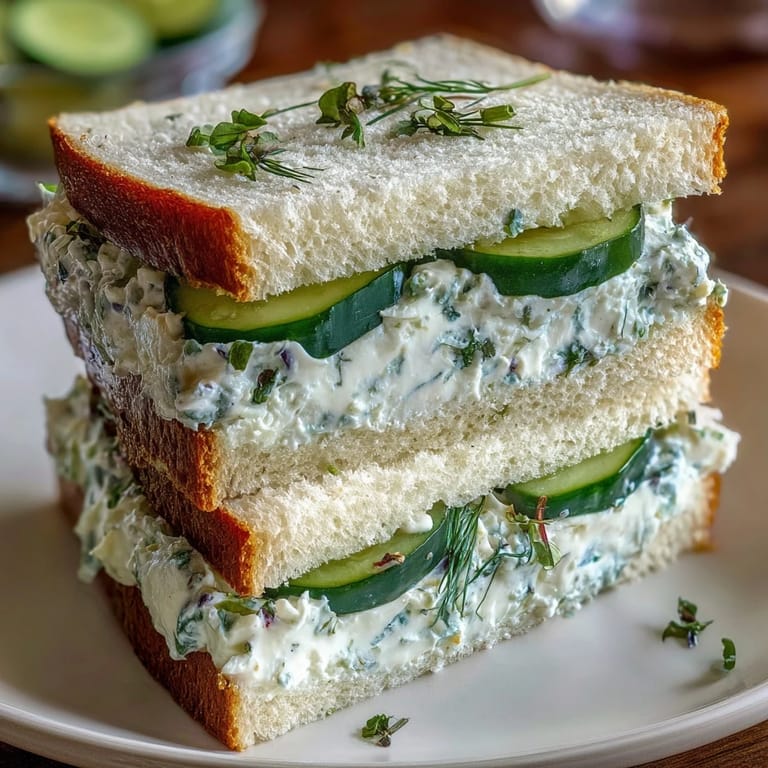
These sandwiches belong to a specific tradition of Southern hospitality that bloomed around the Kentucky Derby, where ladies in elaborate hats gathered to drink mint juleps and eat delicate things that took longer to prepare than to consume. Benedictine is actually the name of a Louisville restaurant where this recipe originated, and it spread through the South like any good secret shared at the right moment. Making them connects you to something bigger than a recipe—it's a small act of ceremony in everyday life.
Timing and Make-Ahead Magic
The best part about this recipe is that it bends to your schedule instead of the other way around. The spread keeps beautifully for a full day, which means you can make it while you're having your morning coffee, then assemble the sandwiches right before guests arrive when you'll feel most calm and composed. The uncut sandwiches will hold for a couple hours wrapped and refrigerated, but cut them closer to serving time so the bread stays crisp and the whole thing tastes like it was made moments before you offered it to someone.
Variations and Gentle Experiments
While this recipe is nearly sacred as it exists, kitchens are for gentle experimentation, and I've learned some variations that work if you're feeling playful. Whole wheat bread gives it an earthiness that surprises people, or rye bread if you want something with more personality. You can add a tiny pinch of lemon zest to the spread for brightness, or a whisper of fresh tarragon if dill feels too obvious, or paper-thin slices of radish layered in if you want something with a little bite.
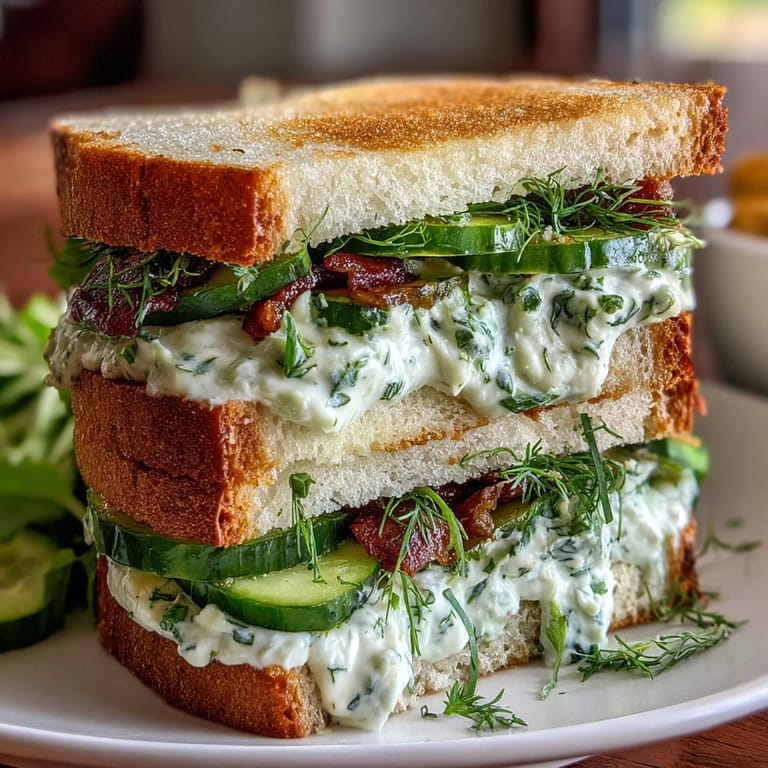
- Garnish the finished sandwiches with a single fresh dill frond or the thinnest cucumber slice for beauty and a hint of extra flavor.
- If you don't have fresh herbs, you've lost something important, so go get them—dried won't sing the same way.
- These taste best made with the freshest ingredients you can find, because when you have so few of them, each one matters.
 Save
Save These sandwiches have taught me that some of the most memorable meals aren't complicated—they're just made with attention and served with genuine care. Every time I make them, I think about my grandmother humming in her kitchen, about my book club lingering at the table, about all the moments that feel important because we decided they were.
Recipe FAQs
- → What type of bread works best for these sandwiches?
Soft white sandwich bread with crusts removed is traditional, but whole wheat or rye bread can be used for added flavor.
- → How do I prevent the sandwiches from becoming soggy?
Lightly butter one side of the bread slices before spreading the cucumber mixture to create a moisture barrier.
- → Can the cucumber spread be prepared in advance?
Yes, the spread can be made a day ahead and refrigerated to allow flavors to meld.
- → What gives the spread its traditional green color?
A few drops of green food coloring can be added for the classic look, though it is optional.
- → Are there any common allergens to be aware of?
This dish contains dairy, wheat, and eggs, so check labels if allergies are a concern.