 Save
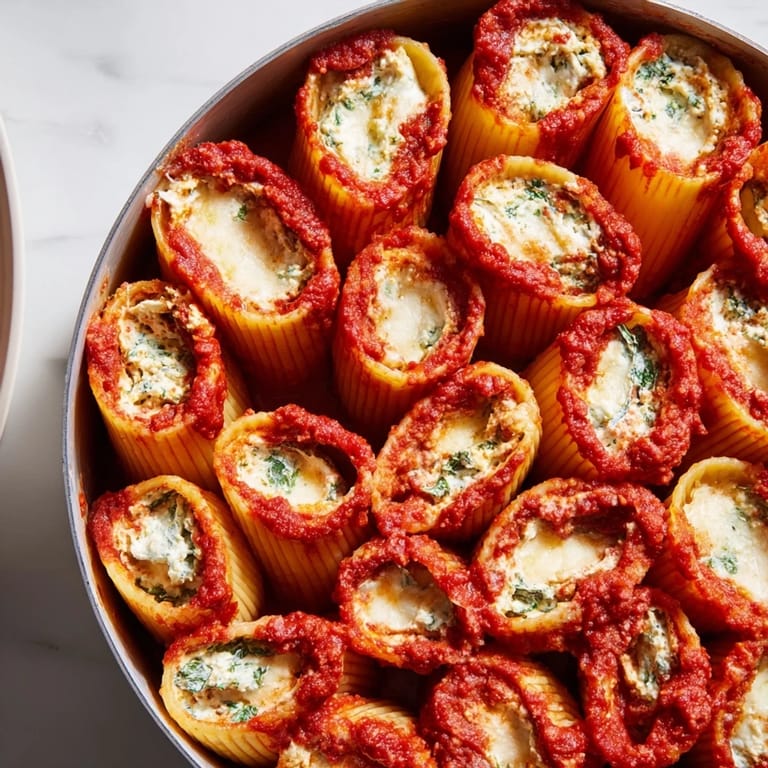
Save The first time I stood a tube of pasta upright like a tiny building, I felt a little silly—until the whole pan came together and suddenly looked like a honeycomb of golden cheese and sauce. It was one of those moments where presentation and comfort food collided in the best way, and I realized I'd stumbled onto something that made people pause mid-bite just to admire the plate. Rigatoni bake has that rare quality of being impressive without pretending to be fancy, honest Italian-American home cooking at its most beautiful.
I remember making this for a dinner party when someone asked what was for the main, and I almost hesitated to say pasta bake—that phrase can conjure tired office potlucks. But when I set the springform pan in the center of the table and ran a knife around the edge, watching it hold its shape perfectly, the whole mood shifted. The golden, bubbly top caught the candlelight, and suddenly the kitchen smelled like something people travel for.
Ingredients
- Rigatoni pasta, 500 g: The larger tubes are essential—they hold filling generously and stand upright without tipping. Undercooked pasta stays firm enough to support the weight, so aim for noticeably al dente.
- Ricotta cheese, 350 g: This is your base, creamy and mild, allowing the herbs and other cheeses to shine without competing flavors.
- Mozzarella, shredded for filling, 100 g: Low-moisture mozzarella melts smoothly in the filling and won't weep excess liquid into the pan.
- Parmesan, 50 g for filling and 2 tbsp for topping: The sharpness cuts through richness and browns beautifully under heat, creating that essential crispy edge.
- Fresh egg, 1 large: This binds the filling so it holds together when piped, preventing a loose or runny consistency.
- Fresh basil and parsley, 1 tbsp each: These herbs taste alive compared to dried, and their brightness prevents the dish from feeling one-note and heavy.
- Marinara sauce, 700 ml: Choose a quality sauce you'd enjoy on its own—this isn't a vehicle for hiding mediocre flavors, it's half the personality of the dish.
- Olive oil, 1 tbsp plus more for cooking: A light toss after cooking pasta prevents sticking without making tubes slippery in the pan.
Tired of Takeout? 🥡
Get 10 meals you can make faster than delivery arrives. Seriously.
One email. No spam. Unsubscribe anytime.
Instructions
- Set the stage:
- Preheat your oven to 200°C and grease your springform pan with a light hand—you want it slick enough to release later but not so much that tubes slide around. Parchment on the bottom prevents sticking and makes plating cleaner.
- Cook the pasta almost done:
- Boil rigatoni for two minutes under the package time; it will seem too firm to bite, but it finishes cooking in the oven and holds its shape instead of collapsing. Drain and toss with just enough oil to coat, so tubes move freely without clumping.
- Build the filling:
- Mix ricotta, mozzarella, Parmesan, egg, basil, parsley, salt, and pepper in a bowl until smooth and pale. Taste it—the filling should taste bold and herbaceous, something you'd want on a spoon by itself.
- Arrange the pasta upright:
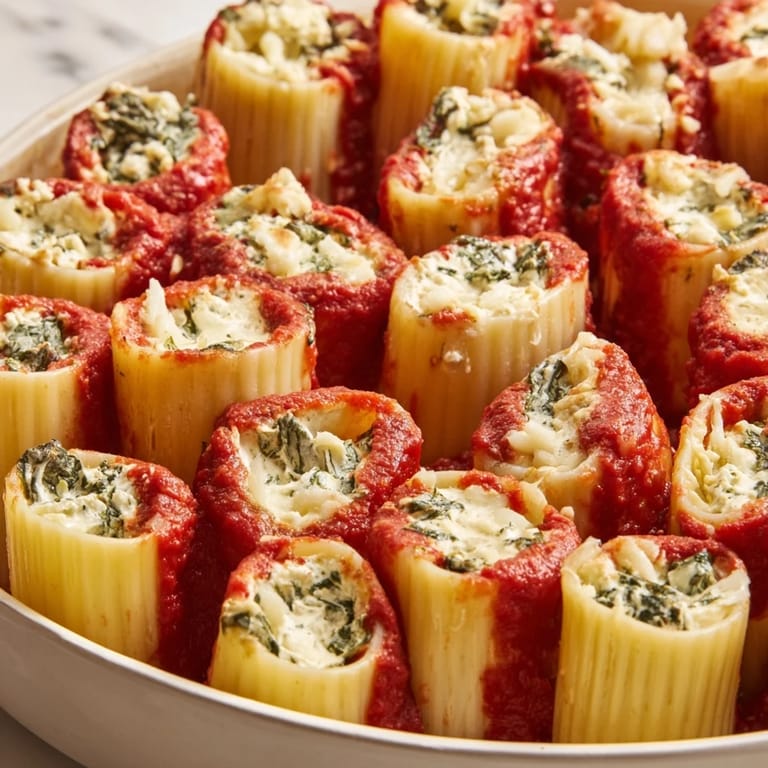
- Pack rigatoni tubes tightly into your prepared pan, standing each one upright like soldiers at attention. Work in circles from the edge toward the center, filling every gap so they support each other and create that honeycomb effect.
- Fill each tube:
- Transfer the cheese mixture to a piping bag or snipped zip-top bag, then gently squeeze filling into the top of each tube until it's level with the rim. You'll develop a feel for how much each one holds—too little and they taste empty, too much and it overflows into sauce.
- Add the sauce:
- Pour marinara evenly over the top, letting it cascade down between tubes. Tap the pan gently on the counter to help sauce settle into the gaps, creating pockets of flavor throughout.
- Top and cover:
- Scatter shredded mozzarella and Parmesan across the surface, covering it generously. Tent loosely with foil so heat circulates but cheese doesn't dry out in the first half of cooking.
- Bake in stages:
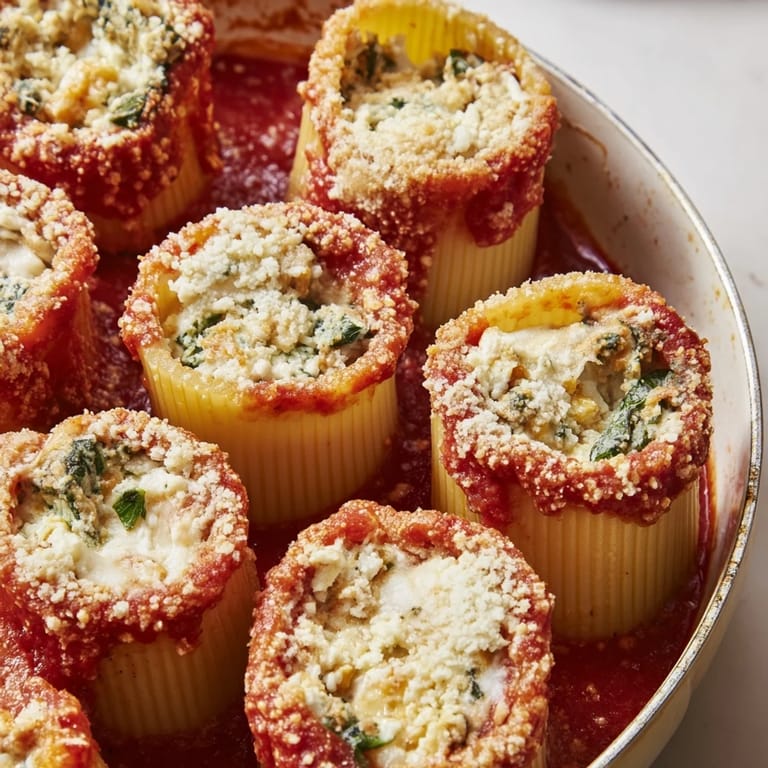
- Bake covered for 25 minutes until the edges begin to set, then uncover and bake 10 minutes more until the top turns golden and bubbles at the edges. The cheese should look slightly charred in spots—that's where the real flavor lives.
- Rest and release:
- Let the pan sit for 10 minutes so the structure sets and becomes easier to unmold. Run a knife around the edge, release the springform, and cut into wedges like a cake.
 Save
Save Years ago, a friend watched me unmold this bake at the table and said it was the most elegant thing she'd seen me make in her kitchen. That comment stuck with me because it wasn't about technique or ingredients—it was about the moment when something warm and comforting suddenly felt special, like we were doing something together that mattered more than just dinner. That's what this dish does.
Why This Approach Works
Baking rigatoni upright changes everything about how you experience the dish. Instead of cheese scattered throughout like a traditional baked pasta, you get a creamy core in every bite, surrounded by tender pasta and tangy sauce. The geometry also means the top browns faster and more evenly, creating a crispy crust that contrasts beautifully with the soft interior. It's a technique that looks complicated but works with basic equipment and straightforward steps, rewarding patience with visual and textural drama.
Customizing Your Filling
The ricotta base is flexible enough to adapt to what you have on hand or what sounds good that day. Sautéed spinach wilts right into the mixture without changing the structure; cooked Italian sausage adds savory depth without drying out; a small handful of finely chopped sun-dried tomatoes introduces brightness. Some cooks swap a portion of ricotta for cottage cheese, which creates a slightly grainier texture but works fine if you prefer it. The key is keeping the filling consistency similar to what the egg binds—too wet and it won't pipe cleanly, too thick and it becomes difficult to fill tubes.
What to Serve Alongside
This bake is rich and substantial, so balance it with something bright and acidic that cuts through the cheese and sauce. A simple green salad dressed with lemon vinaigrette refreshes your palate between bites, and the crisp texture plays beautifully against the soft pasta. If you want wine, a medium-bodied red like Chianti complements the marinara without overwhelming the delicate herbs in the filling, while a dry white like Pinot Grigio brightens everything if you prefer lighter pairings. A crusty bread alongside means no sauce gets left behind on anyone's plate.
- Toss your salad with good olive oil, fresh lemon juice, and a whisper of garlic for maximum impact against the richness.
- Warm bread gently in a low oven for 5 minutes so it's soft inside with a slight crust outside.
- Have extra Parmesan and a microplane at the table for anyone who wants to finish their slice with a final grating.
 Save
Save This recipe becomes something you want to make again the moment you taste it, and something you want to make for people you care about because it gives you a real reason to gather around a table. That's the whole point.
Recipe FAQs
- → What pasta is best for this bake?
Rigatoni is preferred as its tube shape allows easy filling and holds the cheese mixture well during baking.
- → How do I prevent pasta from sticking before baking?
Cooking rigatoni slightly less than al dente and tossing with olive oil helps keep the tubes separate and easy to fill.
- → Can I use different cheeses in the filling?
Ricotta, mozzarella, and Parmesan create a balanced creamy filling, but cottage cheese or other mild cheeses can be substituted to suit taste.
- → What is the reason for standing pasta upright in the pan?
Arranging rigatoni upright helps evenly distribute the cheese filling and allows the sauce to settle nicely around each piece for balanced flavor.
- → How to achieve a golden topping?
Sprinkle shredded mozzarella and Parmesan on top before baking; removing foil mid-bake encourages browning and bubbling.
- → Can I add vegetables or proteins to the filling?
Sautéed spinach or Italian sausage can be mixed into the cheese for extra flavor and variety.