 Save
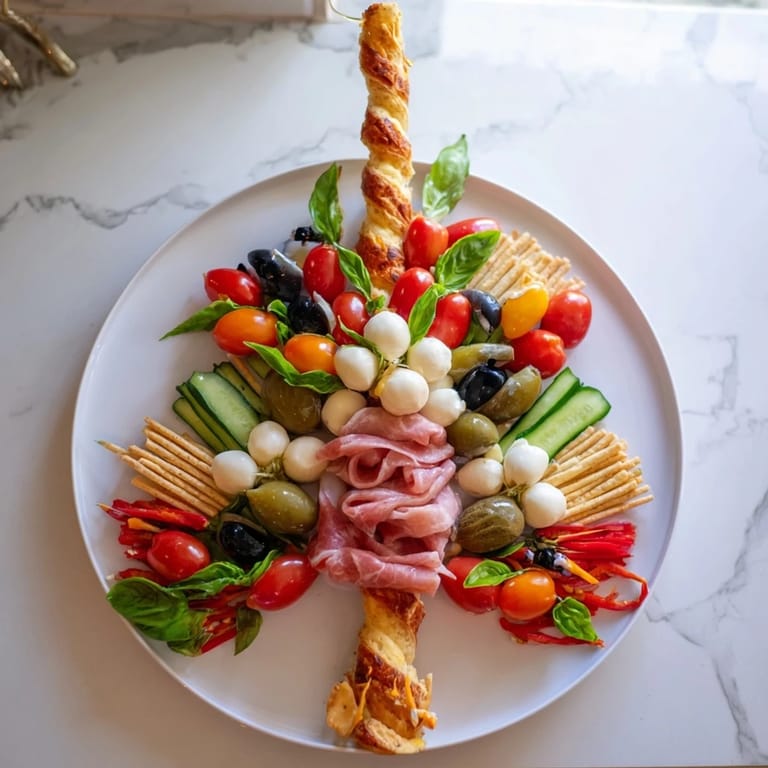
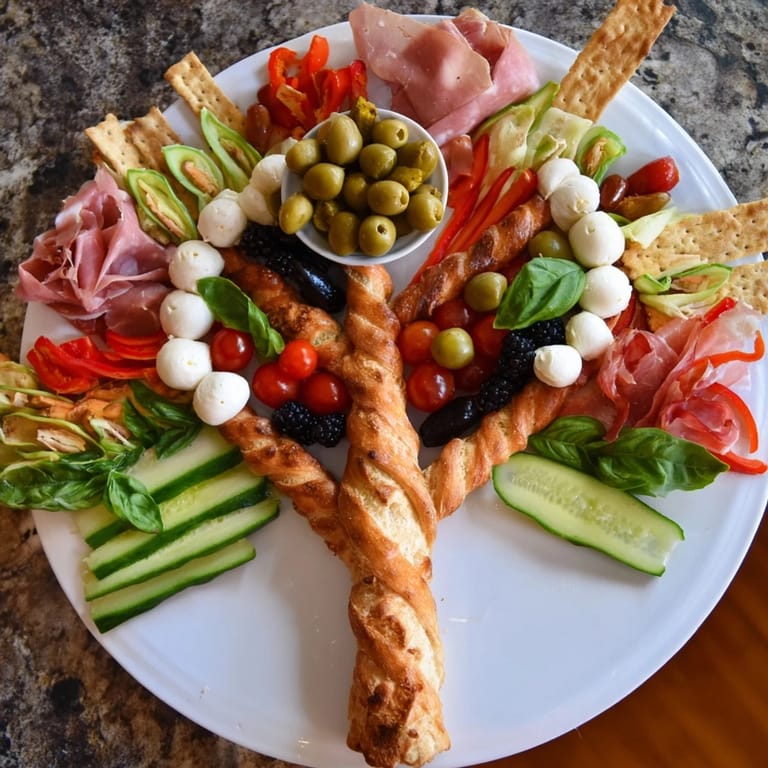
Save I'll never forget the moment I first saw a fractal tree platter at a dinner party a few years ago. A friend had arranged cured meats, cheeses, and vegetables in this mesmerizing branching pattern radiating from a central breadstick, and honestly, it stopped me mid-conversation. The way each ingredient tapered into smaller pieces, creating this natural mathematical beauty, felt like art you could actually eat. That night, I realized that the most memorable dishes aren't always the most complicated—sometimes they're the ones that make people pause and really look before they taste. I've been creating variations of this platter ever since, and it's become my secret weapon for entertaining because it does something special: it transforms a simple arrangement of good ingredients into something that feels like a gift.
I made this for my cousin's engagement party last spring, and watching three generations of family members gather around the platter, debating which branch to pick from and laughing about the mathematical precision, reminded me why I cook. My grandmother kept saying it was too beautiful to eat, but then she'd reach for another piece of prosciutto anyway. That's when I knew this platter had done something right—it bridged the gap between visual art and genuine enjoyment, all on one serving board.
Ingredients
- 1 large breadstick (about 25–30 cm long): This is your tree trunk, the anchor point for the entire composition. I learned to choose breadsticks that are sturdy enough to support gentle pressing without crumbling but not so hard that they feel stale. Room-temperature breadsticks are easier to work with and feel more inviting to guests than cold ones straight from the fridge.
- 6 slices prosciutto or vegetarian deli slices: These become your largest branches, and their delicate texture contrasts beautifully with the crunchier elements. Prosciutto's salty richness does something special here, but quality vegetarian deli slices work just as well if you're going that route. I fold mine loosely rather than laying them flat—it adds a little dimension to the presentation.
- 6 mini mozzarella balls or small cheese cubes: The creaminess of fresh mozzarella is essential to the experience here. If you can find ciliegine (the tiny mozzarella balls), they're perfect because they're portion-controlled and look intentional. They also offer a soft, melting contrast that keeps this platter from feeling too austere.
- 6 baby pickles or gherkins: The brine-sharp bite of these pickles becomes increasingly important as you make your way through the platter—they cleanse your palate between bites of richer ingredients. I prefer cornichons because they're smaller and fit the fractal aesthetic better, but any quality small pickle works.
- 12 cherry tomatoes, halved: These form your middle branches and add color and juiciness. Halving them exposes their bright interior and makes them easier to eat in one bite. Choose tomatoes that are ripe but still firm—they should smell fragrant when you cut them.
- 12 thin cucumber slices: The cool crunch of cucumber is grounding. I slice mine on a slight bias because it makes them appear more intentional and they're less likely to roll around on the platter. English cucumbers have fewer seeds and thinner skins, which means less waste and a cleaner presentation.
- 12 green or black olives: These add umami depth and visual interest. I've found that brined olives work better than canned for this because they have more character and less of a tinny aftertaste. They also hold their shape better throughout the serving period.
- 18 small basil leaves: Fresh basil becomes the delicate tips of your smallest branches. These should be the freshest herbs you can find because they'll be eaten raw and uncooked. Their peppery freshness is the final note guests experience if they work their way all the way to the edge of the platter.
- 18 roasted red pepper strips: I use jarred roasted peppers because they're reliable and save time, but roasting your own earlier in the day elevates this. The sweet char and silky texture bridge the gap between the salty cured meats and the fresh herbs. Cut them thin enough to curve naturally on the platter.
- 18 small crackers or crostini: These are your smallest branches, the final textural element. They provide crunch and can actually serve as little vehicles for other ingredients if your guests want to combine flavors. I prefer thin, subtle crackers that don't compete for attention with the main components.
Tired of Takeout? 🥡
Get 10 meals you can make faster than delivery arrives. Seriously.
One email. No spam. Unsubscribe anytime.
Instructions
- Set Your Foundation:
- Place your breadstick in the center of your largest serving platter—this is the trunk of your tree. Step back and imagine the invisible branches radiating outward in a symmetrical pattern, like you're looking down at a real tree from above. The breadstick should feel centered and intentional, not haphazardly placed. This moment of planning takes only a few seconds but makes the whole arrangement feel deliberate.
- Create the Largest Branches:
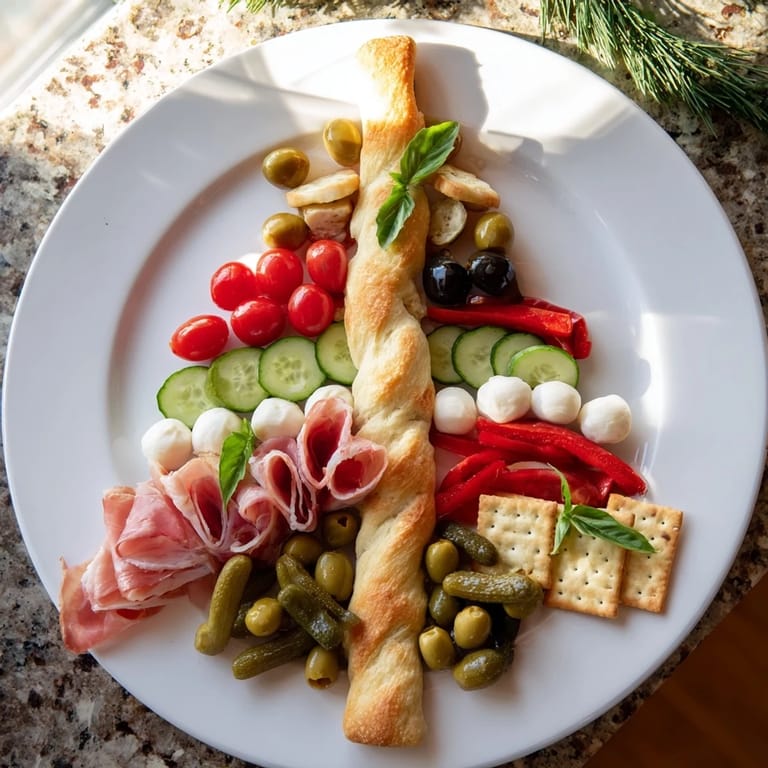
- Now arrange your prosciutto slices, mozzarella balls, and baby pickles radiating outward from the breadstick, creating three-ingredient sets that branch out symmetrically. Think of working in pairs or triplets, alternating the ingredients so each "branch" has visual variety. The prosciutto can be folded loosely, the mozzarella placed where it catches light, and the pickle standing slightly forward. This layer takes the most time because you're setting the visual rhythm for everything that follows.
- Build the Middle Branches:
- Arrange your cherry tomato halves, cucumber slices, and olives as the second layer, branching off from where the larger ingredients end and fanning further outward. Here's where the fractal pattern really starts to feel natural—you're not placing items randomly, but following the suggestion of where branches would naturally split. The tomatoes can be halved further if needed to continue the tapering effect. This is the point where you might step back and feel like the platter is actually starting to look like something intentional.
- Complete the Finest Details:
- Arrange your basil leaves, roasted red pepper strips, and small crackers as the third, smallest branches, continuing the fractal tapering outward to the very edge of the platter. At this stage, you're filling gaps and creating those delicate outer branches that look fragile and intricate. The basil leaves should be the very final touch, added close to serving so they stay fresh and don't wilt from being handled. The crackers can stand slightly upright, and the pepper strips can curve to suggest movement.
- Refine and Balance:
- Step back and look at your creation from above and from eye level. Adjust spacing to enhance the fractal appearance, ensuring each subsequent branch is shorter, thinner, and tapers naturally from what came before. You might need to move a few items to create better visual flow or to ensure the negative space on the platter feels intentional. This final adjustment transforms something arranged into something composed. Make sure there aren't awkward gaps, but also avoid overcrowding—white space is part of the design here.
- Present with Intention:
- Serve immediately as a centerpiece, and invite guests to pick pieces from the branches, working from the outer edges inward if they want to follow the fractal journey, or jumping around randomly if they prefer. The beauty of this platter is that it's interactive—it's not just something to look at but something to engage with. Watch how people approach it and you'll see the design working in real time.
 Save
Save The first time my five-year-old niece saw this platter, she gasped and said it looked like a real tree she could pick from, and suddenly I understood why this arrangement matters so much beyond just being beautiful. Food that invites play, that makes people slow down and really look, that sparks imagination—that's the kind of food that stays in memory longer than the taste itself. That moment made me realize I wasn't just arranging ingredients; I was creating a small edible experience.
The Fractal Philosophy
The beauty of this platter is that it teaches a lesson about design and nature without making it feel like a lesson at all. Fractals—patterns that repeat at different scales—show up everywhere in the natural world, and recreating that pattern with food creates this satisfying sense of order and intention. When I started researching fractals for fun, I began seeing them everywhere in the kitchen: the way a head of broccoli branches, how a cauliflower breaks apart, even the structure of our own veins. Translating that concept to a platter felt like bringing a little bit of nature's hidden geometry directly to the table. There's something almost meditative about arranging items in this fractal way because it feels like you're working with how the world actually organizes itself rather than fighting against it.
Making It Work for Different Diets
What I've loved about this platter is how naturally it accommodates dietary preferences without feeling like compromise. For vegetarians, swapping the prosciutto for grilled vegetables or quality plant-based deli slices doesn't diminish the visual impact—in fact, roasted eggplant or zucchini ribbons add a different kind of beauty. For dairy-free guests, plant-based cheese alternatives have come so far that most people won't notice the difference, especially in a context where they're being tasted alongside pickles and fresh vegetables. I've even created nut-free versions with marinated artichoke hearts and sun-dried tomatoes replacing the botanical complexity that nuts usually provide. The point is that the concept is so flexible that you can honor everyone's preferences without creating a separate "alternative" platter—everyone gets the same beautiful artistic vision, just with swaps that work for their needs.
Pairing and Serving Suggestions
I've learned that what you serve alongside this platter matters just as much as the platter itself. A crisp, dry white wine or sparkling water creates the perfect balance—the bubbles and acidity cut through the richness of the mozzarella and prosciutto and make you want another bite. I've also discovered that a light olive oil drizzle and a grinding of fresh pepper right before serving adds a professional finish without overwhelming the delicate flavors of the raw vegetables. The platter works equally well as a standalone appetizer, a component of a larger charcuterie spread, or even as a light lunch if you add some crusty bread alongside for people who want something more substantial. Serve it on something that complements it—I prefer a plain white or neutral wood board because it makes the colors of the ingredients really pop. The size of your platter matters too; you want enough negative space around the fractal pattern to make it feel like an intentional design rather than a cluttered arrangement.
- Drizzle with quality olive oil and fresh cracked pepper just before serving for an extra layer of sophistication
- Keep backup ingredients in small bowls nearby so you can refresh the platter if it's being picked at for a while
- Pair with a dry white wine, sparkling water, or light aperitif for the best flavor balance
 Save
Save This platter has become my favorite thing to make when I want to give people something that feels special without spending hours in the kitchen. It's a reminder that the most beautiful food moments often come from simplicity, intentionality, and understanding that presentation is its own form of love.
Recipe FAQs
- → How is the fractal effect achieved in this dish?
By arranging ingredients in layers radiating outward from a central breadstick, each layer decreasing in size, mimicking natural tree branching patterns.
- → Can I substitute the prosciutto for vegetarian options?
Yes, replace prosciutto with additional cheeses or grilled vegetables to maintain flavor and texture.
- → What types of cheeses work best for the branches?
Mini mozzarella balls or small cheese cubes provide a creamy texture that pairs well with cured meats and vegetables.
- → Are there suggestions to enhance flavor before serving?
Drizzling olive oil and sprinkling cracked pepper can elevate the taste and harmonize the ingredients.
- → Is this platter suitable for guests with dietary restrictions?
Options include gluten-free breadsticks and crackers and plant-based cheeses for dairy-free guests, while nut-free versions omit nuts entirely.