 Save
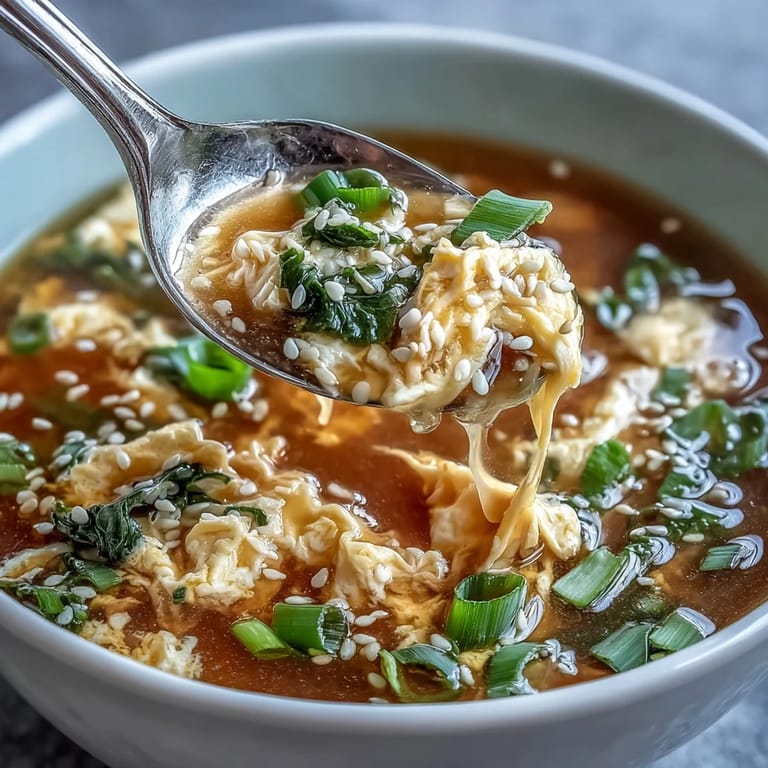
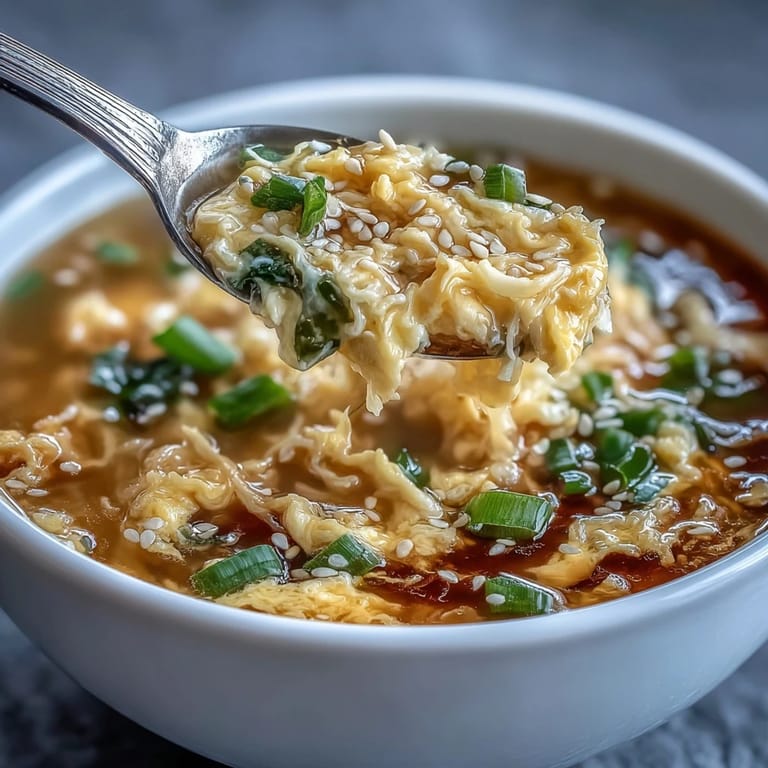
Save Steam curled up in gentle spirals from the saucepan as the broth sang its soft, inviting melody. There’s something quietly beautiful about egg drop soup: translucent, golden ribbons swirling with the lightest hand. The sound of my whisk against the bowl always draws someone near, curiosity mingling with the rich aroma of sesame and scallion. Watching the eggs transform before my eyes, I felt a simple kind of happiness that comes from a meal coming together so swiftly and yet so soulfully. Egg drop soup isn’t just quick comfort; it’s a small act of gentle kitchen magic.
Once, late on a rainy Saturday, I ended up making this soup for my family while thunder rolled in the distance. I barely finished ladling the soup before everyone drifted into the kitchen, drawn by the scent of broth and sesame oil, even my picky little cousin. We ate in companionable silence, listening to the rain. It became one of those quiet moments that punctuate a long week—simple, shared, and deeply comforting.
Ingredients
- Low-sodium chicken or vegetable broth: The foundation of the soup—using low-sodium keeps it from overwhelming the delicate egg flavor, and a splash of vegetable broth is perfect for a vegetarian twist.
- Soy sauce: Just enough to deepen the umami and color—aim for balance, not dominance.
- Ground white pepper: Its subtle heat lifts the broth, and I find it dissolves in perfectly without dark flecks.
- Sesame oil: Barely half a teaspoon brings a nutty warmth that lingers after every spoonful.
- Salt: A little at a time, tasting as you go, since soy sauce adds saltiness too.
- Cornstarch (optional): When I crave a heartier bowl, I whisk in a touch of slurry to thicken the soup slightly—it makes the broth feel silkier.
- Eggs: The heart of the dish—room temperature eggs swirl into ribbons more smoothly, so I leave them out for a bit before cracking.
- Scallions: Crisp and bright, sliced thin for a final hit of freshness.
- Toasted sesame seeds (optional): They add a satisfying crunch and a hint of toasted flavor—just a sprinkle on top is all you need.
Tired of Takeout? 🥡
Get 10 meals you can make faster than delivery arrives. Seriously.
One email. No spam. Unsubscribe anytime.
Instructions
- Simmer the Broth:
- Pour the broth into your saucepan with soy sauce, white pepper, sesame oil, and salt, and let it quietly come up to a gentle simmer—it’ll smell cozy and inviting almost immediately.
- Whisk in the Slurry (Optional):
- If you’re after a thicker soup, swiftly stir together cornstarch and water, then pour it into the simmering broth and wait a minute or so until it looks a touch silkier.
- Beat the Eggs:
- Crack your eggs into a bowl and beat them well, letting the yolks and whites become one smooth sunshiney liquid.
- Create the Egg Ribbons:
- Turn the heat to low, get your chopsticks or fork swirling the broth in one direction, then slowly drizzle in the eggs; pause for a moment to watch them set in feathery streaks.
- Finish and Serve:
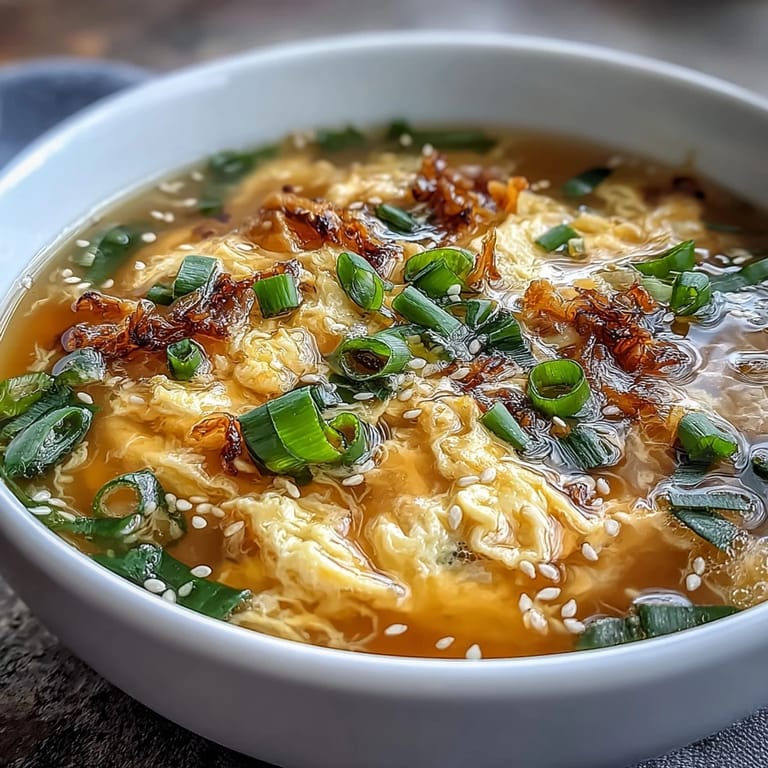
- After half a minute, gently stir to break up any long ribbons, then ladle the soup into bowls and scatter with scallions and sesame seeds for a final flourish.
 Save
Save 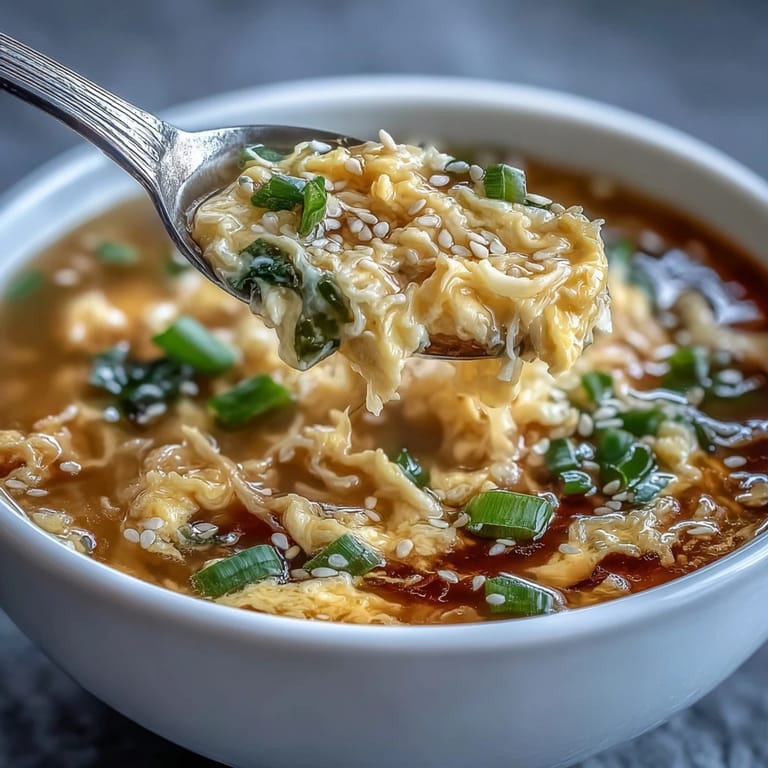 Save
Save I’ll never forget the day I tried to impress a date with this soup, thinking it’d be no-fail. The eggs clumped up in little islands because I got distracted chatting, but we laughed so much over ‘egg clouds’ that it hardly mattered. Ever since, every batch feels like a quiet celebration of shared kitchens and small imperfections.
How to Customize Your Egg Drop Soup
Once you’ve mastered the basics, the soup becomes a canvas for whatever bits and bobs need using up. I often toss in stray slivers of ginger or a handful of sweet corn when I’m feeling playful or when the fridge demands a clean out. The possibilities make each pot a tiny adventure.
Serving Suggestions That Always Work
This soup is lovely with nothing more than a sprinkle of extra pepper, but sometimes I pair it with a plate of steamed greens or crisp spring rolls. It’s the sort of dish that plays well with bold sides but holds its own as a late-night snack as well. When friends drop by unexpectedly, egg drop soup is always my confidence meal.
Little Lessons Learned in the Kitchen
The first few times I made this, I was sure I’d never get those dreamy egg ribbons right. Slowing down and enjoying the process—watching the transformation—turned making egg drop soup into a meditative kitchen pause instead of a frantic rush. Remember, no rushing the swirl.
- Patience transforms the eggs into delicate ribbons—don’t pour too fast.
- Letting the broth cool slightly before adding eggs prevents overcooking.
- Always taste before serving—every broth’s saltiness is a little surprise.
 Save
Save 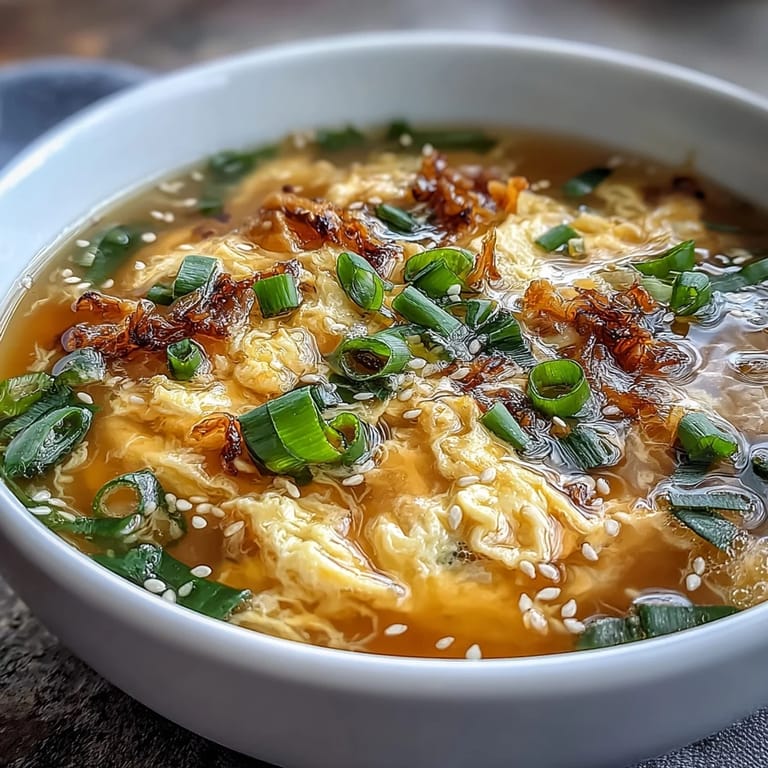 Save
Save I hope this simple soup brings comfort and a bit of playfulness to your kitchen as it has to mine. May your swirls be silky and your moments at the stove a quiet joy.
Recipe FAQs
- → How do I get thin, silky egg ribbons?
Keep the broth at a low simmer, reduce the heat before adding eggs, stir the liquid in a slow circular motion and pour the beaten eggs in a thin stream. A fork or chopsticks helps create fine ribbons.
- → Can this be made vegetarian?
Yes—use a good vegetable broth in place of chicken broth. The dish remains ovo-vegetarian since it uses eggs; check soy sauce labels if avoiding gluten.
- → How can I thicken the broth slightly?
Mix 1 teaspoon cornstarch with about 2 tablespoons cold water to make a slurry, then stir it into the simmering broth and cook 1–2 minutes until it barely thickens.
- → What additions work well for more texture or protein?
Fold in sweet corn, soft tofu cubes, sliced mushrooms or shredded chicken for heartier bowls. Add during simmering so ingredients warm through before adding the eggs.
- → How should I store and reheat leftovers?
Cool quickly and refrigerate in an airtight container for up to 2 days. Reheat gently over low heat; avoid prolonged boiling to prevent the eggs from becoming rubbery.
- → Why use white pepper and sesame oil in the broth?
White pepper gives a subtle, warm heat that blends smoothly with the broth, while a touch of sesame oil adds fragrant, nutty depth—use sparingly to avoid overpowering the eggs.