 Save
Save The first time I actually understood fondue wasn't from a recipe—it was watching my Swiss neighbor lean over a bubbling pot in her kitchen, swirling cheese with this meditative focus like she was conducting an orchestra. She caught me staring and laughed, handing me a bread cube on a fork, and that warm, stringy pull of melted Gruyère and Emmental was nothing like the rubbery fondue I'd eaten at some suburban dinner party years before. It turns out there's a real technique to it, a rhythm that makes all the difference between creamy silk and broken, greasy mess. Now whenever I make it, I think of that afternoon and how something so simple could feel like such an art form.
I made this for my partner on a freezing January night when we couldn't decide where to go out, and something about cooking it at the table together—the gentle sizzle, the way the pot demanded we stay present—turned an ordinary weeknight into something memorable. We sat there longer than we needed to, long after the fondue was gone, just talking and letting the moment stretch. That's when I realized fondue isn't really about the cheese at all; it's about the excuse to slow down and be together.
Ingredients
- Gruyère cheese, grated (200g): This is your backbone—nutty, complex, and it melts into that creamy foundation that fondue depends on.
- Emmental cheese, grated (200g): Emmental's mild sweetness balances the Gruyère's intensity and keeps the whole thing from feeling too heavy.
- Dry white wine (1 cup / 240ml): The acid is crucial; it keeps the cheese from clumping and adds brightness that cuts through the richness.
- Kirsch, cherry brandy (1 tbsp / 15ml, optional): If you skip this, the fondue is still delicious, but kirsch adds a subtle depth that makes you pause and wonder what that flavor is.
- Cornstarch (1 tbsp / 8g): This tiny amount prevents the cheese from separating—toss it with the cheese before adding to the wine, or you'll end up with a grainy disaster.
- Garlic clove, halved: Just rubbing the pot with this is enough; it whispers garlic flavor without overpowering the cheese.
- Freshly grated nutmeg and white pepper (1/4 tsp each): Nutmeg belongs in fondue the way black pepper belongs in carbonara—it's not negotiable if you want it to taste right.
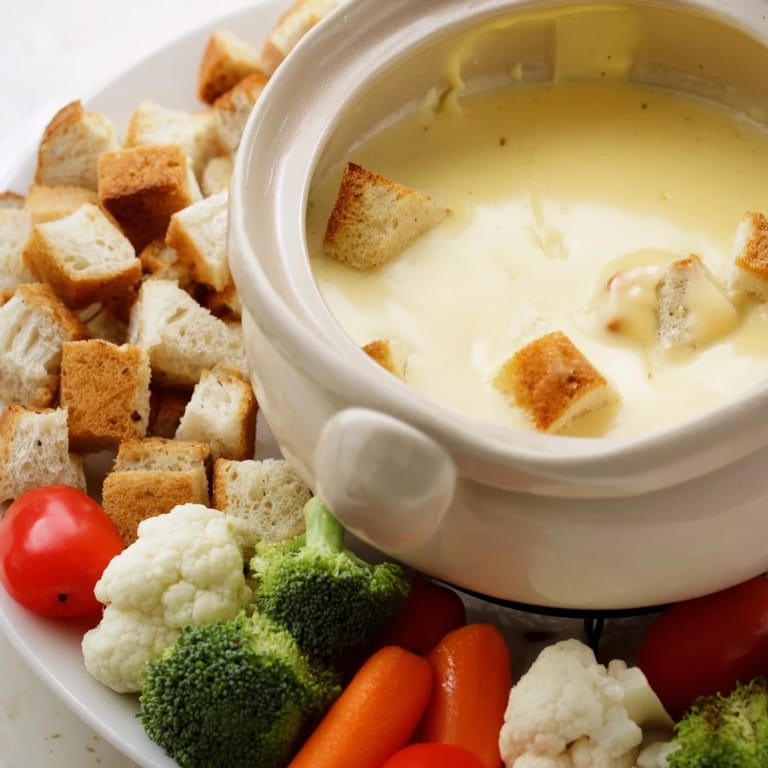
- Bread, cubes (1 baguette, slightly stale): Stale bread grips the fork better and soaks up the cheese without dissolving into mush.
- Vegetables for dipping (broccoli, cauliflower, cherry tomatoes, carrots): Blanch the harder vegetables first so they're tender enough to eat easily but still have structure.
Tired of Takeout? 🥡
Get 10 meals you can make faster than delivery arrives. Seriously.
One email. No spam. Unsubscribe anytime.
Instructions
- Prepare your pot with quiet intention:
- Rub the inside of your fondue pot with the cut garlic clove, then discard it. This simple step adds a whisper of flavor without being aggressive.
- Heat the wine until it shivers:
- Pour in the white wine and warm it over medium-low heat until it just begins to simmer—you're looking for tiny bubbles breaking the surface, not a rolling boil.
- Coat the cheese like armor:
- In a small bowl, toss your grated cheeses with the cornstarch until every piece is lightly coated. This prevents the cheese from clumping when it hits the hot wine.
- Add cheese with patience and movement:
- Gradually add the coated cheese to the simmering wine in handfuls, stirring constantly in a figure-eight motion. This isn't random stirring—the pattern helps incorporate everything evenly and keeps the mixture smooth.
- Season and finish:
- Once the cheese is melted and glossy, stir in the kirsch (if using), nutmeg, and white pepper. Taste and adjust if needed; the mixture should smell warm and welcoming, never sharp or overcooked.
- Transfer to your serving pot and keep the warmth gentle:
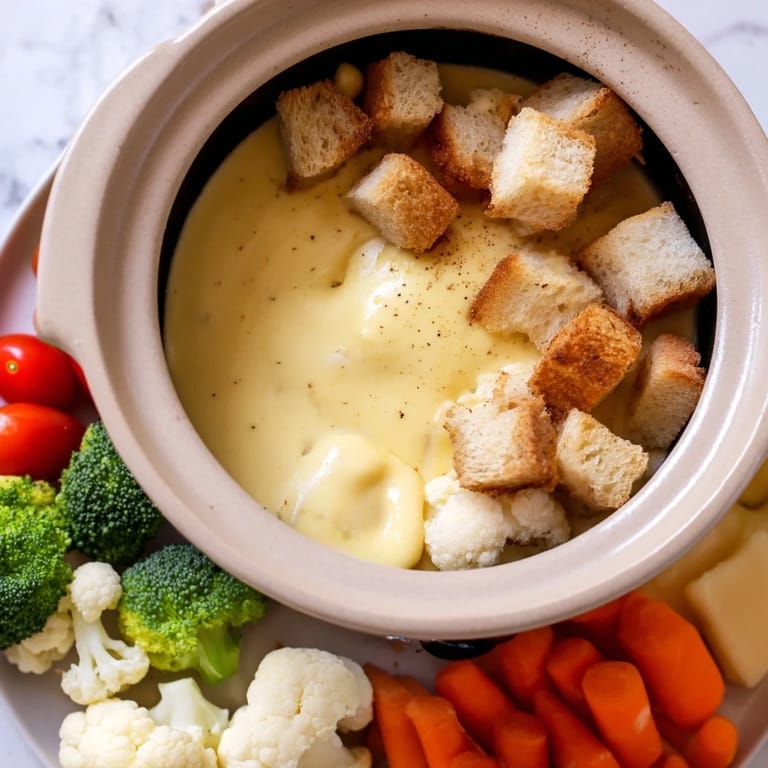
- Move the fondue to your tabletop burner set to low heat, and keep it there just warm enough to stay creamy. Overheating is the enemy.
 Save
Save Years ago, a friend's fondue broke during a dinner party, and instead of pretending it didn't happen, she leaned into the chaos, scooped it into a baking dish, baked it with breadcrumbs on top, and served it as 'broken fondue gratinée.' Everyone loved it and talked about it for months. That moment taught me that cooking isn't about perfection—it's about showing up and doing your best with what you have.
The Art of Dipping
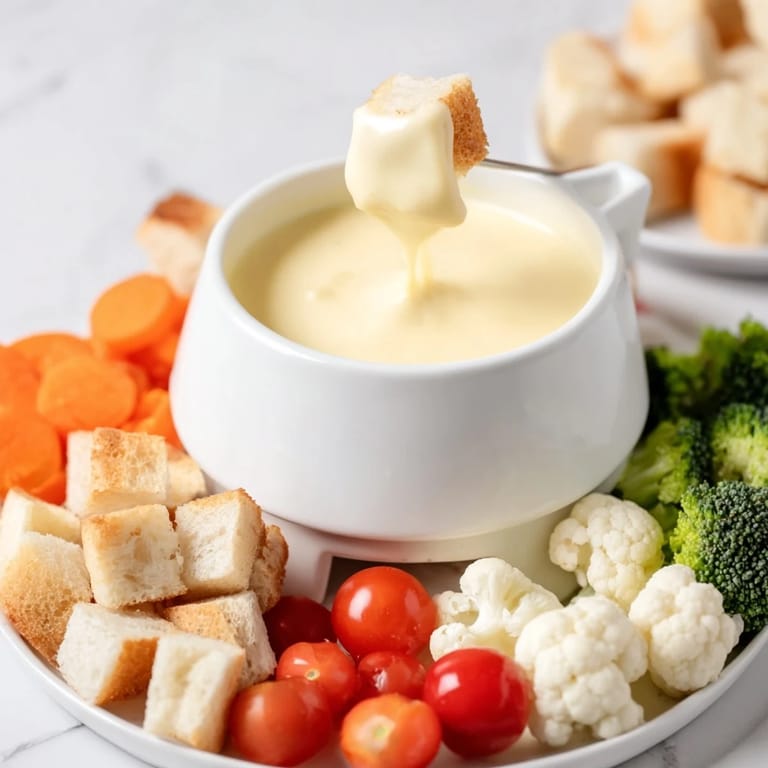
There's a rhythm to fondue eating that most people discover by accident: you're supposed to stir the pot occasionally while eating to keep the cheese from separating, and each dipped piece should be cooled on your tongue for just a second before eating—the cheese stays molten inside. I used to think fondue forks were just fancy, but they're actually designed to let you control the experience, keeping bread or vegetables exactly where you want them. My uncle once tried to use a regular fork and ended up with fondue all over his lap, which became the fondue story that lives forever in family memory.
Choosing Your Cheeses Wisely
The Gruyère-Emmental combination is the tried-and-true foundation, but once you understand why they work together, you can start experimenting. Gruyère brings complexity and a slightly fruity note, while Emmental's milder character keeps things balanced. If you want to dive deeper, a small amount of Appenzeller adds a sharper, more peppery edge that some people crave. The rule I've learned is never to stray too far from the original blend unless you're prepared for something unexpected—and sometimes that's exactly what you want.
Wine, Kirsch, and the Finishing Touches
The white wine does more than just add flavor; it's the chemistry that keeps the cheese emulsified and prevents the dish from becoming a greasy puddle. Kirsch, the clear cherry brandy traditional to Swiss fondue, adds a subtle sweetness and floral note that lingers on the palate—but it's optional if you can't find it or prefer to keep things simpler. The nutmeg and white pepper are the final notes that make fondue taste like fondue; without them, it's just melted cheese, and with them, it becomes something with history and intention behind it.
- If you can't find kirsch, a splash of cognac or even a tiny bit of white vermouth works in a pinch.
- Freshly grated nutmeg makes a noticeable difference—pre-ground nutmeg tastes dusty by comparison.
- White pepper is gentler than black pepper and won't create dark specks that catch the eye.
 Save
Save Fondue is one of those dishes that reminds you why people gather around food in the first place. Make it for someone you want to spend unrushed time with.
Recipe FAQs
- → What cheeses are best for a creamy fondue?
Gruyère and Emmental provide a smooth, rich melt ideal for a balanced fondue texture.
- → Can kirsch be omitted without affecting flavor?
Yes, kirsch adds subtle depth but omitting it still yields a delicious, creamy result.
- → How do I prevent clumps when mixing cheese with wine?
Toss grated cheese with cornstarch before gradually stirring into simmering wine to ensure smooth melting.
- → What dippers complement the cheese blend well?
Crusty bread cubes and blanched vegetables such as broccoli, cauliflower, carrots, and cherry tomatoes pair beautifully.
- → How should fondue be served to keep warm?
Use a fondue pot over low heat to maintain a gentle warmth without boiling, preserving smooth texture.