 Save
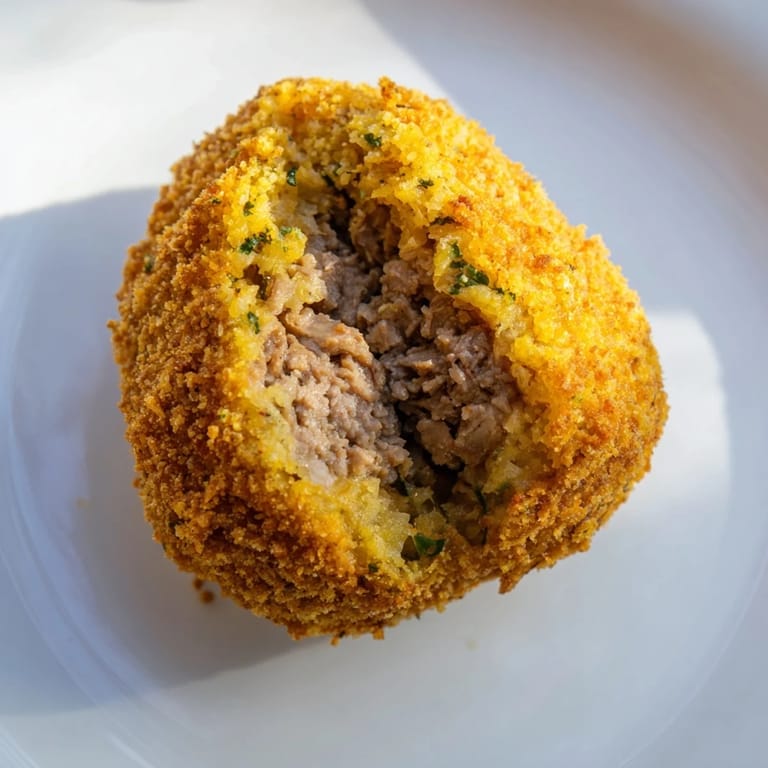
Save The first time I made Dutch croquettes, I was standing in my friend's kitchen in Amsterdam on a grey November afternoon, watching her mother work with the kind of casual precision that comes from making the same dish a hundred times. She moved between pots without hesitation, and when I asked what made them special, she smiled and said it was just patience with the filling and respect for the oil's heat. That afternoon, biting into one still steaming from the fryer, I understood—the contrast between that shatteringly crisp exterior and the silky, savory ragout inside was something worth mastering.
I made these for a dinner party last winter, and I still remember my brother asking for the recipe before he'd even finished his first one. He mentioned the nutmeg—said he'd never expected to taste it in something savory, but it made sense once he noticed it. That small spice became the thread everyone remembered, the detail that separated these from any store-bought version.
Ingredients
- Stewing beef, 250 g: Chuck or another well-marbled cut breaks down beautifully during the long simmer, becoming so tender it shreds with barely any pressure.
- Beef broth, 500 ml: Quality broth is worth seeking out; it's the foundation of flavor that makes the entire filling sing.
- Bay leaf: Just one, used during cooking and discarded—it adds subtle depth without being obvious.
- Small onion, finely chopped: The fine chop matters because you want it to disappear into the filling, adding sweetness without texture.
- Unsalted butter, 40 g (for roux): This amount creates the perfect binding base without overwhelming the other flavors.
- All-purpose flour, 40 g: Equal parts butter and flour make a classic roux that thickens the filling without lumps if you whisk constantly.
- Whole milk, 150 ml: The milk mellows the beef's richness and creates that creamy dreaminess in the center.
- Ground nutmeg, 1/2 tsp: This is the secret note that makes people pause mid-bite; don't skip it and don't increase it.
- Fresh parsley, 1 tbsp (optional): A small amount of fresh parsley adds a whisper of brightness, though the filling is perfect without it.
- Large eggs, 2: These bind your coating together; make sure they're room temperature for the most cohesive breading.
- Fine dry breadcrumbs, 150 g: Panko or Dutch paneermeel gives the crispiest result because the larger crumbs fry to a deeper golden color.
- Neutral oil: Use something with a high smoke point like sunflower or canola; you'll need enough to submerge the croquettes.
Tired of Takeout? 🥡
Get 10 meals you can make faster than delivery arrives. Seriously.
One email. No spam. Unsubscribe anytime.
Instructions
- Simmer the beef until it falls apart:
- Combine the beef, broth, bay leaf, and salt in a saucepan and bring to a boil, then lower the heat and let it bubble gently for about an hour. The beef should be so tender you can break it apart with the side of a wooden spoon. Reserve 200 ml of that cooking liquid—it's liquid gold for your roux.
- Build the flavor base with onion and shredded beef:
- Melt a tablespoon of butter in a skillet and sauté the chopped onion until it's soft and translucent, about 3 minutes. Stir in your shredded beef, season with pepper and a touch more salt if needed, and let it sit while you move to the next step.
- Create a smooth roux and combine with broth:
- In a clean saucepan, melt the 40 g of butter over low heat, then add the flour and stir constantly for about 2 minutes—you want it to smell slightly nutty but not brown. Slowly add the reserved beef broth and milk, whisking as you pour to avoid lumps, until you have a smooth, thickened sauce.
- Fold everything together and season:
- Pour the roux into the beef mixture, add the nutmeg and parsley if you're using it, and stir until you have a thick, creamy ragout. Taste it and adjust the salt and pepper until it tastes deeply savory and rich. Spread it in a shallow dish, cover it, and refrigerate for at least an hour—the filling needs to be firm enough to hold its shape when you roll it.
- Shape the croquettes:
- Once chilled, scoop the filling and roll each piece between your palms into a cylinder about 8 cm long. If the filling is too soft, return it to the refrigerator for another 15 minutes.
- Set up your breading station and coat each croquette:
- Arrange three shallow bowls with flour in the first, beaten eggs in the second, and breadcrumbs in the third. Roll each croquette in flour to dust off excess, dip it in egg, then roll it in breadcrumbs, pressing gently so they adhere. For extra crispiness—and this is worth doing—repeat the egg and breadcrumb coating on each one.
- Heat oil and fry until golden:
- Pour oil into a deep fryer or heavy-bottomed pot and heat it to 180°C (350°F). Fry the croquettes in batches so they're not crowded, about 3 to 4 minutes per batch, until they're deep golden brown all over. Drain them on paper towels as soon as they come out.
- Serve while the contrast is still perfect:
- Eat them hot, ideally within minutes of frying. The outside is still crackling, the inside is warm and creamy, and that's when they're at their absolute best.
 Save
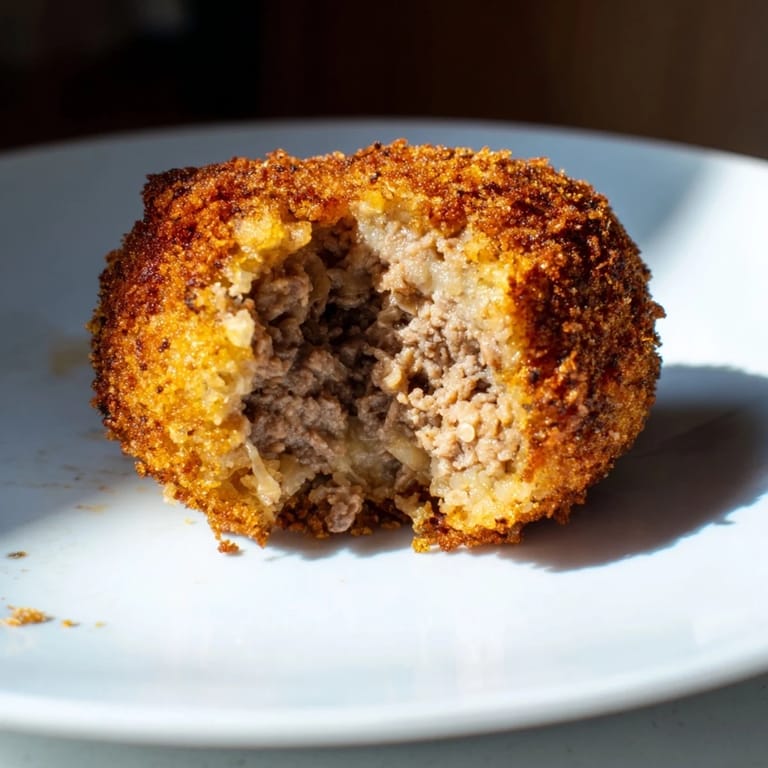
Save My neighbor once called these 'Dutch happiness,' which stuck with me because there's something so unpretentious about them—they're elegant enough for company but approachable enough to make just because you want something warm and satisfying on a quiet evening. They've become my version of comfort, the thing I make when I want to feel connected to someone else's kitchen memory.
Why the Filling Needs Time
Croquettes are really about understanding the phases of a single dish. The filling must cool and firm because hot ragout can't hold a shape, and the oil must reach exactly the right temperature because it's doing two things at once—crisping the outside while the hot inside steam finishes cooking the breadcrumb coating. This isn't extra work; it's the rhythm of the recipe, and once you feel it, you stop thinking about instructions and start thinking about intuition.
The Science of That Shatteringly Perfect Crust
The double breading works because the first coat of crumbs seals in the moisture, and the second coat gets suspended in the egg, frying to that deep golden-brown color that sounds crispy when you bite it. I've seen people skip this step, thinking it's excessive, and their croquettes always look slightly dull and pale. The difference is small but unmistakable—it's like the difference between a good coat of paint and one that was rushed.
Serving and Variations
These are endlessly flexible once you understand the structure. I've made them with veal for richness, with a touch of Dijon mustard mixed into the filling for sharpness, and once with a hint of fresh thyme that no one could identify but everyone noticed. The filling is what carries the flavor, so that's where your creativity lives. For serving, they're equally at home with fries and a cold pilsner as they are passed around on small plates at a party, and they pair surprisingly well with a sharp pickled vegetable on the side.
- Try mixing a small spoonful of Dijon mustard into the finished filling for subtle heat.
- A squeeze of fresh lemon over the top right before eating brightens the rich beef perfectly.
- If you freeze them unbaked, add an extra 2 minutes to the frying time and don't thaw them first.
 Save
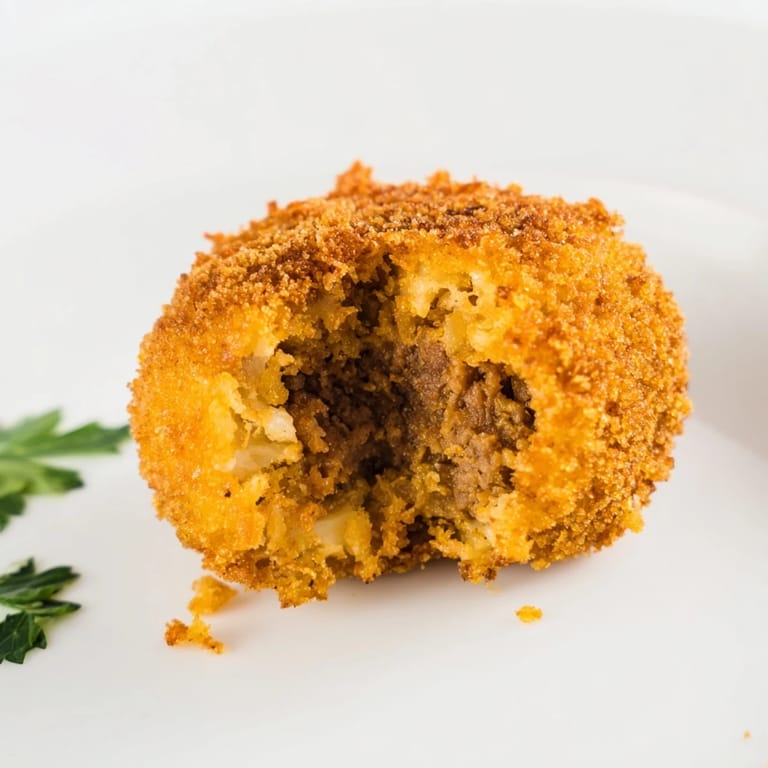
Save Croquettes are the kind of dish that teaches you something about cooking itself—patience, precision, and the reward of respecting each step. Once you've made them, they become the thing you return to.
Recipe FAQs
- → How do you achieve the creamy filling texture?
Simmer beef slowly until tender, mix with a buttery roux and milk mixture to create a thick, creamy ragout before chilling.
- → What is the best coating for croquettes?
A traditional three-step breading using flour, beaten eggs, and fine dry breadcrumbs ensures a crispy and golden crust.
- → Can croquettes be prepared ahead of time?
Yes, they can be breaded and frozen before frying; cook directly from frozen, adding a couple of extra minutes to frying time.
- → What oil is recommended for frying?
Use neutral oils with high smoke points like sunflower or canola for even and crisp frying at 180°C (350°F).
- → How should croquettes be served?
Serve hot with mustard for dipping or alongside fries to enjoy a comforting, traditional Dutch snack experience.