 Save
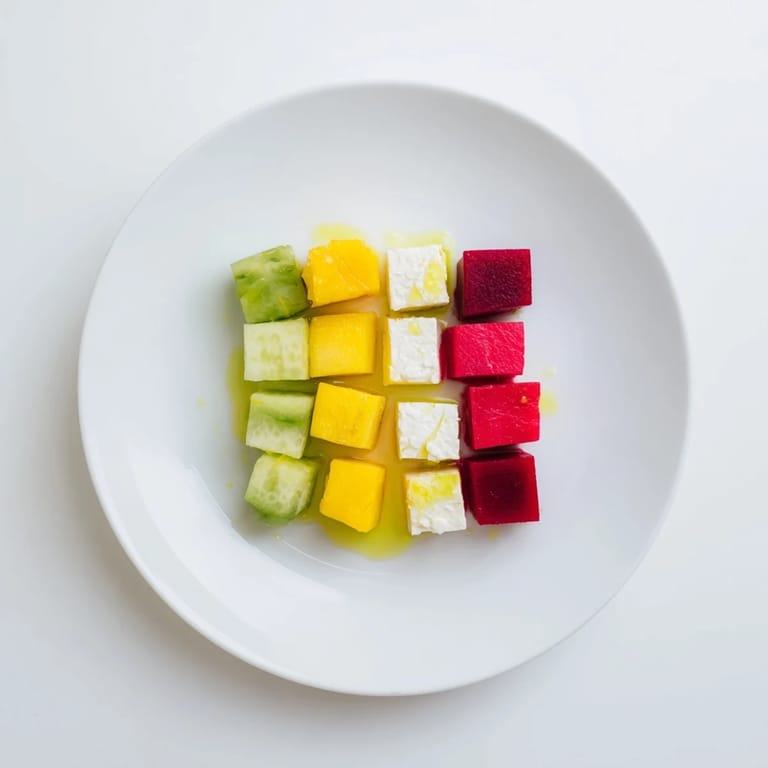
Save I discovered this salad on a particularly uninspired afternoon when I had a farmer's market haul spread across my kitchen counter and absolutely no idea what to do with it. Instead of throwing together another forgettable mix, I remembered something a chef friend once mentioned about how the eye eats first. So I grabbed my sharpest knife, a ruler I found in a drawer, and decided to turn lunch into a meditation on precision and color. What emerged was this beautiful geometric grid of perfectly cubed vegetables and fruits that somehow tasted fresher and more intentional than any salad I'd made before. It became my go-to when I wanted to impress people without actually trying.
I made this for a dinner party where a friend brought their new partner, and I'll never forget how the conversation completely stopped when I placed it on the table. Not because it was fancy in a pretentious way, but because it was so refreshingly simple and visually honest. Everyone started talking about the colors, the shapes, the way it looked like edible art. By the time we actually ate it, we'd already connected over something small but genuinely beautiful.
Ingredients
- 1 small cucumber, peeled and cut into 1 cm cubes: The crisp backbone of this salad that stays refreshing even as everything else settles. Peeling it keeps the texture uniform, and cutting it to exact sizes is where the whole concept comes together
- 1 ripe mango, peeled and cut into 1 cm cubes: This is where the sweetness lives, bringing a natural brightness that makes the other vegetables taste more vibrant than they would alone
- 1 ripe avocado, peeled and cut into 1 cm cubes: Handles the creamy element without overwhelming anything else, but you've got to work quickly after cutting so it doesn't brown
- 1 small red beet, cooked, peeled, and cut into 1 cm cubes: The earthy drama that makes everything else feel more intentional. Cook it separately and let it cool completely before cutting
- 1 small yellow bell pepper, seeded and cut into 1 cm cubes: Adds a subtle crunch and a gentle sweetness that bridges the fruit and vegetable categories
- 1 small watermelon wedge, rind removed, cut into 1 cm cubes: The surprise ingredient that shouldn't work but absolutely does, bringing unexpected juiciness and a summer-like freshness
- 120 g feta cheese, cut into 1 cm cubes: The salty, tangy note that ties everything together. The uniform cubes make it feel intentional rather than scattered
- 2 tbsp extra-virgin olive oil: Use something you actually enjoy tasting because it matters here more than in heavy sauces
- 1 tbsp lemon juice: The acid that keeps everything bright and prevents the avocado from darkening too quickly
- 1/2 tsp sea salt: Start here and taste as you go because the feta is already salty
- 1/4 tsp freshly ground black pepper: Freshly ground makes a noticeable difference in something this simple
- 1/2 tsp honey (optional): If your mango isn't perfectly ripe, this adds just enough sweetness to balance the lemon
Tired of Takeout? 🥡
Get 10 meals you can make faster than delivery arrives. Seriously.
One email. No spam. Unsubscribe anytime.
Instructions
- Get Your Mise en Place Ready:
- Before you cut a single thing, make sure you have your sharp knife, cutting board, and a ruler nearby if you're that kind of person. I'm definitely that kind of person. Set out small bowls for each ingredient as you finish cutting it. This isn't just organized, it's actually easier than scrambling around with everything mixed together
- Cut Everything to Exactly 1 cm:
- Start with the beet since it's already cooked and won't oxidize. Then move through the vegetables and fruit one at a time, keeping each ingredient separate. The ruler helps, but honestly, once you do the first few cubes, your eye adjusts and you can eyeball it. Take your time here because precision is literally the whole point
- Make Your Dressing:
- While you're finishing the cutting, whisk together the olive oil, lemon juice, salt, pepper, and honey in a small bowl. Taste it before you use it because this is where you control the entire flavor profile of the dish
- Arrange Your Grid:
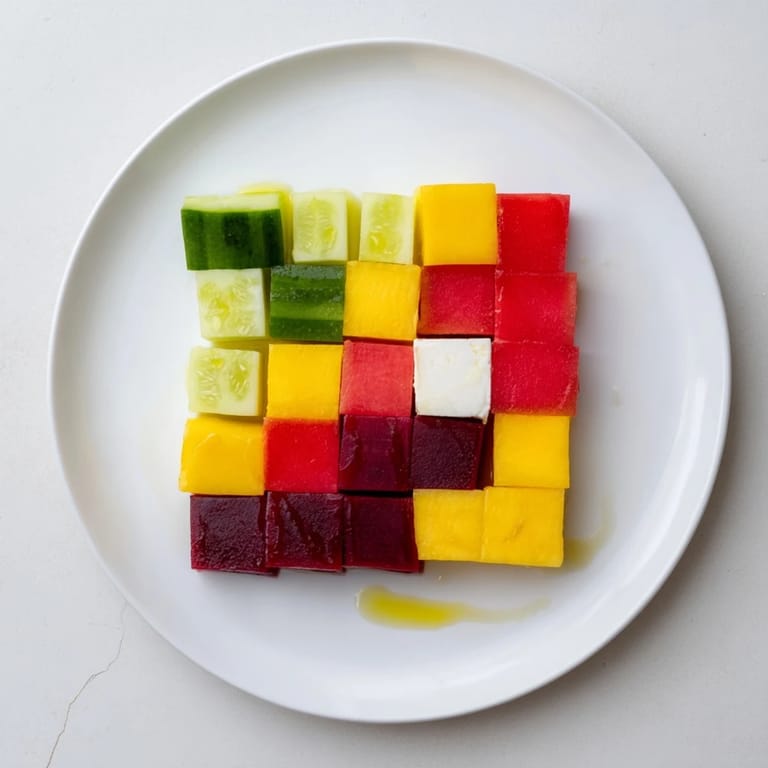
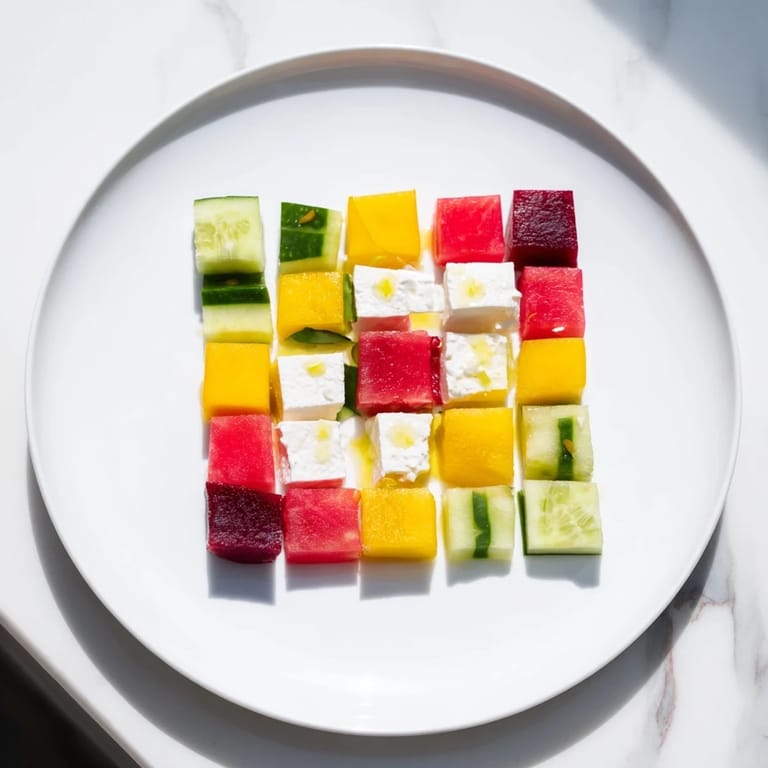
- This is the fun part. On your largest, flattest platter, start arranging the cubes in a geometric pattern. Some people do perfect rows, some do a checkerboard, some do concentric squares. There's no wrong way, but the key is intention. Every cube should have a reason for being exactly where it is
- Dress It Gently:
- Just before serving, drizzle the dressing lightly over everything. Not a heavy pour, more like a whisper of flavor. You want people to taste the individual ingredients, not a dressed salad
- Serve Immediately:
- The moment it's arranged, get it to the table. The crispness and the geometric beauty are time-sensitive. This is one of those dishes where timing is part of the experience
 Save
Save I'll always remember making this for my mother's friend who'd just moved to our town and didn't know anyone. She took one look at the arrangement and actually teared up a little, saying it reminded her that small moments of beauty matter. We sat together and talked for two hours over that salad, and what started as a way to use up some vegetables became the beginning of a real friendship.
The Geometry Matters More Than You Think
There's something almost meditative about arranging these cubes in a grid. It forces you to slow down and think about color, balance, and visual harmony. I've found that the act of creating something deliberately organized makes the eating experience feel more intentional. You're not just putting food in your mouth; you're engaging with something someone took time to build. That small shift in attention actually makes everything taste better.
Substitutions and Variations
The beauty of this salad is how flexible it actually is once you understand the structure. The principle isn't about these exact ingredients; it's about contrast and balance. I've made versions with papaya instead of mango, added pomegranate seeds for crunch, substituted the beet with roasted carrots, and even made it entirely vegan by using firm tofu instead of feta. The key is keeping the cubes uniform and thinking about how each ingredient contributes color, texture, or flavor to the overall composition.
Pairing and Presentation
This salad genuinely shines when paired with something light and crisp to drink—a Sauvignon Blanc if you're going that direction, or just sparkling water with lime if you're not drinking wine. If you want to elevate it further, a light scatter of microgreens or edible flowers on top adds another layer of visual interest without changing the flavor. I've also served it as part of a larger appetizer spread, and it becomes the conversation starter every single time because it looks more like a work of art than something you're actually going to eat.
- Serve on your largest, most beautiful platter because presentation is half the experience here
- If you're making this ahead, keep the dressing separate and only dress it literally moments before serving
- The salad is at its absolute best within 15 minutes of arrangement, so time your preparation accordingly if you're cooking for others
 Save
Save This salad taught me that sometimes the most impressive dishes are the ones where you respect your ingredients enough to let them shine individually. It's become my reminder that restraint and intentionality always outperform complexity.
Recipe FAQs
- → How do you achieve perfectly uniform cubes?
Use a sharp chef's knife and a ruler for precise 1 cm cuts, taking time for careful, even slicing to maintain uniformity.
- → What fruits and vegetables work best for this salad?
Fruits and vegetables with firm flesh like cucumber, mango, avocado, beet, bell pepper, and watermelon provide vibrant colors and crisp textures.
- → Can the feta cheese be substituted?
Yes, for vegan options, firm tofu cut into cubes offers a similar texture without dairy.
- → How should the dressing be prepared and applied?
Whisk olive oil, lemon juice, salt, pepper, and optional honey. Drizzle lightly over the cubed ingredients just before serving to maintain crispness.
- → What presentation techniques enhance this salad?
Arrange the cubes in an ordered grid with alternating colors and flavors to create a visually appealing, geometric display.