 Save
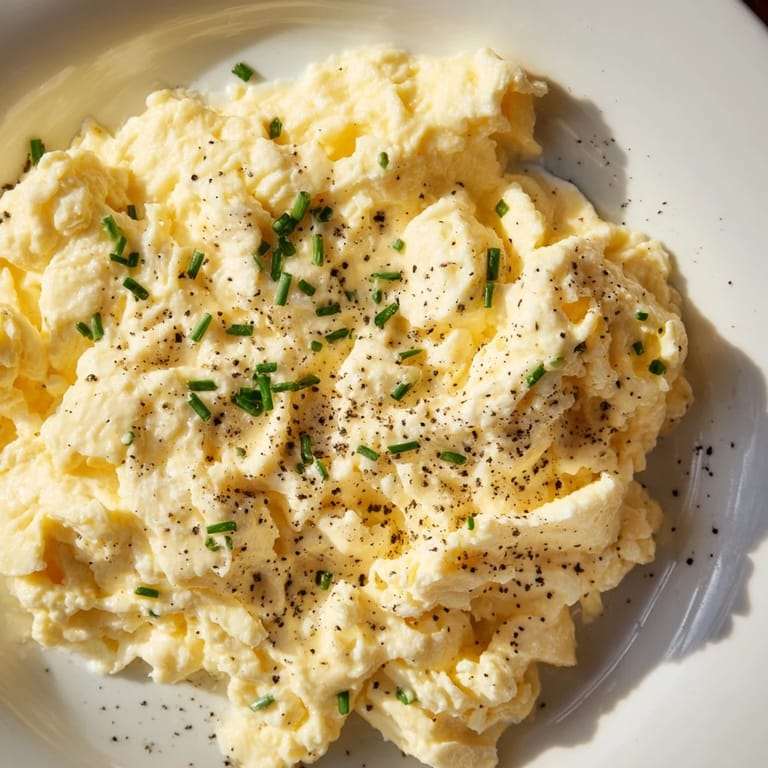
Save There's something magical about cottage cheese in scrambled eggs that I discovered entirely by accident one rushed Tuesday morning. I'd grabbed what I thought was Greek yogurt from the fridge, but it was cottage cheese instead, and by the time I realized it, the eggs were already in the bowl. What emerged from that skillet was the fluffiest, creamiest scrambled eggs I'd ever made, and I've never gone back. The cottage cheese creates this delicate cloud texture that regular eggs simply can't achieve, while packing in way more protein than I expected.
I made these for my roommate who was training for a half-marathon, and she asked for the recipe before she'd even finished eating. She's made them every morning since, and now I can't bring myself to make scrambled eggs any other way. There's something about sharing a breakfast that works this well that turns a simple weekday morning into something worth talking about.
Ingredients
- 4 large eggs: The base of everything—I always use room temperature eggs because they cook more evenly and create that silky texture you're after.
- 1/3 cup cottage cheese (preferably full fat): This is the secret ingredient that transforms the whole dish, so don't skip the full-fat version or you'll lose the richness and creamy mouthfeel.
- 1 tablespoon milk or cream: Just a splash to help everything blend together smoothly and add a bit more silkiness.
- 1/4 teaspoon salt: Season as you go, not just at the end, so the flavor develops evenly throughout.
- 1/8 teaspoon freshly ground black pepper: Freshly cracked makes all the difference in brightness and bite.
- 1 tablespoon unsalted butter: Use real butter here because it browns slightly and adds a subtle nutty flavor that ties everything together.
- 1 tablespoon chopped chives or parsley (optional): A handful of fresh herbs right before serving wakes up all the other flavors.
Tired of Takeout? 🥡
Get 10 meals you can make faster than delivery arrives. Seriously.
One email. No spam. Unsubscribe anytime.
Instructions
- Mix your egg base:
- Whisk the eggs, cottage cheese, milk, salt, and pepper in a medium bowl until you see small curds of cottage cheese still visible but everything is combined and slightly frothy on top. This takes about a minute of whisking and is worth doing well.
- Heat your skillet:
- Melt the butter over medium-low heat in a nonstick skillet, watching it foam up and smell buttery and warm. Once you see it bubbling gently at the edges, you're at the right temperature.
- Pour and rest:
- Pour the egg mixture into the center of the skillet and let it sit completely undisturbed for about 20 seconds—this is how you get those soft, creamy curds instead of tiny scrambled bits. You'll see the edges start to set while the center stays liquid.
- Stir with intention:
- Gently sweep your spatula from the edges toward the center, pulling the cooked portions over the wet ones, and then let it sit for another 15 seconds. Repeat this stirring pattern instead of constant scrambling.
- Finish perfectly:
- Stop cooking as soon as the eggs look just barely set but still glossy and soft, around 2 to 3 minutes total. The eggs will continue cooking slightly from residual heat after you remove them from the pan.
- Plate and garnish:
- Transfer immediately to your plate while the eggs are still creamy, and sprinkle with fresh chives or parsley if you have them. Serve right away while everything is warm and fluffy.
 Save
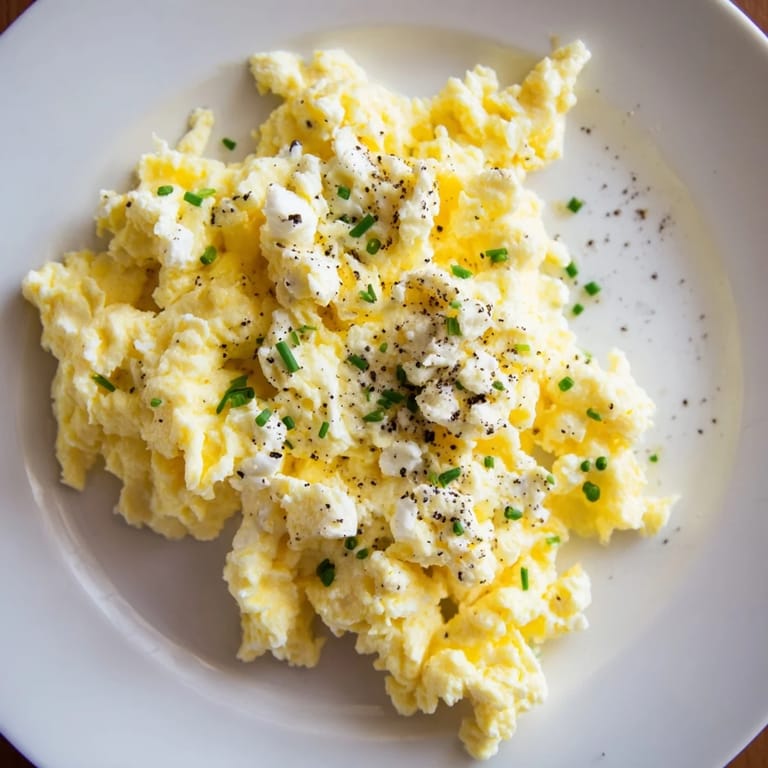
Save My neighbor came over for breakfast one Sunday and took one bite and got quiet for a moment, then asked if this was really just eggs. There's something about the combination of fluffy and creamy that hits differently, like the eggs taste both more refined and more comforting at the same time. That's when I realized this wasn't just a random accident anymore, it was something special.
Why Cottage Cheese Changes Everything
Most scrambled eggs rely on constant motion or high heat to get fluffy, which makes them either dry or tough depending on how you approach it. Cottage cheese does the heavy lifting for you by trapping tiny air pockets and adding moisture throughout, so you can cook at a lower temperature and get better results with less fussing. The texture ends up somewhere between a classic scramble and a soft omelet, and once you experience it, regular scrambled eggs feel kind of flat by comparison.
Make It Your Own
The beauty of this base recipe is how well it accepts additions without becoming fussy or complicated. I've added shredded cheddar right before serving, stirred in sautéed spinach or tomatoes, even folded in smoked salmon once on a Sunday morning that felt fancy. The creamy texture actually helps everything blend together instead of sliding around on the plate.
- A small handful of shredded cheese stirred in during the last 30 seconds of cooking melts perfectly into the cream.
- Sautéed vegetables like spinach, mushrooms, or diced tomatoes added at the beginning cook gently in the egg mixture.
- Fresh herbs, smoked fish, or even crispy bacon bits work beautifully as a garnish or stirred through right before serving.
Serving Suggestions That Actually Work
These eggs are rich enough and filling enough to stand on their own, but pairing them with something gives you a more complete breakfast that actually sustains you through the morning rush. Whole-grain toast soaks up any extra cream, avocado adds fresh richness, and a simple salad or fresh fruit provides brightness and balance. I've found that simple pairings work best because the eggs are already pretty special on their own.
 Save
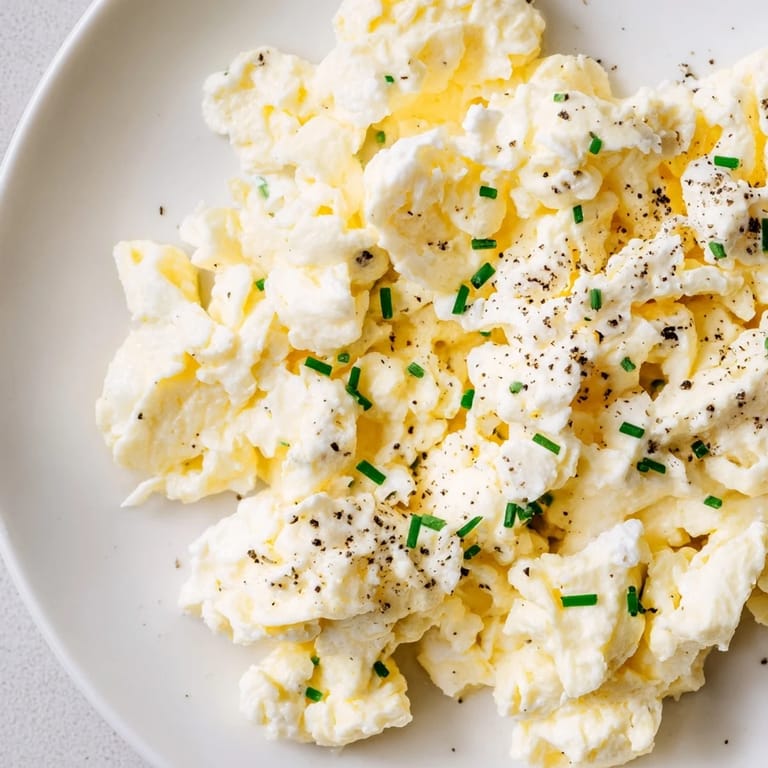
Save Once you master this version, you'll understand why cottage cheese and eggs belong together, and you'll probably make them more often than you expect. It's the kind of breakfast that feels a little bit special every time, even on a regular Tuesday.
Recipe FAQs
- → How does cottage cheese affect the texture?
Cottage cheese adds creaminess and moisture, making scrambled eggs extra fluffy and soft.
- → Can I use non-fat cottage cheese?
Yes, but full-fat cottage cheese provides a richer, creamier texture and flavor.
- → What cooking method ensures fluffiness?
Cooking eggs slowly over medium-low heat and stirring gently helps maintain a soft, creamy consistency.
- → Are there seasoning tips to enhance flavor?
Simple salt and freshly ground pepper work well, but herbs like chives or parsley add freshness.
- → Can I add other ingredients?
Sure, try shredded cheese, sautéed spinach, tomatoes, or smoked salmon as delicious additions.