 Save
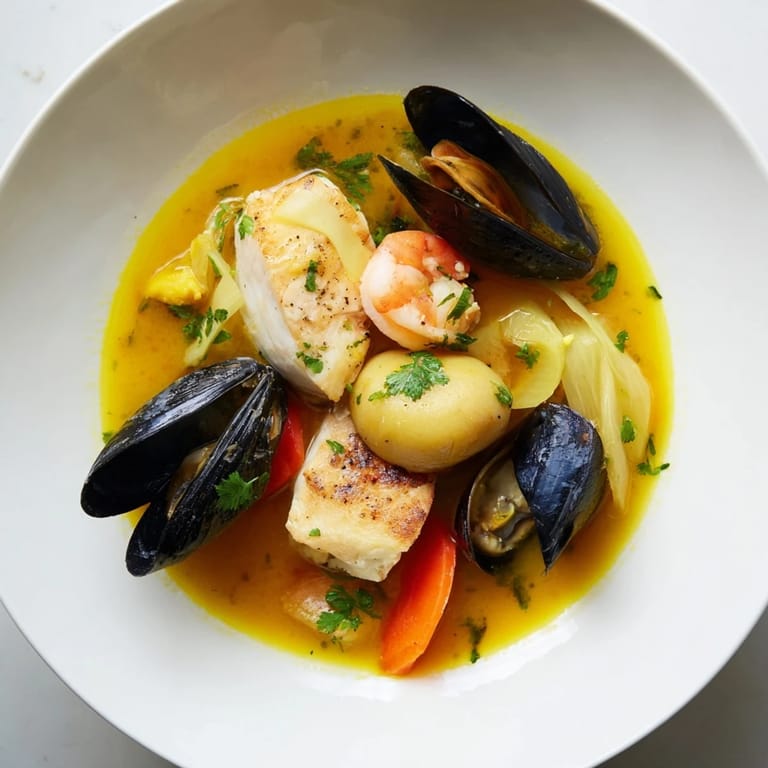
Save The first time I truly understood bouillabaisse wasn't from a recipe book but from watching a fishmonger in Marseille pack up the day's less marketable catches into paper. He explained that bouillabaisse was born from necessity, a humble way to transform those overlooked pieces into something magnificent. What struck me was how he arranged each fish with such care, knowing exactly where it would end up in the pot and why. Years later, standing in my own kitchen with a market haul of sea bass, red mullet, and whatever else looked vibrant that morning, I finally got it—this isn't about perfection, it's about respect for the ingredient.
I made this for a dinner party once when someone insisted they didn't like fish stew, then ate two bowls and asked for the recipe before leaving. The truth was in that moment: there's something about the saffron hitting your nose before the spoon touches your lips, the way the broth clings to the seafood, how the rouille melts into the warmth—it converts skeptics without them noticing.
Ingredients
- Firm white fish fillets (monkfish or sea bass), 400g: These hold their shape during cooking and won't turn to mush, which matters more than you'd think when you're already managing mussels and shrimp.
- Oily fish fillets (red mullet), 300g: The fattier fish carries flavor and richness through the broth; skip this and your stew loses character.
- Mussels, 300g and shrimp, 200g: Buy them as close to cooking time as possible, and don't be shy about discarding any mussels that don't open.
- Olive oil, 2 tbsp: Use something you actually like the taste of, because it's a primary ingredient here, not just cooking medium.
- Onion, leek, fennel, and carrot: These build the aromatic foundation; the fennel especially whispers something Provençal into every spoonful.
- Saffron threads, 1 tsp total: This is the soul of the dish, so buy it fresh and don't cheap out—a little goes far and transforms everything it touches.
- Orange zest: Sounds unexpected but it brightens the heavy seafood flavors and makes people wonder what's making this taste like the Mediterranean.
- White wine, 200ml and fish stock, 1.5 liters: If you can't find good fish stock, water works, but save your vegetable scraps and make your own next time.
- Rouille ingredients (egg yolk, garlic, chili, saffron, olive oil, Dijon mustard): This emulsion is basically mayonnaise's sophisticated cousin; the saffron turns it golden and mysterious.
- Baguette for serving: Toast it and brush it with good olive oil because this is the vehicle for the rouille and the broth-soaking hero.
Tired of Takeout? 🥡
Get 10 meals you can make faster than delivery arrives. Seriously.
One email. No spam. Unsubscribe anytime.
Instructions
- Build your flavor base:
- Heat olive oil over medium heat and add onion, leek, fennel, carrot, and garlic, letting them soften for 8–10 minutes until they smell sweet and have lost their raw edge. Don't let them brown—you want them to melt into the background, not announce themselves.
- Layer in the aromatics:
- Stir in tomatoes, orange zest, bay leaf, thyme, parsley, saffron, fennel seeds, and peppercorns, cooking for 5 minutes until the saffron starts releasing its color and everything smells like a Provençal market. This step is where the stew gets its personality.
- Deglaze and simmer:
- Pour in white wine, let it bubble for 2 minutes, then add your fish stock or water and bring to a gentle boil. Lower the heat and let it simmer uncovered for 25 minutes so the flavors can marry and concentrate without losing their delicate balance.
- Strain for clarity:
- Push the broth through a fine sieve, pressing gently on the solids to coax out every drop of flavor, then discard what's left behind. This step separates homemade bouillabaisse from watery seafood soup.
- Cook the seafood with intention:
- Return the strained broth to a clean pot and bring to a simmer, then add the firm fish first and give it 5 minutes alone, followed by the oily fish, mussels, shrimp, and scallops, simmering another 5–6 minutes until everything is just cooked through. Watch for the mussels to open—they'll tell you when it's time.
- Make the rouille:
- Whisk together egg yolk, minced garlic, chili, and saffron with its soaking water and mustard until smooth, then drizzle in olive oil very gradually while whisking constantly until it thickens into something glossy and rich. Season with salt and taste as you go, because this is your spoon's best friend.
- Serve with ceremony:
- Ladle the stew into warm bowls, scatter with fresh parsley, and offer toasted baguette slices and rouille on the side so everyone can customize their own experience.
 Save
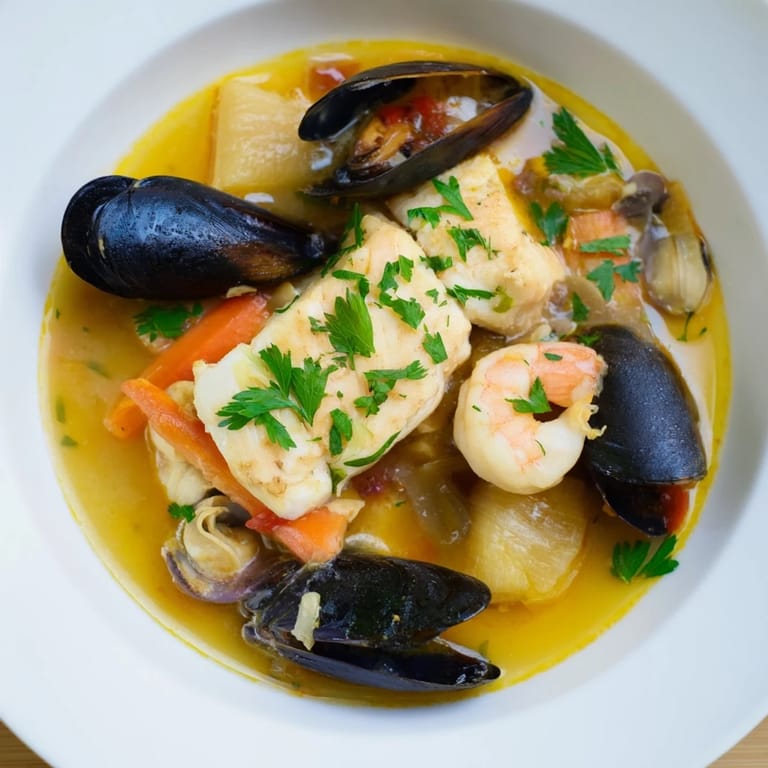
Save I realized this dish stopped being just dinner when my grandmother tasted it and smiled quietly, not at the execution but because it transported her back to her own kitchen in Nice. Food that does that—that carries people somewhere—is the kind worth learning to make.
Why Saffron Matters So Much Here
Saffron is expensive for a reason, but in bouillabaisse it's not a luxury—it's the reason the stew tastes like itself and nothing else. The threads release a color that's almost unreal, a golden sunset that seems impossible from a tiny red strand. I learned to buy it from sources I trust and steep it in warm water before adding, which unlocks its full flavor instead of having it sit uselessly in the broth.
The Rouille Redemption
The rouille intimidates people because it's technically an emulsion, which sounds fancy, but it's really just mayo that believes in itself. I make mine the same way every time now: patience on the oil, consistency in the whisking, and tasting after every few additions so I catch it before it breaks. If it does break, start over with a fresh yolk—there's no rescue mission once the oil separates.
Seafood Selection and Timing
The magic of bouillabaisse is in its diversity; traditional versions use three or four different fish because each one brings something different to the broth. Firm fish holds shape, oily fish adds richness, and shellfish contributes sweetness and depth. Buy what your fishmonger recommends, get there early when the selection is freshest, and ask them to fillet things for you because life is too short to fight with fish bones.
- Plan your shopping so you're cooking within a few hours of purchase—seafood waits for no one and tastes best when it hasn't.
- Keep everything cold until the moment you need it, and add each type of seafood at the right moment so nothing overcooks.
- Mussels that don't open after cooking get discarded without guilt, because closed ones signal they weren't alive to begin with.
 Save
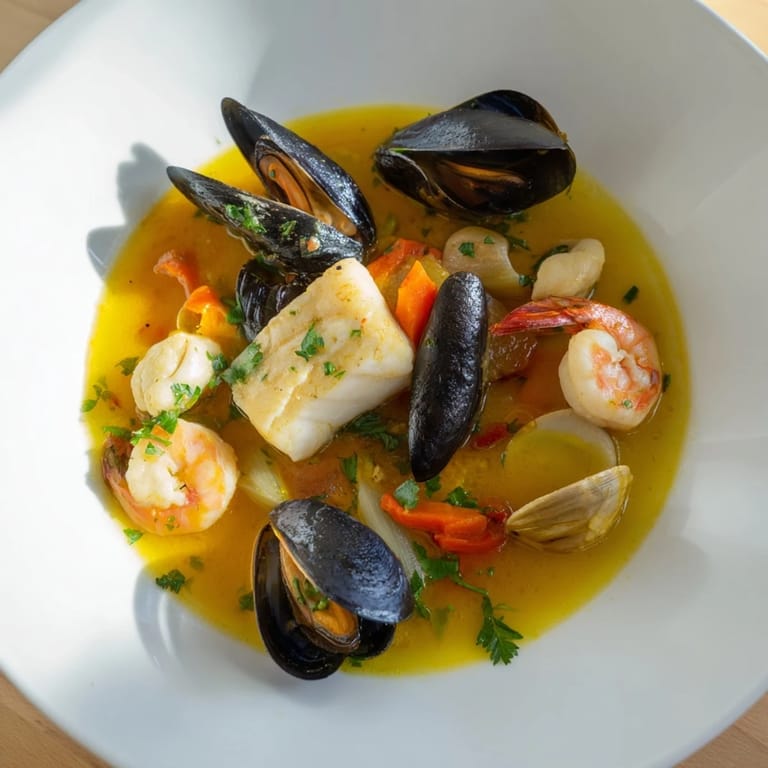
Save Bouillabaisse tastes like generosity in a bowl, the kind of meal that makes people slow down and actually talk to each other. Once you've made it, you'll understand why it's been feeding people along the Mediterranean for centuries.
Recipe FAQs
- → What types of fish are best for bouillabaisse?
Firm white fish like monkfish or sea bass and oily fish such as red mullet provide ideal texture and flavor balance for the stew.
- → How is rouille sauce made for this dish?
Rouille combines egg yolk, garlic, chili, soaked saffron, mustard, and olive oil, whisked into a thick, creamy sauce that complements the stew’s flavors.
- → Can I prepare bouillabaisse ahead of time?
The broth can be made in advance and refrigerated. Add seafood only before serving to maintain freshness and texture.
- → What is the purpose of straining the broth?
Straining removes solids to create a clear, rich broth that highlights the flavors of herbs, saffron, and seafood.
- → What wine pairs well with this Provençal dish?
A chilled Provençal rosé or crisp dry white wine complements the aromatic fish stew beautifully.