 Save
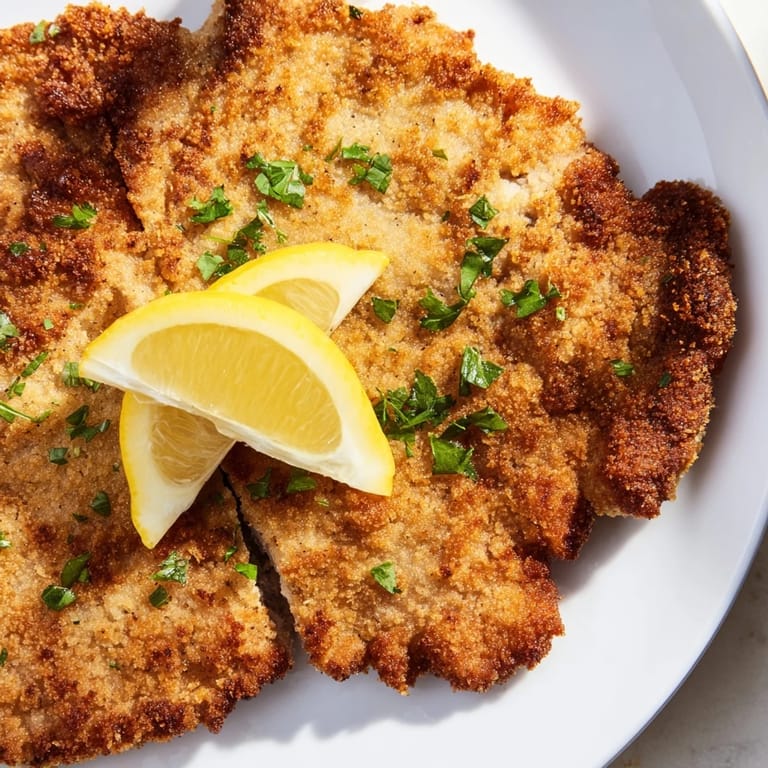
Save My first encounter with proper Wiener Schnitzel happened in a small kitchen in Vienna, where an elderly woman showed me that the secret wasn't in fancy technique but in respect for the ingredient. She pounded veal so thin you could almost see through it, breaded it with the lightest touch, and fried it in a cloud of clarified butter until it sang in the pan. That day I learned that simplicity, when done with intention, becomes elegance.
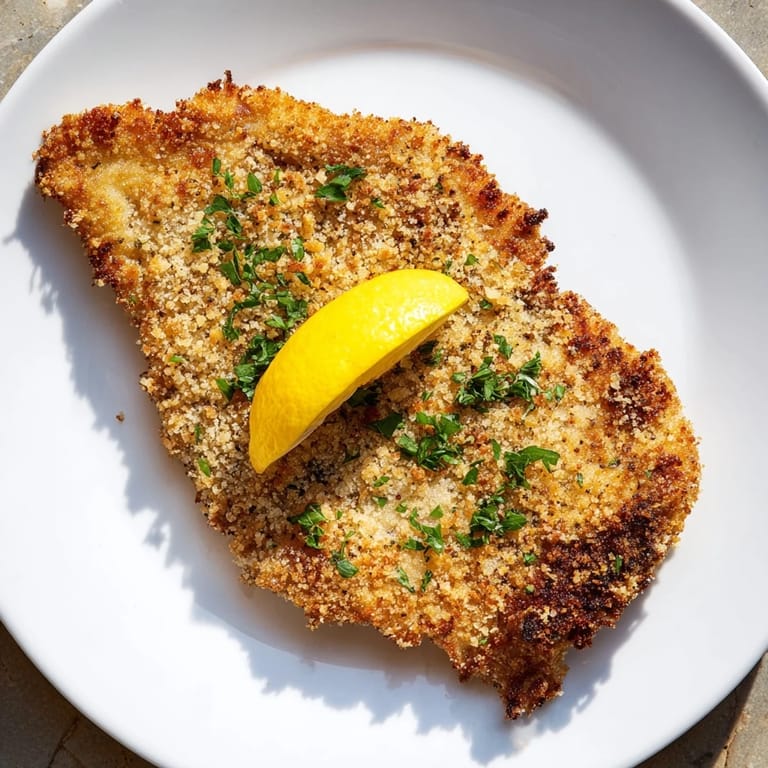
I remember cooking this for a friend who claimed he'd never had anything like it, then watched his face change completely on that first bite. The way the breadcrumb crust caught the light, golden and delicate, made it worth every bit of attention during preparation. He asked for the recipe immediately, which meant I'd succeeded in my mission.
Ingredients
- Veal cutlets (4, about 150 g each): The foundation of authenticity; pounding them yourself ensures they cook evenly and stay impossibly tender inside.
- All-purpose flour (100 g): Use this as your first dry barrier to help the egg adhere properly.
- Eggs (2 large): Beat these with milk to create a binding layer that helps breadcrumbs cling without getting heavy.
- Milk (4 tbsp): This thins the egg wash so it coats lightly rather than creating a thick crust.
- Fine dry breadcrumbs (150 g): The key to crispiness is using panko or fine breadcrumbs and never pressing them into the meat.
- Clarified butter or neutral oil (250 ml): This is where the magic happens; the fat must be hot enough to create that golden shell instantly.
- Lemon (1, cut into wedges): Brightens each bite and cuts through the richness of the fried coating.
- Fresh parsley (2 tbsp, chopped): A traditional finish that adds color and a whisper of freshness.
Tired of Takeout? 🥡
Get 10 meals you can make faster than delivery arrives. Seriously.
One email. No spam. Unsubscribe anytime.
Instructions
- Pound the veal with purpose:
- Place each cutlet between plastic wrap and use steady, even pressure with your meat mallet to reach exactly 1/4 inch thickness. Once done, pat them completely dry with paper towels and season lightly with salt and pepper on both sides.
- Organize your breading station:
- Line up three shallow dishes in order: flour, then the egg mixture beaten with milk, then breadcrumbs. This assembly line approach keeps you from getting overwhelmed and ensures each cutlet gets perfect coverage.
- Bread with a light hand:
- Dust each cutlet in flour first, shake off the excess, then dip briefly in the egg mixture and finally coat with breadcrumbs. The secret is to use a light touch and never press the breadcrumbs into the meat; they should sit on the surface like golden snow so they fry crispy rather than dense.
- Get your pan singing hot:
- Heat the clarified butter or oil over medium-high heat until it shimmers and moves like water across the pan. When you're ready, the fat should be hot enough that the cutlet sizzles immediately upon contact.
- Fry with confidence:
- Working with one or two cutlets at a time so they have room to swim in the fat, fry for 2 to 3 minutes per side. Tilt the pan and use a spoon to baste the top with the hot fat so the coating colors evenly and the meat stays juicy.
- Finish and serve at once:
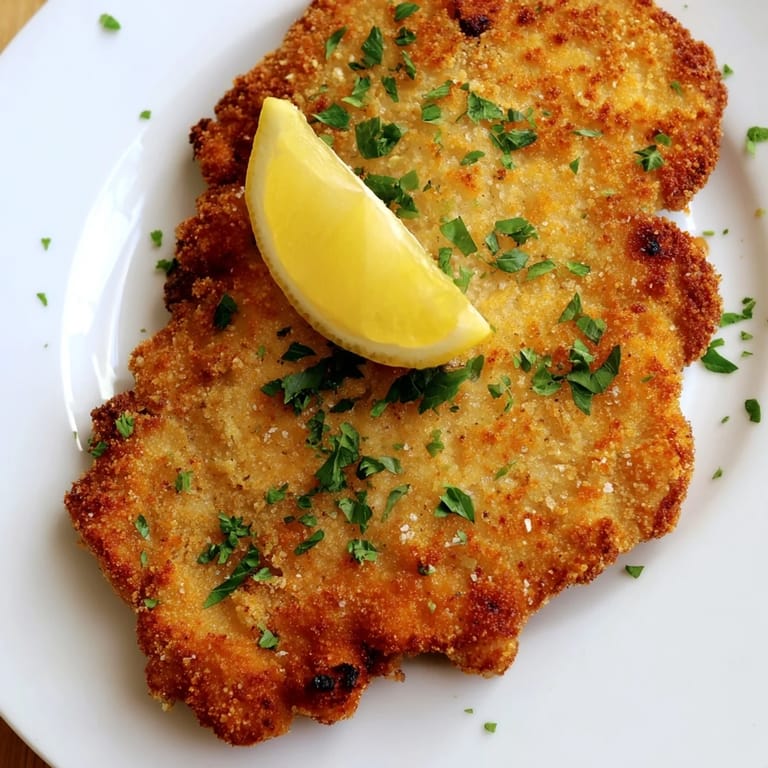
- Transfer each schnitzel to a paper towel-lined plate to drain briefly, then serve immediately with lemon wedges and a sprinkle of parsley for color.
 Save
Save There's a moment when you tilt the pan and watch the golden fat wash over the schnitzel, and you realize this dish represents something beyond food: it's about technique passed down, about honoring ingredients, about the sound of a proper fry. That moment crystallized why this dish has endured for generations.
The Breading Technique Matters
I learned the hard way that pressing breadcrumbs into the meat creates a dense, chewy crust rather than the shatteringly crisp exterior you want. The Austrian way is to apply the breadcrumbs like you're dusting flour from a pastry, letting them settle naturally on the surface where the heat can turn them into golden armor. It's a small shift in mindset that changes everything about the final dish.
Temperature and Timing
Your fat must be hot enough to create immediate color, but not so hot that the coating burns before the meat cooks through. I test the temperature by dropping a small piece of bread into the pan; if it sizzles and browns in about thirty seconds, you're in the perfect zone. Too cool and you'll have greasy, pale results; too hot and the outside burns while the inside stays pale.
Serving and Pairing
In Vienna, this dish arrives at your table with quiet confidence, usually accompanied by potato salad, cucumber salad, or lingonberry jam. Each side tells a different story, but all of them work because they cut through the richness of the fried coating with either acidity or sweetness. The lemon wedges are non-negotiable; squeeze them over the schnitzel just before eating for brightness that makes every bite sing.
- Potato salad with a warm vinaigrette is the most traditional pairing and offers comforting familiarity.
- Cucumber salad provides a cool, crisp contrast that feels refreshing against the hot, crispy cutlet.
- Lingonberry jam adds a sweet-tart element that's utterly Scandinavian and unexpectedly perfect.
 Save
Save Wiener Schnitzel taught me that sometimes the most memorable dishes are the simplest ones, executed with unwavering attention to technique and respect for ingredients. Cook this when you want to feel connected to generations of kitchen wisdom.
Recipe FAQs
- → What type of veal is best for Wiener Schnitzel?
Choose tender veal cutlets about 150 grams each, pounded to a uniform thinness for even cooking and softness.
- → How do I achieve a crispy coating on the veal?
Use a light breading technique by dredging in flour, dipping in egg-milk wash, then coating loosely with fine dry breadcrumbs to ensure a crisp crust.
- → Can I substitute the frying fat used in the dish?
Clarified butter is traditional, but neutral oils with a high smoke point like sunflower or canola oil work well for frying.
- → What is the proper frying temperature and time?
Maintain medium-high heat until the fat shimmers, frying cutlets 2–3 minutes per side until a golden brown crust forms.
- → How should Wiener Schnitzel be served?
Serve immediately after frying with fresh lemon wedges and optionally sprinkle chopped parsley for added brightness.
- → What traditional side dishes complement this dish?
Classics include potato salad, cucumber salad, or lingonberry jam, enhancing the meal with complementary flavors.