 Save
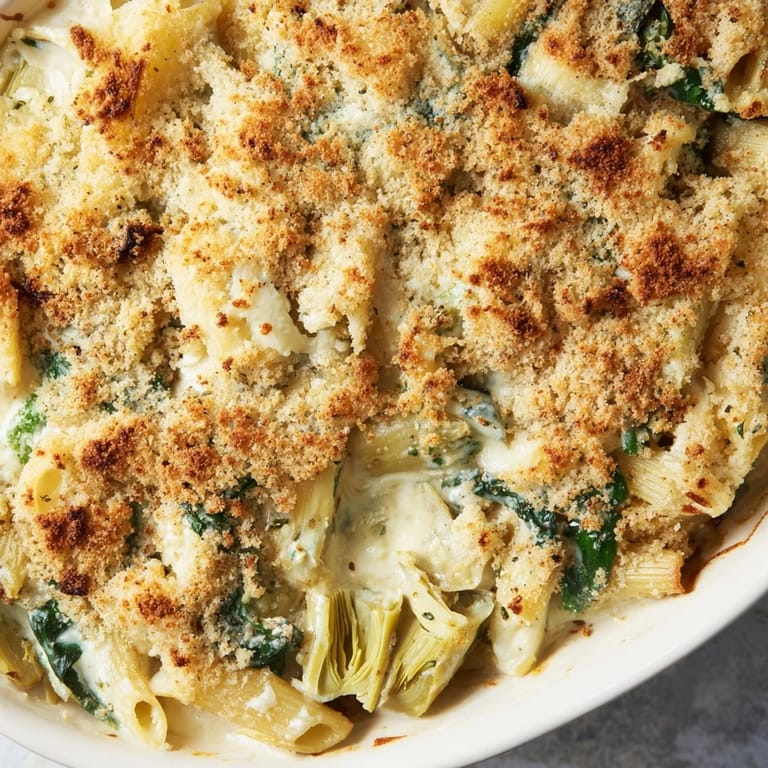
Save There was this Sunday afternoon when I opened my fridge and found a jar of marinated artichokes I'd forgotten about, a handful of spinach that needed using, and leftover pasta from the night before. I wasn't planning anything fancy, but something about the way the light hit the kitchen counter made me want to create something warm and filling. I pulled out a baking dish, turned on the oven, and let my instincts guide me. What came out was this bubbling, golden casserole that smelled like an Italian grandmother's kitchen. That improvised meal became a regular in my home, especially when I need comfort without fuss.
I made this for a friend who claimed she didn't like artichokes, and I watched her go back for seconds without realizing what she was eating. She paused mid-bite, looked at me suspiciously, and asked what was in it. When I told her, she laughed and admitted that maybe she just hadn't had them prepared the right way. That moment reminded me how context and care can change someone's relationship with an ingredient. Now she requests this dish every time she visits, and I always pretend I'm revealing a secret recipe even though it's wonderfully straightforward.
Ingredients
- Short pasta (penne, rigatoni, or fusilli): These shapes have ridges and hollows that catch the creamy sauce perfectly, and cooking them just to al dente ensures they don't turn mushy during baking.
- Artichoke hearts: Drain them well and pat them dry if they're too oily, as excess moisture can make the sauce watery instead of luscious.
- Fresh baby spinach: It wilts down to almost nothing, adding color and nutrition without overwhelming the dish, and frozen spinach works too if you squeeze out all the water first.
- Yellow onion and garlic: These aromatics build the flavor foundation, and sautéing them until soft and fragrant makes the whole dish smell like home.
- Heavy cream and whole milk: The combination creates a sauce that's rich but not cloying, and using both instead of just cream keeps it from feeling too heavy.
- Freshly grated Parmesan cheese: Pre-grated cheese doesn't melt as smoothly, so take the extra minute to grate it yourself for a silky, cohesive sauce.
- Olive oil: A good quality oil adds a subtle fruity note that complements the vegetables without competing with the cream.
- Dried Italian herbs: A blend of oregano, basil, and thyme works beautifully, or use whatever Italian seasoning you have on hand.
- Ground nutmeg: Just a pinch wakes up the cream sauce and adds warmth without being identifiable, a trick I learned from an old cookbook.
- Breadcrumbs and melted butter: This topping turns golden and crispy in the oven, providing textural contrast to the creamy pasta beneath.
Tired of Takeout? 🥡
Get 10 meals you can make faster than delivery arrives. Seriously.
One email. No spam. Unsubscribe anytime.
Instructions
- Prep Your Oven and Dish:
- Preheat your oven to 190°C (375°F) and grease a large baking dish generously so nothing sticks to the edges. I like using a little butter for this because it adds flavor as it bakes.
- Cook the Pasta:
- Boil your pasta in well-salted water until it's just al dente, with a slight bite still in the center. Drain it quickly and don't rinse it, the starchy surface helps the sauce cling better.
- Sauté the Aromatics:
- Heat olive oil in a large skillet over medium heat and cook the chopped onion until it turns translucent and soft, about three minutes. Add the minced garlic and stir constantly for one more minute, watching carefully so it doesn't burn and turn bitter.
- Wilt the Spinach and Warm the Artichokes:
- Toss in the fresh spinach and stir until it collapses into a fraction of its original volume, about two minutes. Add the quartered artichoke hearts and cook everything together for another two minutes, then remove the skillet from the heat.
- Make the Cream Sauce:
- In a saucepan, gently heat the heavy cream and milk over medium-low heat, stirring occasionally. Stir in the Parmesan, Italian herbs, salt, pepper, and nutmeg, and keep stirring until the cheese melts completely and the sauce becomes smooth and glossy, about three minutes.
- Combine Everything:
- In a large bowl, mix the cooked pasta, sautéed vegetables, and cream sauce until every piece is coated. Transfer this mixture to your prepared baking dish, spreading it out evenly.
- Add the Topping:
- In a small bowl, toss the breadcrumbs with melted butter until they're evenly coated. Sprinkle this mixture over the casserole, and add extra Parmesan on top if you want an extra cheesy crust.
- Bake Until Golden:
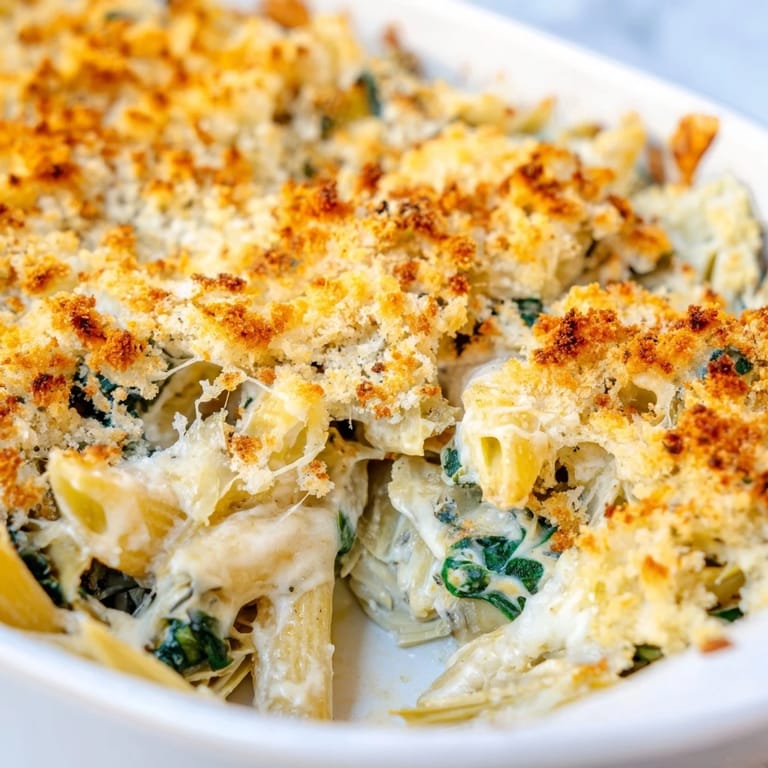
- Slide the dish into the oven and bake for 20 to 25 minutes, until the top is golden brown and the edges are bubbling. Let it rest for five minutes before serving so the sauce thickens slightly and doesn't run everywhere when you scoop it out.
 Save
Save One winter evening, I brought this to a potluck where everyone else had made elaborate dishes with exotic ingredients and complicated techniques. I felt a little sheepish setting down my simple pasta bake next to a deconstructed this and a sous-vide that. But by the end of the night, my dish was the first one scraped clean, and three people asked for the recipe. It taught me that comfort and flavor will always win over complexity, and that sometimes the best cooking is just honest food made with care.
Make It Your Own
This recipe is forgiving and adaptable, so don't be afraid to improvise based on what you have. I've stirred in sun-dried tomatoes when I wanted a sweet-tart contrast, and roasted red peppers add a smoky depth that changes the whole character. If you prefer heartier greens, swap the spinach for chopped kale, though you'll need to cook it a bit longer to soften. A splash of white wine in the vegetable mixture before adding the cream adds brightness, and a handful of fresh basil torn over the top just before serving makes it feel summery even in the middle of winter.
Serving Suggestions
I like to serve this with a simple arugula salad dressed in lemon and olive oil to cut through the richness of the cream. A crisp white wine like Pinot Grigio or a light Sauvignon Blanc complements the Parmesan and artichokes beautifully. If you're feeding a crowd, this pairs well with garlic bread for soaking up any extra sauce, though honestly, there's rarely any left. Leftovers are excellent reheated in the oven with a splash of milk to loosen the sauce, and I've even eaten it cold straight from the fridge on rushed mornings.
Storage and Timing Tips
You can assemble the entire casserole up to a day ahead, cover it tightly with foil, and refrigerate it until you're ready to bake. Just add an extra five to ten minutes to the baking time if it's going in cold from the fridge. Leftovers keep well in an airtight container in the refrigerator for up to three days, and they reheat beautifully in the oven or microwave. I don't recommend freezing this because the cream sauce can separate when thawed, though I've done it in a pinch and it still tasted good even if the texture wasn't perfect.
- If you're short on time, use pre-washed spinach and jarred minced garlic to cut down on prep work.
- For a lighter version, substitute half-and-half for the heavy cream, though the sauce won't be quite as luscious.
- Always taste the sauce before mixing it with the pasta and adjust the seasoning, because once it's baked, there's no going back.
 Save
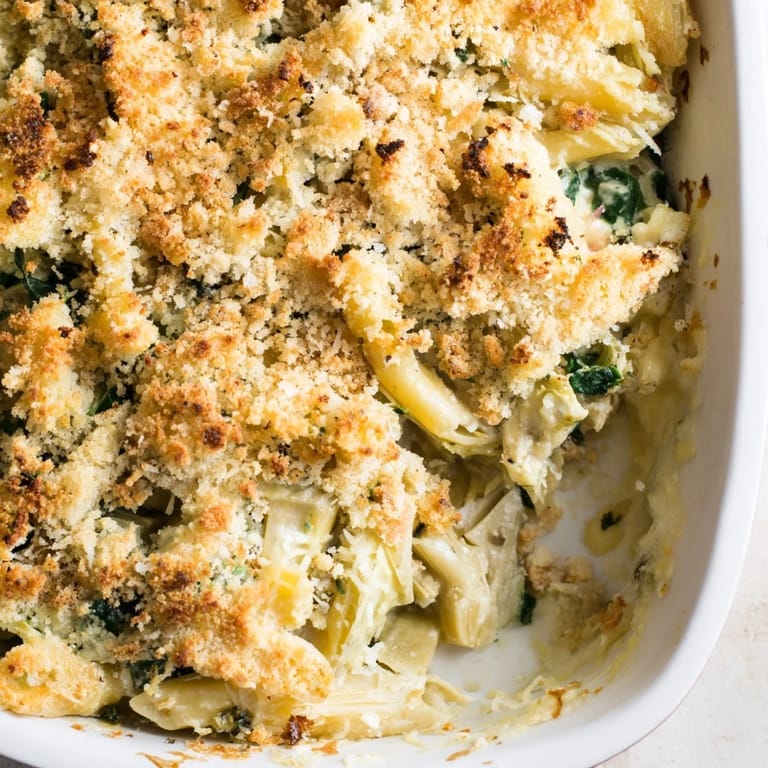
Save This artichoke pasta bake has become one of those recipes I turn to when I need something reliable, delicious, and comforting without a lot of drama. It's a dish that feels like a warm hug on a plate, and I hope it brings the same kind of easy joy to your table that it's brought to mine.
Recipe FAQs
- → Can I prepare this dish ahead of time?
Yes, you can assemble the casserole up to 8 hours in advance. Cover and refrigerate, then bake when ready, adding 5-10 extra minutes to the baking time since it will start cold.
- → What pasta shapes work best?
Short tube pastas like penne, rigatoni, or fusilli work wonderfully as they capture the creamy sauce. Avoid very thin or long pastas that may break apart when mixed.
- → How do I keep the sauce from becoming too thick?
Use the full amount of heavy cream and milk specified. If the sauce thickens during cooking, whisk in a splash of milk or pasta water to reach the desired consistency before combining with pasta.
- → Can I use frozen spinach instead of fresh?
Yes, use about 100 g frozen spinach. Thaw completely and squeeze out excess moisture before adding to prevent a watery casserole.
- → What vegetables can I add or substitute?
Sun-dried tomatoes, roasted red peppers, mushrooms, or zucchini work beautifully. You can also swap kale for spinach. Add heartier vegetables like mushrooms earlier in cooking for better texture.
- → Is this dish freezer-friendly?
Yes, freeze the unbaked casserole for up to 3 months. Thaw in the refrigerator overnight, then bake as directed, adding a few extra minutes if needed.