 Save
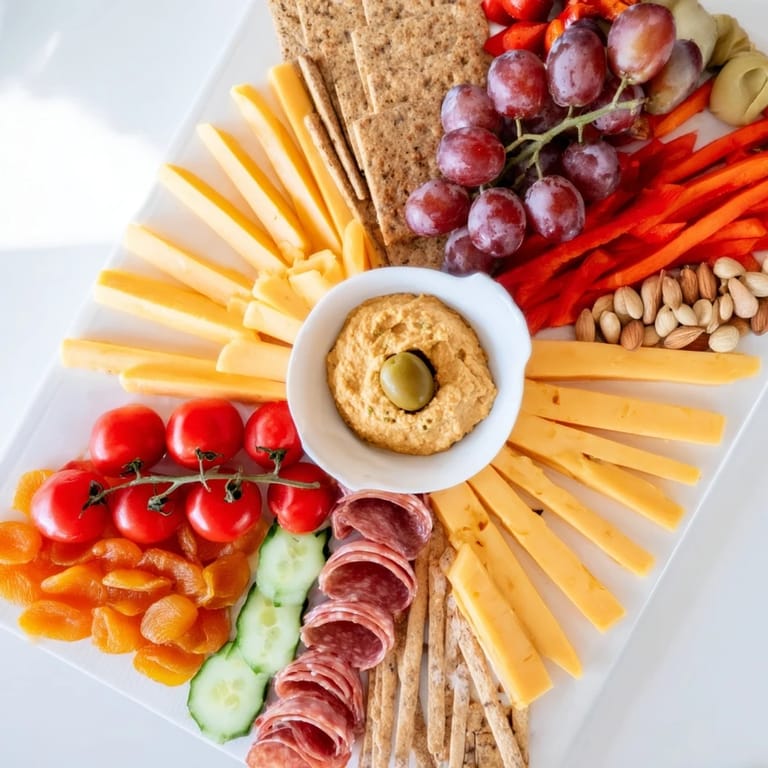
Save I discovered the magic of directional boards at a dinner party where a friend arranged everything pointing toward a single bowl of whipped feta, and suddenly the whole table felt like it was moving with intention. Before that night, I'd always thought charcuterie boards were just about piling things beautifully, but watching guests naturally reach along those angled lines toward that center dip changed how I think about serving food. It wasn't fussy or complicated, just clever enough to make people smile and reach at the same time. The board felt alive, almost like it was guiding the conversation as much as the appetizers were. Now I make these whenever I want a spread that feels less like a display and more like an invitation.
My sister brought this board to a casual game night, and I watched three separate conversations happen organically just because everyone was reaching toward the same dip bowl from different angles, like the board was orchestrating who talked to whom. That small detail of pointing everything inward somehow made the whole gathering feel more connected, less about grabbing and more about sharing.
Ingredients
- Aged cheddar: Cut into triangles so the points naturally aim toward the center, and the angles reinforce your directional theme.
- Brie: Wedge shapes work best here because they already have that built-in arrow look.
- Gouda: Strips feel more dynamic than chunks, and they're easier to angle convincingly.
- Prosciutto: Folded gently so it sits like a small fan pointing the right way.
- Salami: Fold each slice loosely so it catches light and maintains that sense of movement.
- Seedless grapes: Group them in small clusters so you can place each cluster strategically along your directional lines.
- Cherry tomatoes: Halving them makes them lay flatter and easier to arrange in neat radiating rows.
- Cucumber: Slice on the diagonal so each piece is already a natural arrow shape pointing somewhere.
- Red bell pepper: Strips work better than chunks for this pattern, and the color pops beautifully between other elements.
- Artisan crackers: Choose shapes with clean edges that can point without looking accidental.
- Baguette: Bias cuts give you longer, more elegant slices that hold direction better than straight cuts.
- Marcona almonds: Place them individually along your lines like tiny punctuation marks.
- Dried apricots: Their warm color fills gaps while reinforcing the flow toward the center.
- Olives: Use them as connectors between sections to keep the eye moving toward the dip.
- Herbed hummus or whipped feta: This is your anchor, the point everything else aims for, so choose something you genuinely love.
Tired of Takeout? 🥡
Get 10 meals you can make faster than delivery arrives. Seriously.
One email. No spam. Unsubscribe anytime.
Instructions
- Set your focal point:
- Place the dip bowl at one corner or edge of your board first, like you're setting a compass. Everything else will orient around this one decision, so choose a spot that feels balanced visually but still leaves room for the board to breathe.
- Arrange your cheeses with intention:
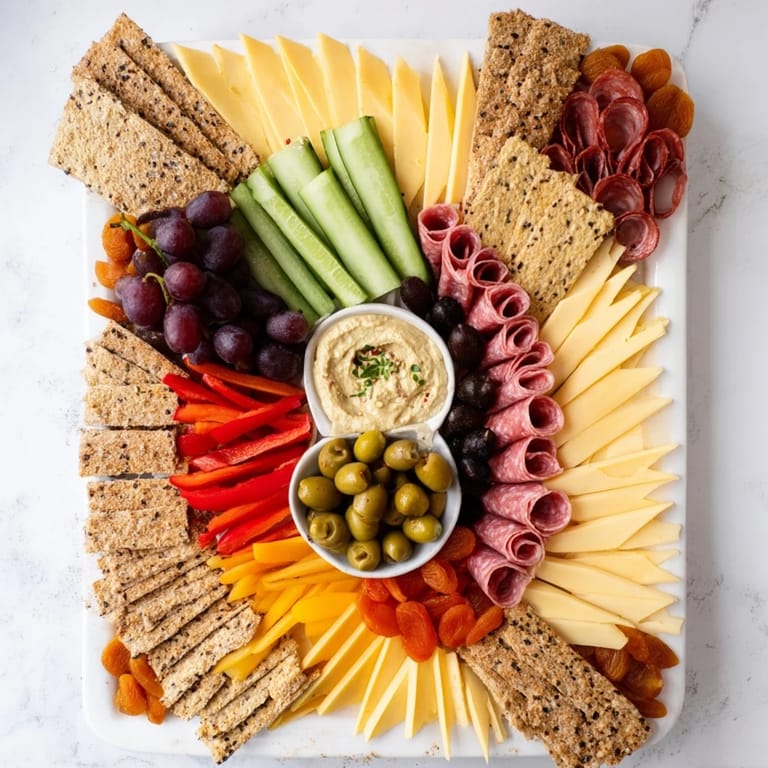
- Take those triangles and wedges and angle them so their points all face the dip bowl, creating radiating lines like spokes. Step back and squint a little to make sure the directional pattern is actually reading before you commit the rest of the board.
- Add meats to reinforce the flow:
- Position your folded prosciutto and salami along the lines you've started, keeping the folds oriented toward the center. These pieces are lighter and more sculptural than cheese, so they add visual interest without breaking the pattern.
- Lay down vegetables and fruit:
- Cucumber slices, pepper strips, and tomato halves should all angle the same direction, almost like you're creating lanes of traffic moving inward. Your grape clusters can fill in between the structured vegetables and add softness to the geometry.
- Place crackers and bread in radiating rows:
- This is where the board really starts to sing visually because these larger pieces reinforce the directional feeling the strongest. Fan them out from near the dip bowl back toward the edges, all tilted the same way.
- Scatter your finishing touches:
- Almonds, apricots, and olives go into the gaps between your main components, placed individually to keep strengthening that directional pattern. They're like visual glue that makes everything feel intentional rather than randomly placed.
- Step back and adjust:
- Walk around the board from different angles to see how the directional flow reads from where your guests will actually be standing or sitting. Fill any obvious bare spots and trust that some emptiness is actually more elegant than cramming every inch.
 Save
Save I made this board for my parents' anniversary dinner, and my dad actually stopped mid-conversation to comment on how thoughtfully it was arranged, which never happens. That moment reminded me that food isn't just about taste; it's about the care you show through design, and sometimes people notice that more than we expect.
The Psychology of Flow on a Plate
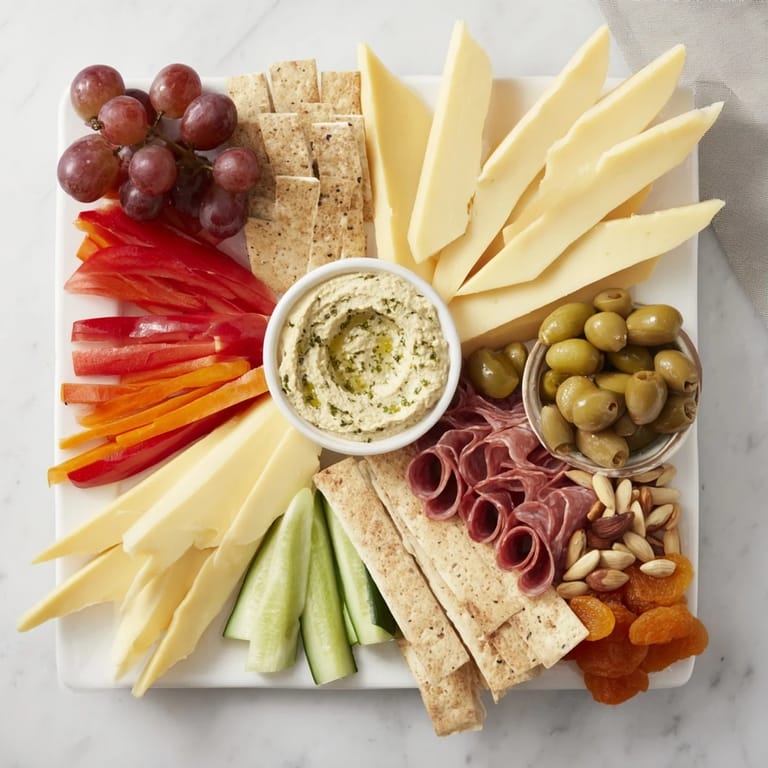
There's something almost magnetic about a board designed this way that changes how people interact with it. Instead of everyone converging on one spot and bumping elbows, they naturally spread out along those angled lines, and the whole experience feels more civilized and playful at once. It's the kind of small visual trick that makes your hosting feel intentional without being fussy.
Building Your Color Story
The magic here isn't just directional; it's in how the angles let you showcase color in a way a regular board can't. Each line becomes a conversation between the deep orange of apricots, the cream of brie, the jewel tones of olives, and the blush of tomatoes, all moving together toward one point. When you plan your board thinking about color flow along those directional lines instead of just spot-placement, suddenly everything feels more curated and less random.
Make It Your Own
The directional concept is sturdy enough to handle your substitutions and preferences, so don't feel locked into this exact lineup. Swap in whatever cheeses are calling to you, try different dips based on the season, and remember that the pattern is what makes it work, not the specific ingredients. A vegetarian board radiates just as beautifully when everything points inward with the same intention.
- For a winter version, try whipped beet hummus instead of herbed, and add pomegranate seeds scattered along your lines.
- Swap fresh grapes for dried cranberries if you want deeper color or longer storage before serving.
- If you're short on time, peak-season farmers market finds in the moment often look better than whatever you planned at home.
 Save
Save This board style turns an appetizer into a moment, and that's worth the five extra minutes of intentional arrangement. Serve it with confidence and watch how the directional design does half the work for you.
Recipe FAQs
- → How do I create the arrowhead effect on the board?
Place the dip bowl at one end of the board, then arrange cheeses, meats, and produce so their shapes and angles point toward the bowl, creating directional flow.
- → Can I make this without meat?
Yes, simply omit the cured meats and add more cheese varieties or fresh produce to maintain balance and flavor.
- → What types of dips work well?
Herbed hummus, whipped feta, beet hummus, tzatziki, or whipped ricotta complement the components beautifully.
- → What board size is recommended for this arrangement?
A large wooden or slate board at least 14" x 10" provides ample space for this directional display.
- → How can I add visual interest to my board?
Use contrasting colors, varied textures, and arrange ingredients in angled lines to enhance both motion and appeal.
- → Are there suggested beverage pairings?
Crisp Sauvignon Blanc or light Pinot Noir wines pair nicely with the fresh and savory flavors of this board.