 Save
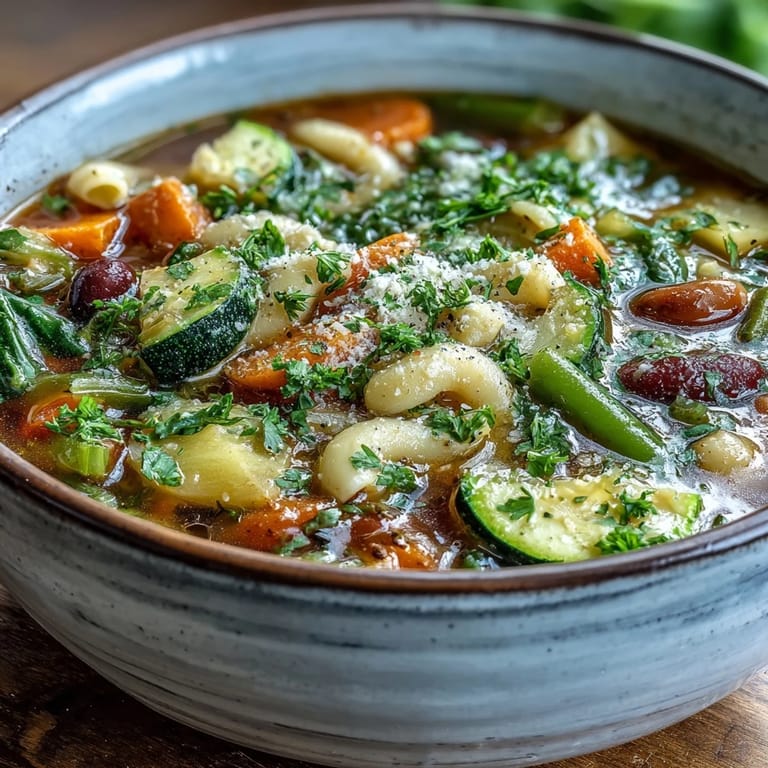
Save My neighbor Maria taught me that minestrone isn't about following rules, it's about whatever vegetables are hanging around your kitchen and the kind of soup that tastes different every time you make it. One rainy Tuesday, she showed up at my door with an armful of zucchini from her garden and started chopping without even asking where things were kept, filling my pot with the rhythm of someone who'd made this soup a hundred times. Within an hour, the whole house smelled like home, and I realized this was the soup that bridges seasons, budgets, and moods all at once.
I made this for my colleague Jake who'd just moved into a studio apartment with barely any kitchen equipment, and watching him eat three bowls in a row while standing at his counter made me understand why Italian grandmothers guard their soup recipes so carefully. That night he texted me a photo of the empty pot, and somehow that felt like a compliment worth more than words.
Ingredients
- Olive oil: Use the good stuff here, not the budget bottle, because it's one of only two fats in this whole soup and it actually matters for the flavor foundation.
- Yellow onion, carrots, and celery: This is the holy trinity of Italian cooking, and yes, they need to go in first to build the base that everything else rests on.
- Garlic: Fresh cloves minced fine, not that pre-jarred stuff, because the difference in taste is immediately noticeable once the soup starts simmering.
- Zucchini and potato: The potato adds substance and helps thicken the broth naturally, while zucchini breaks down slightly and adds delicate vegetable flavor.
- Green beans: They stay firm even through cooking if you add them at the right moment, keeping the soup from becoming one-note mush.
- Diced tomatoes: Canned is actually better than fresh here because the acidity is more consistent and they've already been processed to release their juice.
- Cannellini beans: Drain and rinse them well, otherwise the canned liquid makes the broth cloudy instead of clear and bright.
- Small pasta like ditalini: It cooks to tenderness without disappearing, and it catches the broth in each little tube so every bite feels intentional.
- Vegetable broth: This is the backbone, so taste it first if you can, because some brands are much saltier than others and you'll need to adjust your seasoning accordingly.
- Dried Italian herbs: A measured blend matters more than throwing in random dried things because the proportions keep the flavor balanced and not overwhelming.
- Bay leaf: People forget to remove this and then bite down on it unexpectedly, which is never pleasant, so don't skip the reminder.
- Fresh spinach or kale: Add it at the very end so it stays bright green instead of turning that sad olive color that says you cooked it too long.
- Fresh parsley: The garnish that makes people think you spent way more effort than you actually did.
- Parmesan cheese: Optional but it creates this salty umami moment that makes the whole bowl feel more luxurious.
Tired of Takeout? 🥡
Get 10 meals you can make faster than delivery arrives. Seriously.
One email. No spam. Unsubscribe anytime.
Instructions
- Start the foundation with oil and aromatics:
- Warm that olive oil over medium heat until it shimmers slightly, then add your diced onion, carrots, and celery, stirring them around for about five minutes until the onion becomes translucent and everything smells like you're cooking something intentional. You're not looking for browning here, just softening and releasing those first sweet flavors.
- Build the depth:
- Stir in the minced garlic along with your zucchini, potato, and green beans, cooking for another three minutes so the garlic perfumes everything and the raw vegetable taste starts to mellow. This is when your kitchen fills with the smell that makes people ask what you're making.
- Create the liquid foundation:
- Add the diced tomatoes, drained cannellini beans, vegetable broth, dried herbs, and bay leaf, then crank the heat up until you see those first bubbles breaking the surface. Once it reaches a boil, reduce the heat down so it's simmering gently with just an occasional bubble, then cover the pot and let it do its work for twenty minutes.
- Incorporate the pasta:
- Stir in your small pasta and cook uncovered for eight to ten minutes, stirring occasionally so nothing sticks to the bottom and everything cooks evenly. You want the pasta tender but not mushy, and the vegetables soft enough that a spoon breaks them easily.
- Finish with greens and seasoning:
- Remove that bay leaf, then scatter in your spinach or kale and let it wilt for two minutes while you taste the broth and adjust the salt and pepper to your preference. This is your moment to make it exactly right for your palate.
- Serve with intention:
- Ladle the soup into bowls, top with fresh parsley so there's a hint of green brightness, and pass the Parmesan around so everyone can add as much or as little as they want.
 Save
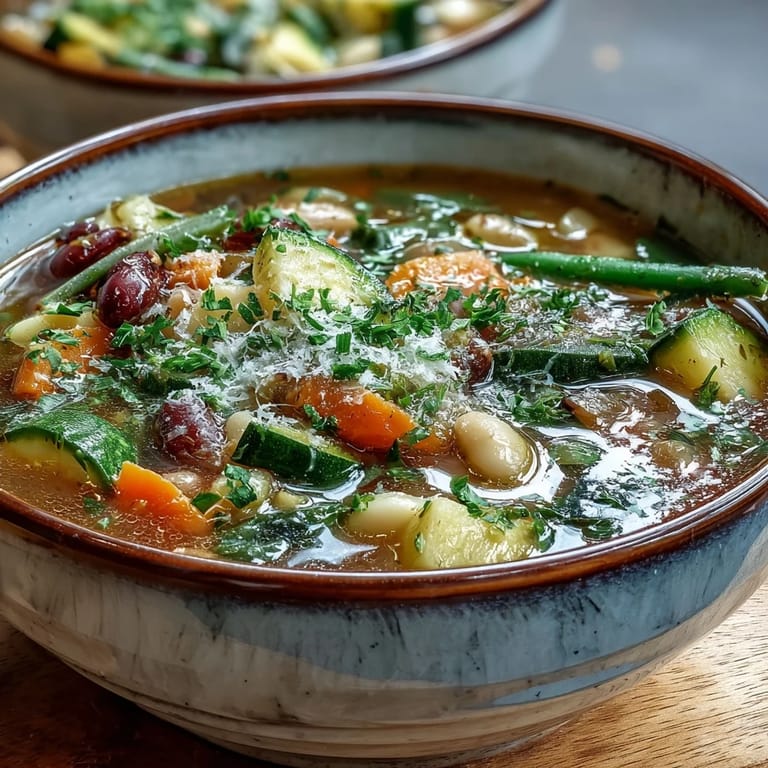
Save My daughter once asked why this soup tasted different every single time I made it, and I realized it was because I was using whatever vegetables we had, whatever broth was in the pantry, and whatever mood I was cooking in that day. That's when I understood minestrone isn't a recipe you master, it's a soup you have a conversation with.
The Rhythm of Vegetable Chopping
There's something meditative about prepping for this soup, the way each vegetable goes into its own pile on your cutting board, waiting its turn. I've learned that having everything cut and ready before you heat the oil means you're not rushing or watching something burn while you're still holding a potato, and somehow that calm translates into the soup itself tasting more intentional.
Timing and Flexibility
The beauty of minestrone is that while there's a natural progression to how you build it, the actual cooking times are suggestions rather than absolutes. If your potatoes are smaller, they might be done in fifteen minutes instead of twenty, so you taste as you go rather than watching a clock, and that's honestly how good cooking happens.
Making It Your Own
This soup becomes magic when you treat the ingredient list as a starting point instead of a commandment, which is probably why every Italian family has a slightly different version. The bones of the soup stay the same, but you're free to add cabbage if you have it, swap the green beans for whatever looks good at the market, or throw in a piece of Parmesan rind if you're feeling fancy.
- Add seasonal vegetables like peas in spring or cabbage in winter because they change the character without breaking the structure of the soup.
- If you want it heartier, add more pasta or beans, and if you prefer it brothier, just use more vegetable stock.
- Save a ladle of broth before you add the pasta so you can thin it out later if it gets too thick after a day in the refrigerator.
 Save
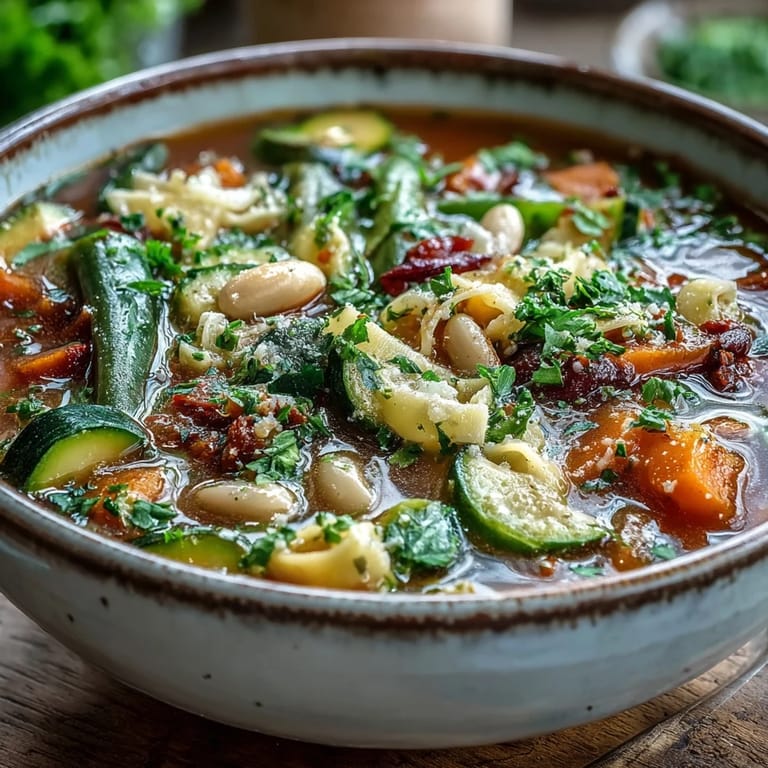
Save Minestrone is the soup I make when I want to feed people without stress, and somehow it always ends up being exactly what they needed to eat that day. There's comfort in simplicity, and there's wisdom in a pot of vegetables and broth.
Recipe FAQs
- → What vegetables go in minestrone?
Traditional versions include onions, carrots, celery, zucchini, potatoes, and green beans. You can adapt based on season—add cabbage in winter or fresh peas in spring.
- → What pasta works best?
Small shapes like ditalini, elbow macaroni, or shells hold up well in the broth. For gluten-free needs, use rice or corn-based pasta alternatives.
- → Can I make it ahead?
Absolutely—it tastes even better the next day as flavors meld. Store pasta separately if making more than 24 hours ahead to prevent it from becoming too soft.
- → How do I boost flavor?
Add a Parmesan rind while simmering for umami depth. Finish with quality olive oil, fresh herbs, and grated Parmesan for serving.
- → Is it freezer-friendly?
Yes, freeze for up to 3 months. Leave pasta slightly undercooked before freezing, or add freshly cooked pasta when reheating.
- → What should I serve with it?
Crusty bread, focaccia, or garlic bread are classic accompaniments. A glass of Chianti or Pinot Grigio complements the Italian flavors beautifully.