 Save
Save My tía taught me brazo gitano on a humid San Juan afternoon when I was barely tall enough to see over the counter. She moved through the kitchen with such ease, cracking eggs into separate bowls while humming something I couldn't quite place, and I remember being mesmerized by how she rolled that delicate cake with her bare hands, no fuss, no fear. That day I learned it wasn't magic—it was just knowing where to be gentle and where to be confident. This Puerto Rican treasure has stayed with me ever since, a dessert that feels like both celebration and comfort wrapped into one golden roll.
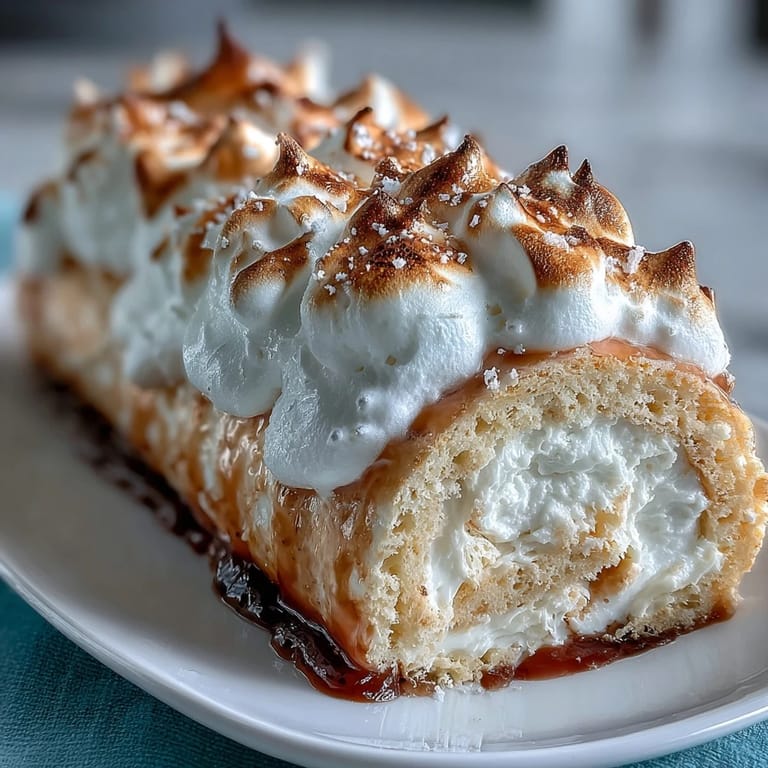
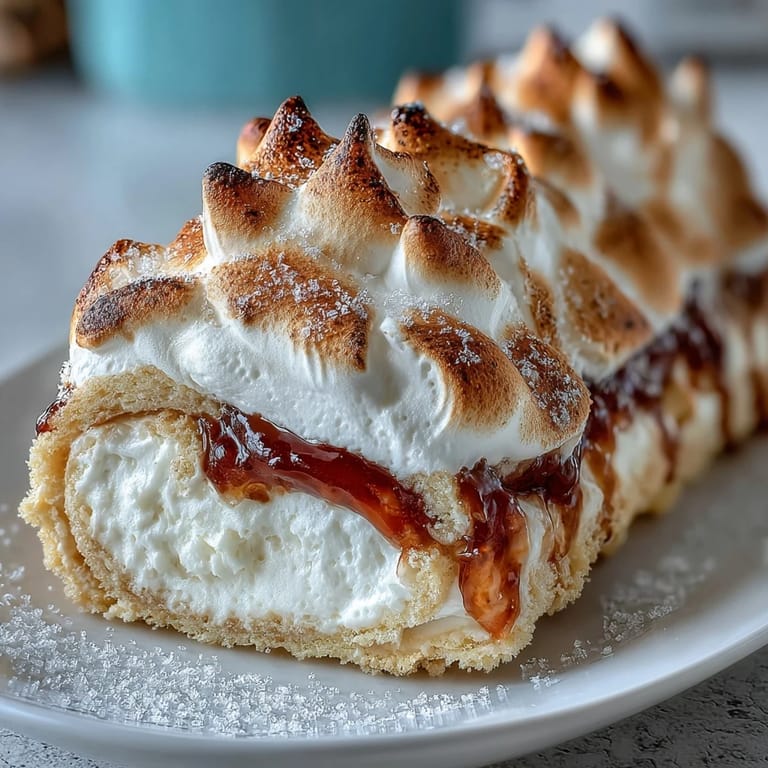
Years later, I made this for my partner's birthday and watched them light up when I carried it to the table—it was the kind of moment where dessert becomes a memory. The meringue had caught perfectly under the torch, all golden peaks and caramelized edges, and I felt my tía's presence in that kitchen, proud in a way that only she could have made me feel.
Ingredients
- Eggs (7 total, separated): This recipe leans on eggs for structure and lift, so room temperature ones blend more smoothly and trap air better than cold eggs straight from the fridge.
- Granulated sugar (250 g total): Split between the yolk mixture and the meringue keeps everything balanced; too much sweetness in one layer and the whole thing becomes cloying.
- Vanilla extract (1 tsp): A small amount but crucial—it whispers through the sponge and prevents the cake from tasting flat or one-dimensional.
- All-purpose flour (120 g): Sift it before folding to avoid lumps that tear the delicate cake structure when you roll it.
- Salt (1/4 tsp): Grounding spice that makes the sweetness pop and steadies the egg whites as they whip.
- Guava paste (225 g): The soul of this dessert; warm it gently with water until spreadable, and your filling becomes silky rather than chunky or difficult.
- Cream of tartar (1/2 tsp, optional): Stabilizes egg whites, especially on humid days when meringue can weep or collapse.
Tired of Takeout? 🥡
Get 10 meals you can make faster than delivery arrives. Seriously.
One email. No spam. Unsubscribe anytime.
Instructions
- Set the stage:
- Preheat to 180°C and line your 10x15 inch pan with parchment, then lightly grease it so the cake releases cleanly. Cold pans and sticky paper are the enemies here.
- Whip the yolks:
- Beat egg yolks with half the sugar and vanilla until pale and thick, about 3 minutes—this aeration is what gives the sponge its cloud-like texture. You're building air into every yolk, and you'll see the color shift from golden to almost white as you work.
- Build the whites:
- In a separate bowl (and it must be spotlessly clean or they won't whip properly), beat egg whites with remaining sugar, salt, and cream of tartar until stiff peaks form. This takes patience, but stiff peaks mean your meringue will hold structure.
- Fold with intention:
- Gently fold the whites into the yolks in two additions, then sift in the flour and fold until barely combined—overmixing deflates all that air you just created. Fold until you see no white streaks, then stop immediately.
- Bake the cake:
- Spread evenly in the pan and bake 12-15 minutes until it springs back when touched lightly, which tells you the sponge is set but still tender. The kitchen will smell like vanilla clouds.
- Roll while warm:
- Invert onto a sugar-dusted kitchen towel, peel away the parchment, and roll tightly from the short end, towel and all—the warmth makes it pliable and forgiving. Let it cool completely in that rolled position so it remembers its shape.
- Prepare the filling:
- Melt guava paste gently with water over low heat, stirring until silky smooth and cool to room temperature. A grainy filling spreads unevenly and tears the cake underneath, so patience here pays off.
- Fill and reroll:
- Unroll the cooled cake, spread guava evenly, and roll tightly again without the towel. Transfer seam side down to your serving platter where it will rest until assembly.
- Make the meringue:
- Beat egg whites until soft peaks form, then gradually add sugar while beating until stiff, glossy peaks appear—this should take about 4-5 minutes of steady beating. Glossy peaks tell you the sugar has dissolved and won't weep out later.
- Top with meringue:
- Spread or pipe the meringue over the entire roll, creating peaks and valleys that will caramelize beautifully. Be generous and artistic here; the meringue is edible decoration.
- Finish and chill:
- Either torch gently for golden peaks or broil for 1-2 minutes under close watch, then chill at least 30 minutes before slicing. A chilled brazo gitano holds its shape better and the flavors meld.
 Save
Save There's something quietly powerful about serving a homemade brazo gitano—it says you took time, that you cared enough to separate eggs and fold gently and watch the meringue turn glossy. My tía would recognize that effort in an instant, and I think that's why this dessert still feels like love on a plate.
Why the Towel Trick Matters
The kitchen towel isn't just a practical tool; it's the difference between a successful roll and a cracked, torn mess. When the warm sponge lands on that sugar-dusted towel, the texture shifts from fragile to workable almost instantly. Rolling it while both cake and towel are warm keeps everything pliable, and the sugar prevents sticking without adding extra flour that would toughen the crumb. I've seen people skip this step and end up with cake shards instead of a perfect spiral, so trust the method even if it feels odd at first.
The Guava Paste Equation
Guava paste and water together become a spreadable dream, but the ratio matters more than the temperature. Too stiff and it tears the delicate cake underneath; too loose and it soaks through and creates a soggy bottom. Heating gently over low flame, stirring constantly, lets you watch it transform from a dense block into something liquid and glossy. Once it reaches room temperature, it'll set slightly, giving you that perfect window for spreading.
Meringue Mastery and Golden Peaks
Meringue is one of those kitchen elements that feels intimidating until you realize it's just egg whites and sugar having a conversation. Beat the whites until they're foamy, then add sugar gradually while continuing to beat—rushing this step means grainy, weeping meringue that looks sad under the broiler. When you finally see those glossy, stiff peaks that hold their shape when you lift the beaters, you'll know you've got it right.
- A kitchen torch gives you more control than a broiler for that golden finish, and the caramelized peaks taste almost like toasted marshmallow.
- If you don't have a torch, watch the broiler obsessively—meringue can go from perfect to burnt in thirty seconds flat.
- Chill the finished brazo gitano well before serving so every layer sets and the slice holds clean lines on the plate.
 Save
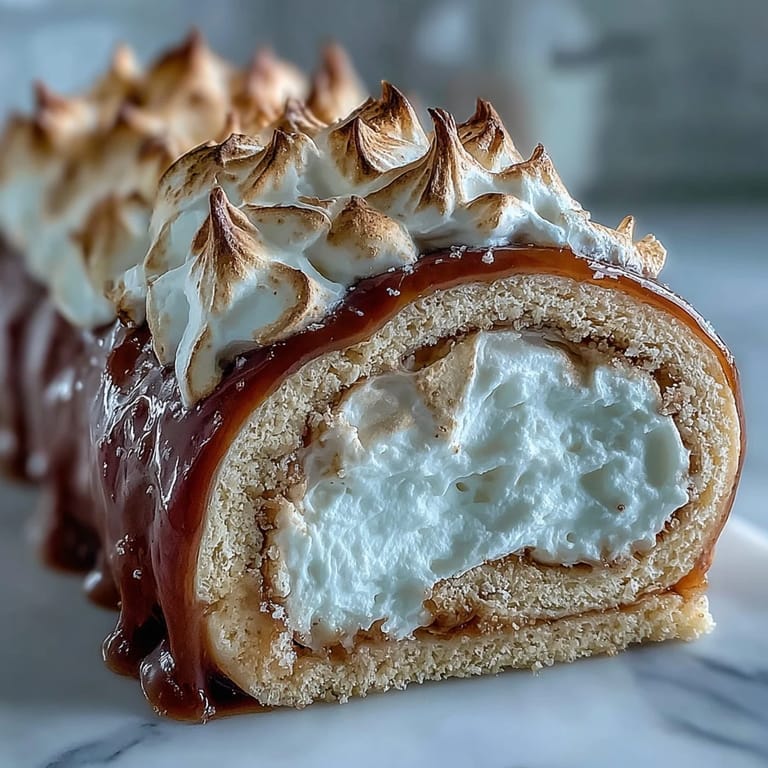
Save Brazo gitano rewards patience and gentle hands, and once you make it once, you'll understand why it's survived generations in Puerto Rican kitchens. Every time you slice into that roll and see the spiral of cake, guava, and meringue, you're eating history and comfort all at once.
Recipe FAQs
- → What is Brazo Gitano?
Brazo Gitano, meaning 'gypsy arm' in Spanish, is a rolled sponge cake originating from Puerto Rican cuisine. It consists of a light vanilla cake filled with sweet guava paste and topped with fluffy meringue, creating a beautiful striped appearance when sliced.
- → Why does the cake crack when rolling?
Cakes typically crack when rolled if they've cooled completely and become less flexible. Rolling while still warm prevents this by maintaining pliability. Using a kitchen towel dusted with sugar creates a barrier and supports the cake structure during the initial cooling phase.
- → Can I make this ahead of time?
Yes, you can prepare the sponge cake and guava filling a day in advance. Store the cooled rolled cake wrapped in plastic at room temperature. Add the meringue topping on the day of serving for the best texture and appearance.
- → What can I substitute for guava paste?
While guava paste is traditional, you can substitute with other thick fruit pastes like mango, quince membrillo, or even raspberry or apricot preserves. The key is using a thick, spreadable fruit filling that won't make the cake soggy.
- → Do I need a kitchen torch for the meringue?
No, a kitchen torch is optional. You can achieve a golden finish by placing the meringue-topped cake under a broiler for 1-2 minutes, watching closely to prevent burning. Alternatively, skip the toasting step for a pure white meringue finish.
- → How should I store leftovers?
Store leftover Brazo Gitano in the refrigerator, covered loosely with plastic wrap or in an airtight container. It's best enjoyed within 2-3 days. The meringue may soften slightly in the refrigerator but will still taste delicious.