 Save
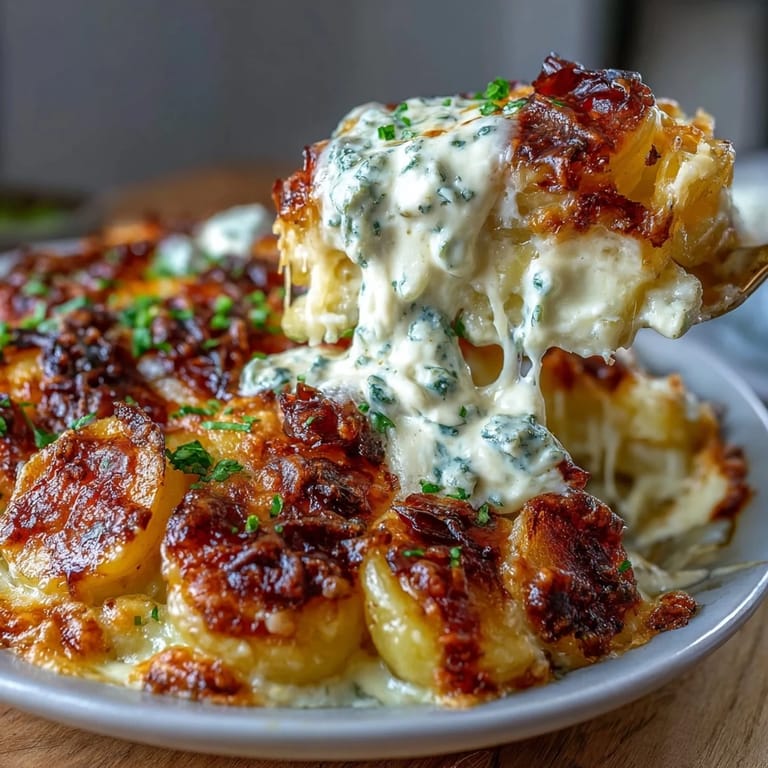
Save My sister called me in a panic the week before Thanksgiving, asking if I could bring a side dish that wouldn't require oven space at her place. I'd been craving au gratin potatoes for months—that exact moment when cream and cheese transform humble potatoes into something that makes people forget about everything else on the table. So I decided this would be it, and honestly, the first time I pulled that golden, bubbling dish from the oven, the smell alone made the decision feel brilliant.
I'll never forget watching my brother sneak a third helping while everyone was distracted with dessert. He didn't even say anything—just quietly went back to the kitchen and came back with more on his plate, this sheepish smile on his face. That's when I knew I'd nailed it, and that this was going to become my go-to dish whenever I needed to feel like I'd actually pulled off something special.
Ingredients
- Yukon Gold or Russet potatoes (2 lbs): Yukon Golds have a naturally buttery flavor that complements the cream beautifully, but Russets work too if that's what you have—just slice them a bit thinner so they cook through evenly.
- Heavy cream (2 cups): Don't skimp here; this is what makes the sauce luxurious and prevents it from breaking or becoming thin during baking.
- Whole milk (1 cup): The milk balances the richness of the cream and helps stretch the sauce without diluting the flavor.
- Garlic cloves (2, minced): Fresh garlic infuses the cream with a gentle, aromatic warmth that brings everything together.
- Salt (1/2 teaspoon) and freshly ground black pepper (1/4 teaspoon): Taste as you heat the cream and adjust; you'll be surprised how much seasoning gets absorbed by the potatoes.
- Grated nutmeg (1/4 teaspoon): This is the secret ingredient that elevates the dish from good to unforgettable—it adds a subtle warmth without being noticeable.
- Gruyère cheese (1 1/2 cups, grated): Gruyère melts smoothly and develops a complex, slightly sweet nuttiness that makes this dish feel restaurant-quality.
- Parmesan cheese (1/2 cup, grated): The Parmesan adds a sharp, salty bite and helps the top turn that beautiful golden brown.
- Fresh chives or parsley (2 tablespoons, optional): A fresh sprinkle at the end cuts through the richness and adds color; it's worth the extra step.
Tired of Takeout? 🥡
Get 10 meals you can make faster than delivery arrives. Seriously.
One email. No spam. Unsubscribe anytime.
Instructions
- Get your oven and dish ready:
- Preheat your oven to 375°F and lightly butter a 9x13-inch baking dish—the butter helps prevent sticking and adds subtle flavor to any potatoes touching the edges. If you want an extra boost, rub a cut garlic clove around the inside of the dish before you start layering.
- Warm the cream mixture:
- In a saucepan over medium-low heat, combine the heavy cream, milk, minced garlic, salt, pepper, and nutmeg. Watch it closely and stop as soon as you see steam rising—you want it hot enough to cook the potatoes gently, but boiling will make it separate or become grainy. This usually takes about 5-7 minutes, and you'll notice the aroma becoming richer as the garlic infuses.
- Build your first layer:
- Arrange half of your thinly sliced potatoes in an even, slightly overlapping layer on the bottom of the baking dish. Think of it like creating a foundation; this is where the magic starts.
- Sprinkle the first cheese layer:
- Scatter half of your grated Gruyère and Parmesan over the potatoes—don't worry about covering every inch perfectly, as the cream will distribute everything as it bakes.
- Add the remaining potatoes:
- Layer the rest of your potato slices on top, again creating an even layer. If you have thick spots and thin spots, the thinner ones will cook faster and might get mushy while the thick ones are still firm, so consistency matters here.
- Pour in the cream and top with cheese:
- Pour that warm cream mixture slowly and evenly over all the potatoes, making sure it reaches the edges and settles between the layers. Then top everything with the remaining cheeses, spreading them across the surface so they can turn golden and bubbly.
- Cover and bake:
- Drape foil loosely over the dish—not sealed tightly, just resting on top—and bake for 40 minutes. The foil traps steam and helps the potatoes cook through without the cheese burning before they're tender.
- Uncover and finish:
- Remove the foil and bake for another 20-25 minutes until the top is golden brown and you can easily pierce a potato with a knife. The cheese should be bubbling at the edges, and the aroma will tell you it's ready.
- Let it rest:
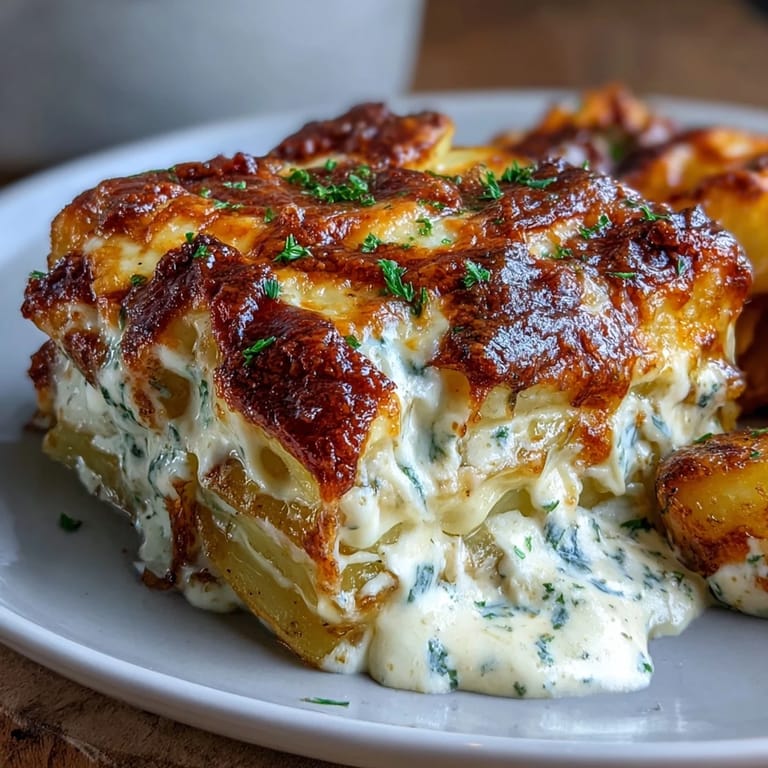
- Pull it from the oven and let it sit for 10 minutes before serving—this allows the cream to set slightly so each serving holds together nicely instead of sliding around on the plate. Finish with a sprinkle of fresh chives or parsley if you're feeling fancy.
 Save
Save There was this one Christmas Eve when my neighbor brought over her elderly mother, who barely touched anything all evening. But she had two servings of this, and afterward, she told me it reminded her of a dish she hadn't tasted in forty years. That moment made me realize food isn't just about feeding people—it's about creating little bridges between their past and present.
Cheese Selection and Substitutions
Gruyère is the star here because it melts smoothly and develops a rich, slightly nutty flavor, but I've had success with sharp white cheddar when Gruyère was too expensive or hard to find. Whatever cheese you choose, make sure it's real cheese that you grate yourself—pre-shredded cheese has anti-caking agents that prevent it from melting as smoothly. The Parmesan is essential because it adds that salty, umami depth and helps the top brown beautifully, so don't leave it out even if you're substituting the Gruyère.
Make-Ahead Magic and Timing
You can assemble this dish up to 24 hours ahead of time—just cover it, refrigerate it, and add 5-10 extra minutes to the baking time since you're starting from cold. I usually prepare it the night before a holiday so I'm not rushing in the kitchen while guests are arriving. Just remember that if you've refrigerated it, the cream mixture might look separated or grainy, but don't worry; it will come back together beautifully as it bakes.
Flavor Variations and Add-Ins
The base recipe is perfect on its own, but I've learned a few ways to tweak it depending on what's available or what I'm craving. Thinly sliced sweet onions layered between the potatoes add a gentle sweetness that balances the cheese, and they cook down into almost nothing, adding body to each bite. Sometimes I'll add a thin layer of crispy bacon between the potato layers for extra depth, or stir a teaspoon of Dijon mustard into the cream mixture for a subtle tangy note that wakes everything up.
- Swap in gruyere with sharp white cheddar for a more pungent, classic American version.
- Layer in thin slices of sweet onion or crispy bacon for added dimension and flavor.
- Stir a pinch of Dijon mustard or fresh thyme into the cream mixture for a subtle twist.
 Save
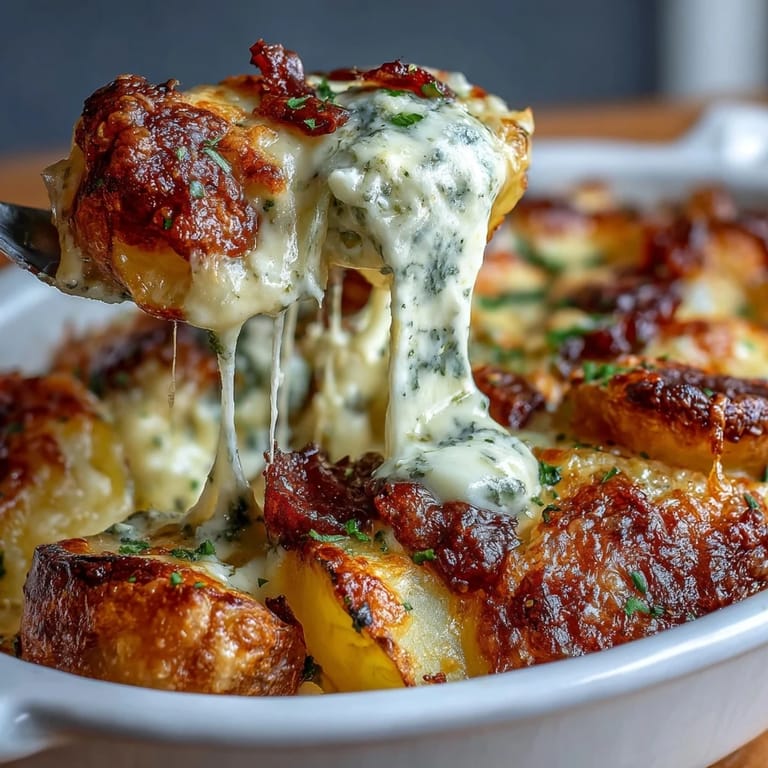
Save This dish has become my answer to almost every potluck and holiday invitation, and I've never regretted bringing it. There's something deeply satisfying about serving food that people actually come back for.
Recipe FAQs
- → What type of potatoes is best for creamy au gratin?
Yukon Gold or Russet potatoes work well due to their texture and ability to absorb the cream sauce without becoming mushy.
- → Can I substitute the cheeses used in this dish?
Gruyère can be replaced with sharp white cheddar to maintain a strong, creamy cheese flavor while Parmesan adds a salty, nutty finish.
- → How can I ensure the top becomes golden and bubbly?
Baking uncovered during the last 20-25 minutes allows the cheese to brown delightfully and form a crust.
- → What is the purpose of adding nutmeg to the cream sauce?
Nutmeg adds a subtle warm spice that enhances the richness of the cream and cheese layers without overpowering them.
- → Is it necessary to let the dish stand before serving?
Letting it rest for about 10 minutes helps the layers settle, making it easier to cut and enhances the melded flavors.